
Anethum graveolens (Dill) : medicinal properties | Lapo
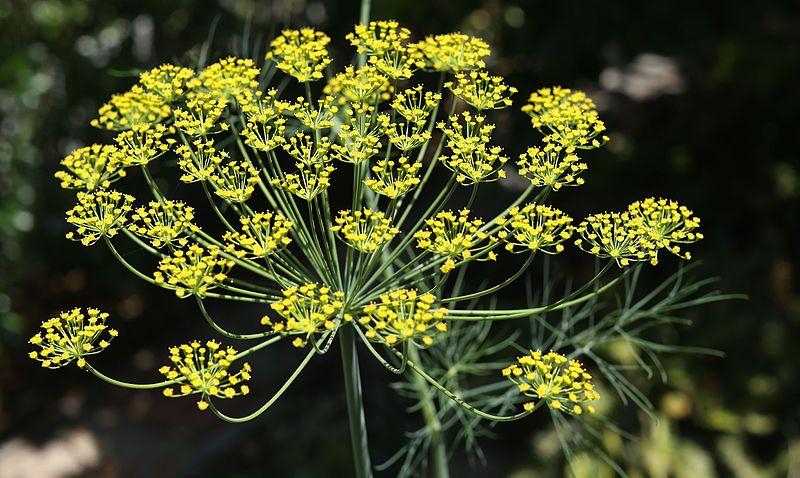
Anethum graveolens (Dill) : medicinal properties in alcoholic extraction
Anethum graveolens (Dill) — family Apiacées.
Recognised external sources linked to this monograph: TRAMIL and French Pharmacopoeia.
This database documents alcoholic (ethanol) extractions of active substances. Our monograph currently lists 17 indications in alcoholic extraction for this species. The monograph draws on 114 scientific references recorded for the species.
Therapeutic indications in alcoholic extraction:
Note: scientific reference excerpts are kept in their original language (most often English), without translation, to respect the source text of publications.
- Hypercholesterolaemia, hypertriglyceridaemia, hyperlipidaemia, low HDL : Plant part used: Sheet.
According to Kojuri J (2007): Conclusion: Anethum has no significant effect on lipid profile, but garlic tablet has significant favorable effect on cholesterol, LDL-cholesterol, & HDL-cholesterol. Garlic may play an important role in therapy of hypercholesterolemia,. According to Hajhashemi V (2013): In this study the hypolipidemic activity of dill powder & it’s essential oil (its most important fraction) were evaluated in male Wistar rats (180 +/- 20 g) fed a high cholesterol diet. - Osteoarthritis, rheumatoid arthritis, rheumatism : Plant part used: Seed. Documented pharmacological profile: Dexaméthasone-like.
According to Valady A (2010): The inflammation was caused by xylene-induced ear oedema. There are many reports about anti-inflammatory effect of Anethum graveolens L. According to Naseri M (2012): One of the methods used for the inflammation assessment is injecting formalin in the rat paw and then measuring the paw volume by the new plethysmometer (weighing method). - Epileptic seizure, convulsion : Plant part used: Seed. Documented pharmacological profile: Phénobarbital-like.
According to Rostampour M (2014): The aim of this study was to determine the anticonvulsant effects of hydro-alcoholic extract of Anethum graveolens seed on pentylenetetrazol (PTZ) -induced seizure in male mice. Discussion: As the hydro-alcoholic extract of AGS showed an appropriate response in experimental model of convulsion, it might be considered as an adjuvant therapy with other traditional antiepileptic medications. According to Arash A (n.d.): Arash A et al, Effects of the Aqueous Extract of Anethum graveolens Leaves on Seizure Induced by Pentylenetetrazole in Mice, School of Med Sci Univ Sains Malaysia,.
Further indications (including other extraction modes where applicable), dosages, precautions for use and full scientific references are available in the complete monograph.
Lapotitjéri di la Nati medicinal database
Ethanolic extracts of active substances — monographs, indications, dosages and references for healthcare professionals. Ethnopharmacologist Emmanuel Nossin.
→ Search Anethum graveolens in the database (subscription required)
Photo credit : Photo by Burkhard Mücke without modification (CC BY-SA 4.0). License : CC BY-SA 4.0.