
Barleria lupulina (Dog-bite) : medicinal properties | Lapo
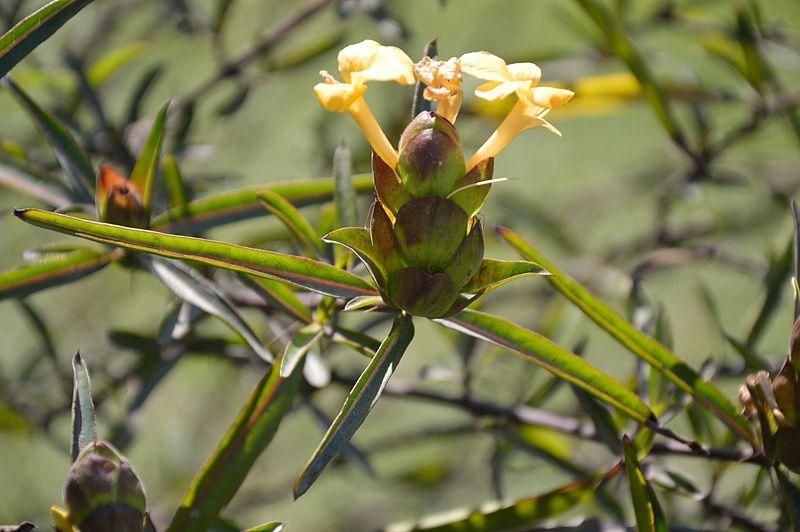
Barleria lupulina (Dog-bite) : medicinal properties in alcoholic extraction
Barleria lupulina (Dog-bite) — family Acanthacées.
This database documents alcoholic (ethanol) extractions of active substances. Our monograph currently lists 12 indications in alcoholic extraction for this species. The monograph draws on 59 scientific references recorded for the species.
Therapeutic indications in alcoholic extraction:
Note: scientific reference excerpts are kept in their original language (most often English), without translation, to respect the source text of publications.
- Adjuvant treatment for colorectal and lung cancer : Plant part used: Sheet. Documented pharmacological profile: Cisplatine-like.
According to Sur PK (2015): In the pioneering work Sur PK & Ds PK (2012a & b), observed that leaf of Barleria lupulina has anti-clastogenic, anti-tumour, radio-protective & anti-cancer activities in mice a fish. According to Das PK (2012): In our previous study, we have reported the radio-protective, anti clastogenic & anti-tumor activities of the leaf extract of Barleria lupulina on mice & fish. Phytochemical analysis, TLC & NMR studies confirm the presence of ursolic acid as the main anti-cancer component, besides other such components, as β sitosterol, sitosterol-3-O-glucoside are also present,. - Adjuvant treatment for ascites-associated lymphoma : Plant part used: Sheet. Documented pharmacological profile: 5-Fluoro-Uracile-like. Mentioned synergistic association: latex de Calotropis gigantea, Allium cepa-racine.
According to Choudhury SM (2015): The present study was aimed to explore the antimitotic activities of Ethanolic (EECGL+EEBLL) & water extracts (WECGL+WEBLL) mixtures of Calotropis gigantea latex & Barleria lupulina leaf of Allium cepa root & in vitro cytotoxic properties in Dalton’s Ascitic Lymphoma (DLA) cell & antiproliferative potency in Dalton’s lymphoma (DLA)-bearing Swiss albino mice. Methods & materials: EECGL+EEBLL & WECGL+WEBLL were subjected to antimitotic study, cell morphology study against Dalton’s Lymphoma Ascites (DLA) cells at the dose level of 100µg/ml. According to Mazumder PM (2012): lupulina (MEBL) leaves (300 and 600 mg/kg BW) was tested for its antiarthritic activity by various models namely, formalin-induced arthritis, adjuvant induced arthritis, collagen type II-induced arthritis & monosodium iodoacetate induced osteoarthritis. - Bacterial infection : Plant part used: Sheet. Documented pharmacological profile: Streptomycine-like, Ciprofloxacine-like.
According to Kumari R (2017): Results: Methanol soluble leaf extract (MLE) contains more soluble bioactive compounds inhibiting the growth of five bacterial pathogens viz., Staphylococcus aureus, Escherichia coli, Pseudomonas aeruginosa, Klebsiella pneumoniae, & Salmonella typhi even at MICs of 1.25 & 2.5 mg/mL. Conclusions: Methanol soluble leaf & stem extract of BL contains antibacterial, antioxidants & immunomodulating phytochemical compounds that was effective for antibacterial, antioxidant & immunomodulatory properties. According to Kumari R (n.d.): The ethanolic & aqueous extracts of Barleria lupulina leaves displayed antibacterial activity against five humans bacterial pathogens viz., Escherichia coli, Pseudomonas aeruginosa, Staphylococcus aureus & Salmonella typhi Klebsiella pneumoniae.
Further indications (including other extraction modes where applicable), dosages, precautions for use and full scientific references are available in the complete monograph.
Lapotitjéri di la Nati medicinal database
Ethanolic extracts of active substances — monographs, indications, dosages and references for healthcare professionals. Ethnopharmacologist Emmanuel Nossin.
→ Search Barleria lupulina in the database (subscription required)
Photo credit : Photo by Biswarup Ganguly without modification (CC BY-SA 3.0). License : CC BY-SA 3.0.