Bixa orellana (Woukou) : medicinal properties | Lapo
Bixa orellana (Woukou) : medicinal properties in alcoholic extraction
Bixa orellana (Woukou) — family Bixacées.
Recognised external sources linked to this monograph: TRAMIL.
This database documents alcoholic (ethanol) extractions of active substances. Our monograph currently lists 14 indications in alcoholic extraction for this species. The monograph draws on 82 scientific references recorded for the species.
Therapeutic indications in alcoholic extraction:
Note: scientific reference excerpts are kept in their original language (most often English), without translation, to respect the source text of publications.
- Bacterial infection : Plant part used: Sheet. Documented pharmacological profile: Chloramphénicol-like.
According to Irobi ON (1996): The extract (5 mg/ml) produced antimicrobial action in agar diffusion assays against standard strains of Gram-positive bacteria including Bacillus subtilis, Staphylococcus aureus, & Streptococcus faecalis while exerting only slight action against Escherichia coli, Serratia marcescens, Candida utilis, & Aspergillus Niger. An organic extract of Annatto (Bixa orellana) leaves obtained in 95% ethanol was examined for in vitro antifungal and antibacterial activity using the agar diffusion and tube dilution methods. According to Rojas JJ (2006): & Spilanthes americana Hiéron were evaluated against five bacteria (Staphylococcus aureus, Streptococcus beta Hemolytic, Bacillus Cereus, Pseudomonas aeruginosa, & Escherichia coli), and one Yeast (Candida albicans). - Infected wound : Plant part used: Sheet. Documented pharmacological profile: Sulfadiazine-like.
According to Author (2014): Published research studies in animals indicate that various extracts of Bixa leaves exhibit antioxidant, broad antimicrobial (antibacterial and antifungal), anti-inflammatory, analgesic, hypoglycemic, and antidiarrheal activities. According to Alim S (2016): The zone of inhibition produced by methanolic extracts of B orellana comparing with standard antibiotics discs showed moderately significant antibacterial activity against almost all of the tested bacterial strains except S typhi which gave promising clear zone (14mm). Methanolic leaf extracts of B orellana were analyzed for their antibacterial activity against pathogenic bacteria including Gram positive bacteria (Bacillus subtilis, Sarcina lutea & Gram-negative bacteria (Escherichia coli, Salmonella typhi, Shigella dysenteriae, Klebsiella pneumonia, Proteus vulgaris) by disc diffusion assay. - Hyperlipidaemia, triglyceridaemia, hypercholesterolaemia : Plant part used: Seed. Documented pharmacological profile: Lovastine-like.
According to Ferreira JM (n.d.): Seeds on Hyperlipidemia, Phytother Res, DOI: 10.1002/ptr.4675,.
Further indications (including other extraction modes where applicable), dosages, precautions for use and full scientific references are available in the complete monograph.
Lapotitjéri di la Nati medicinal database
Ethanolic extracts of active substances — monographs, indications, dosages and references for healthcare professionals. Ethnopharmacologist Emmanuel Nossin.
→ Search Bixa orellana in the database (subscription required)
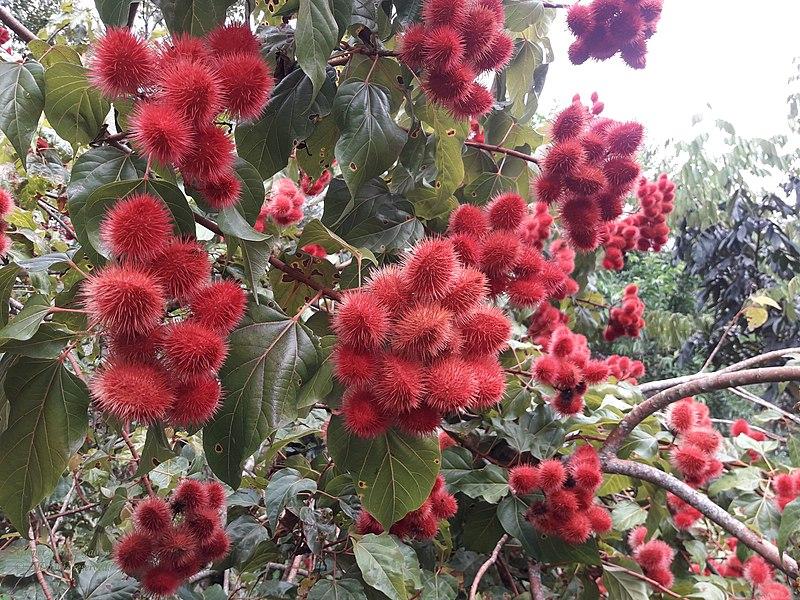
Photo credit : Photo by Gilmergng without modification (CC BY 4.0). License : CC BY 4.0.