Calendula officinalis (Calendula) : medicinal properties | Lapo
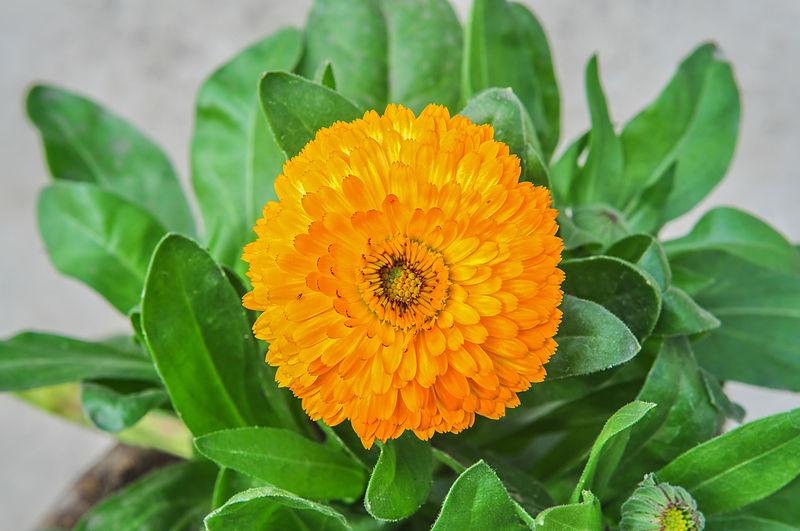
Calendula officinalis (Calendula) : medicinal properties in alcoholic extraction
Calendula officinalis (Calendula) — family Asteracées.
Recognised external sources linked to this monograph: French Pharmacopoeia.
This database documents alcoholic (ethanol) extractions of active substances. Our monograph currently lists 11 indications in alcoholic extraction for this species. The monograph draws on 128 scientific references recorded for the species.
Therapeutic indications in alcoholic extraction:
Note: scientific reference excerpts are kept in their original language (most often English), without translation, to respect the source text of publications.
- Bacterial infection : Plant part used: Sheet. Mentioned synergistic association: Mentha arvensis, association synergique avec CARISSA CARANDAS-L (Feuille).
According to Singh B (2015): In this study, aqueous & ethanolic extract leaves/fruits of three commonly available medicinal plants (Mentha arvensis, Carissa carandas & Calendula officinalis) individually & in combinations were tested for their antimicrobial activity against three different pathogenic bacteria (Bacillus cereus (MCCB-0143), Staphylococcus aureus (MCCB-0139) & Escherichia coli (MCCB-0018)) using agar disc diffusion, agar well diffusion. cereus & F112 (fruits Calendula: C carandas: M arvensis, 1:2:1) showed significant (P < 0.05) antimicrobial activity against S. According to ESTATRIOU E (2012): officinalis exhibited better antibacterial activity against most of the bacteria tested, than ethanol extract. - Cancer : Plant part used: Flower. Documented pharmacological profile: 5-Fluoro-Uracile-like. Mentioned synergistic association: Achillea millefolium-feuille.
According to Ukiya M (2006): Furthermore, upon evaluation of the cytotoxic activity against human cancer cell lines in vitro in the NCI Developmental Therapeutics Program, two triterpene glycosides, 9 & 10, exhibited their most potent cytotoxic effects against colon cancer, leukemia, & melanoma cells. According to Mouhid L (2018): Pancreatic cancer is one of the most aggressive & mortal cancers. CONCLUSION: These results show how Yarrow & Marigold SFE-derived extracts can inhibit pancreatic cancer cell growth, & could be proposed for a comprehensive study to determine the molecular mechanisms involved in their bioactivity with the final aim to propose them as potential adjuvants in pancreatic cancer therapy. - High blood pressure, stable angina : Plant part used: Flower. Documented pharmacological profile: Vérapamil-like.
According to Silva ER (2007): In the biochemical parameters, there was an increase in blood urea nitrogen (BUN) and in alanine transaminase (ALT) levels. According to Jiménez-Medina E (2006): Effect of LACE on human peripheral blood lymphocyte (PBL) proliferation in vitro was also analyzed.
Further indications (including other extraction modes where applicable), dosages, precautions for use and full scientific references are available in the complete monograph.
Lapotitjéri di la Nati medicinal database
Ethanolic extracts of active substances — monographs, indications, dosages and references for healthcare professionals. Ethnopharmacologist Emmanuel Nossin.
→ Search Calendula officinalis in the database (subscription required)
Photo credit : Photo by Joydeep without modification (CC BY-SA 3.0). License : CC BY-SA 3.0.