
Carissa carandas (Trumpet of Christ) | Lapo
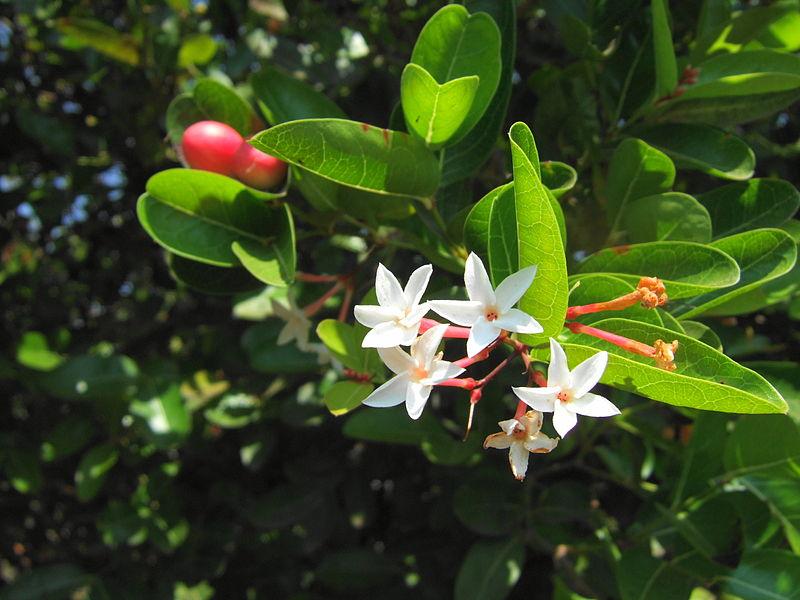
Carissa carandas (Trumpet of Christ) : medicinal properties in alcoholic extraction
Carissa carandas (Trumpet of Christ) — family Apocynacées.
This database documents alcoholic (ethanol) extractions of active substances. Our monograph currently lists 19 indications in alcoholic extraction for this species. The monograph draws on 85 scientific references recorded for the species.
Therapeutic indications in alcoholic extraction:
Note: scientific reference excerpts are kept in their original language (most often English), without translation, to respect the source text of publications.
- Cancer : Plant part used: Sheet. Documented pharmacological profile: Vincristine-like.
According to Ondee S (2019): Antiproliferative activity was also analyzed using 3-(4,5-dimethylthiazol-2-yl)-2,5-diphenyltetrazolium bromide (MTT) colorimetric assay against human cancer cell lines; KB (human epidermoid carcinoma), MCF-7 (human breast adenocarcinoma), SiHa (human cervical carcinoma) & HepG2 (human hepatocellular carcinoma) cell lines, as well as non-tumorigenic cells; Vero (African green monkey kidney) cell line. The purpose of this study was to determine the antioxidant & antiproliferative activities of C. According to Kiruthika P (2021): IDC (Invasive Ductal carcinoma) breast cancer protein- Aromatase was selected as target which is an estrogen synthesizing enzyme. - Bacterial infection : Plant part used: Sheet. Mentioned synergistic association: Mentha arvensis, CALENDULA OFFICINALIS-L.
According to Singh B (2015): In this study, aqueous & ethanolic extract leaves/fruits of three commonly available medicinal plants (Mentha arvensis, Carissa carandas & Calendula officinalis) individually & in combinations were tested for their antimicrobial activity against three different pathogenic bacteria (Bacillus cereus (MCCB-0143), Staphylococcus aureus (MCCB-0139) & Escherichia coli (MCCB-0018)) using agar disc diffusion, agar well diffusion. The plant extract seems promising for the development of a new herbal preparation for bacterial infection. According to Jampa O (n.d.): Their antibacterial activity was tested against Staphylococcus aureus,Escherichia coli, Klebsiella pneumoniae, Pseudomonas aeruginosa & Bacillus subtilis.Their anti-inflammatory activity was determined using nitric oxide (NO) inhibitory assay in LPSstimulated RAW 264.7 macrophage cells. - Oxidative stress : Plant part used: Sheet. Documented pharmacological profile: Acide ascorbique-like, BHT-like.
According to Verma (2015): The extract also completely protected pBR322 plasmid DNA from free radical-mediated oxidative stress in a DNA damage inhibition assay. The aim of this study was to determine the antioxidant & DNA damage inhibition potential of a methanolic extract of Carissa carandas leaves. According to Hegde K (2009): Data also showed that ERCC possessed strong antioxidant activity, which may probably lead to the promising hepatoprotective activities of CC root extract.
Further indications (including other extraction modes where applicable), dosages, precautions for use and full scientific references are available in the complete monograph.
Lapotitjéri di la Nati medicinal database
Ethanolic extracts of active substances — monographs, indications, dosages and references for healthcare professionals. Ethnopharmacologist Emmanuel Nossin.
→ Search Carissa carandas in the database (subscription required)
Photo credit : Photo by Sakurai Midori without modification (CC BY-SA 3.0). License : CC BY-SA 3.0.