
Coreopsis tinctoria (Tick seed) : medicinal properties | Lapo
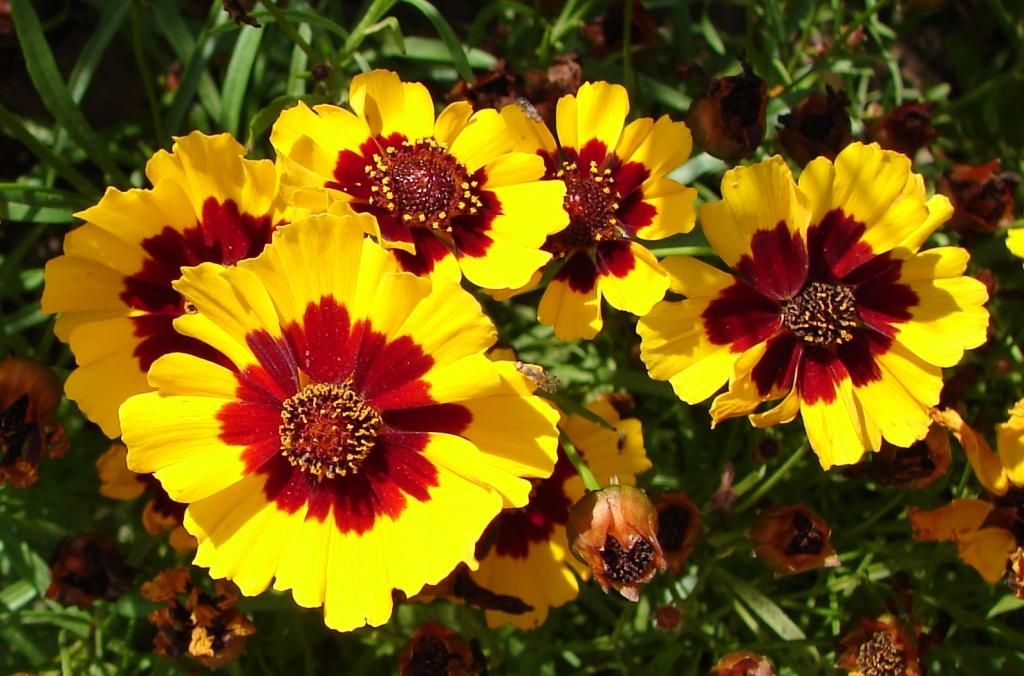
Coreopsis tinctoria (Tick seed) : medicinal properties in alcoholic extraction
Coreopsis tinctoria (Tick seed) — family Asteracées.
This database documents alcoholic (ethanol) extractions of active substances. Our monograph currently lists 13 indications in alcoholic extraction for this species. The monograph draws on 56 scientific references recorded for the species.
Therapeutic indications in alcoholic extraction:
Note: scientific reference excerpts are kept in their original language (most often English), without translation, to respect the source text of publications.
- Cancer : Plant part used: Flower. Documented pharmacological profile: 5-FU-(Fluoro-Uracile)-like.
According to Wufuer Y (2022): This study aimed to explore the anti-tumor effect of total flavonoids extracted from CT(CTFs) on lung cancer & the possible mechanism. Network pharmacological analysis on the active components identified 288 potential targets associated with lung cancer. According to Buweialiye H (2025): To validate the anti-hepatocellular carcinoma (HCC) efficacy of Coreopsis tinctoria Total Flavonoids (CTFs) & explore its underlying mechanisms using a comprehensive approach integrating network pharmacology & experimental verification, thereby supporting its potential as a multi-target therapeutic agent for liver cancer. - Liver disorders : Plant part used: Flower. Documented pharmacological profile: Silymarine-like.
According to Tsai JC (2017): This study was designed to investigate the hepatoprotective potentials of the ethanol extract from C. Histological analysis of liver was performed. According to Li YL (2014): Expression of hepatic ADRP increased in hyperlipemia mice. - Type II diabetes mellitus : Plant part used: Flower. Documented pharmacological profile: Acarbose-like.
According to Huangfu B (2024): Overall, oral intake of CT lowers blood glucose & improves insulin sensitivity in mice with obesity-induced hyperglycemia. The results indicated that WL significantly (p < 0.05) alleviated glucose intolerance & insulin resistance in obesity-induced hyperglycemia. According to Zhang Y (2019): Coreopsis tinctoria capitula (CTC) of the Compositae family has been used traditionally to treat various diseases in China, particularly type 2 diabetes mellitus (T2DM).
Further indications (including other extraction modes where applicable), dosages, precautions for use and full scientific references are available in the complete monograph.
Lapotitjéri di la Nati medicinal database
Ethanolic extracts of active substances — monographs, indications, dosages and references for healthcare professionals. Ethnopharmacologist Emmanuel Nossin.
→ Search Coreopsis tinctoria in the database (subscription required)
Photo credit : Photo by Ogrodnikk without modification (CC BY 4.0). License : CC BY 4.0.