Crinum asiaticum (Lily of St Joseph) | Lapo
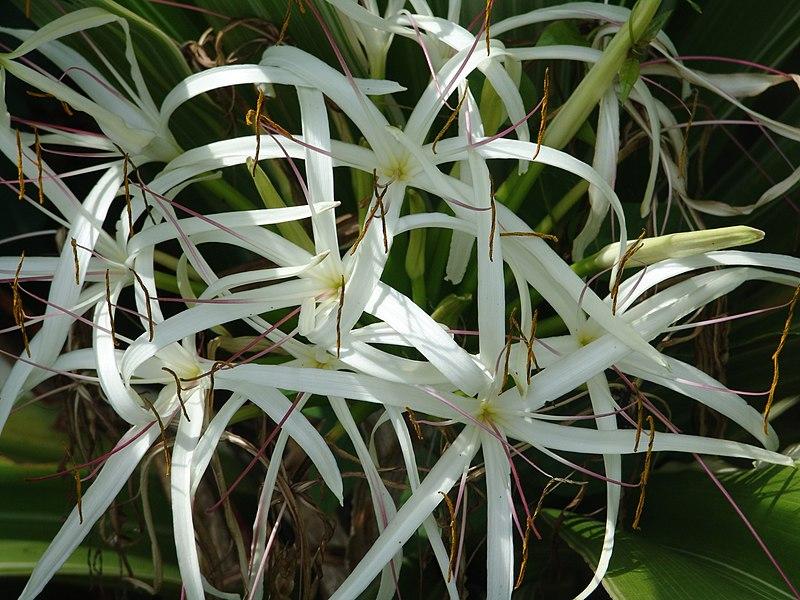
Crinum asiaticum (Lily of St Joseph) : medicinal properties in alcoholic extraction
Crinum asiaticum (Lily of St Joseph) — family Amaryllidacées.
This database documents alcoholic (ethanol) extractions of active substances. Our monograph currently lists 12 indications in alcoholic extraction for this species. The monograph draws on 45 scientific references recorded for the species.
Therapeutic indications in alcoholic extraction:
Note: scientific reference excerpts are kept in their original language (most often English), without translation, to respect the source text of publications.
- Bacterial infection : Plant part used: Sheet. Documented pharmacological profile: Chloramphénicol-like.
According to Dūmā-Riris I (2018): In addition, the antibacterial test showed that the widest inhibition of the leaves a&bulbs are 15.7 mm and 12.4 mm against Escherichia coli respectively & 12.3 mm & 11.5 mm against Staphylococcus aureus. The antioxidant, toxicity and antibacterial of the Crinum leaves & bulbs extracted with ethanol & treated by DPPH (2-2 diphenyl 1-1-picrylhydrazyl) method, Brine Shrimp Lethality Test (BSLT) method, & diffusion method respectively. According to Chairul (2010): The antibacterial activity of ethanolic extract of leaves & bulbs of Crinum asiaticum was tested against Propionibacterium acnes, Staphylococcus aureus & Staphylococcus epidermidis, pathogenic bacteria that cause acne. - Inflammatory conditions : Plant part used: Sheet. Documented pharmacological profile: Diclofénac-like, Prednisolone-like.
According to Samud AS (1999): In the present study, we examined the anti-inflammatory effects of this plant extract on carrageenan-induced hind paw oedema in mice. This may indicate that active anti-inflammatory compounds are present in the CFME. According to Kongkwamaroen C (2021): Results showed that 95% ethanolic extract of hot air oven-dried leaves had the highest anti-inflammatory activity & total phenolic & lycorine contents. - Pain, hyperalgesia : Plant part used: Sheet. Documented pharmacological profile: Morphine-like.
According to Asmawi MZ (2011): The extracts were investigated for their antinociceptive activity on rats using the carrageenan-induced paw hyperalgesia method. After 4 h, the pain threshold of each rat was measured. According to Rahman A (2013): In analgesic study, CS extract inhibited 42.34±3.20% of acetic acid induced pain at higher dose of 2.0 g/kg body weight.
Further indications (including other extraction modes where applicable), dosages, precautions for use and full scientific references are available in the complete monograph.
Lapotitjéri di la Nati medicinal database
Ethanolic extracts of active substances — monographs, indications, dosages and references for healthcare professionals. Ethnopharmacologist Emmanuel Nossin.
→ Search Crinum asiaticum in the database (subscription required)
Photo credit : Photo by Drew Avery without modification (CC BY 4.0). License : CC BY 4.0.