Cynara cardunculus (Artichoke) : medicinal properties | Lapo
Cynara cardunculus (Artichoke) : medicinal properties in alcoholic extraction
Cynara cardunculus (Artichoke) — family Asteracées.
Recognised external sources linked to this monograph: French Pharmacopoeia.
This database documents alcoholic (ethanol) extractions of active substances. Our monograph currently lists 12 indications in alcoholic extraction for this species. The monograph draws on 86 scientific references recorded for the species.
Therapeutic indications in alcoholic extraction:
Note: scientific reference excerpts are kept in their original language (most often English), without translation, to respect the source text of publications.
- Cancer : Plant part used: Sheet. Documented pharmacological profile: Pemetrexed-like.
According to Pulito C (2015): Malignant pleural mesothelioma is a poorly treated neoplasia arising from the pleural mesothelial lining. We found that C scolymus treatment affects strongly cell growth, migration & tumor engraftment of mesothelioma cell lines. According to Vigh S (2016): Chemomapping of artichoke (Cynara scolymus L.) leaf extracts revealed novel bioactive compounds with putative antitumor effects & therefore, we set to analyze the cytotoxic effects of aqueous & alcoholic extracts on T-47D & ZR-75-1 human breast cancer cell lines. - Infection : Plant part used: Sheet.
According to Marand SK (2016): In this regard, this study was performed with the purpose of assessing the antimicrobial activity of Artichoke on five human pathogenic species, including Escherichia coli, Staphylococcus aureus, Bacillus Cereus, Salmonella typhi, and Candida albicans. The results of MIC of the aqueous extract of Artichoke for Salmonella typhi, Escherichia coli, Staphylococcus aureus, Bacillus Cereus, and Candida albicans were 256, 32, 64, 64 and 32mg/ml, respectively, and the MIC of the ethanolic extract were 128, 32, 16, 16, and 16mg/ml, respectively. - Hepatitis, cirrhosis, fatty liver, poisoning (chemical or drug-related)
with elevated ALT levels) : Plant part used: Sheet. Documented pharmacological profile: Bifendate-like.
According to Ahmadi A (2019): Also, DZN led to the reduction of hepatic CAT, SOD, & Vit C in the DZN group relative to the control group. In the present study, the hepatoprotective effects of Cynara scolymus leaf extract against DZN-induced liver injury were examined. According to Rangboo V (2016): Comparing changes in study markers following interventions showed improvement in liver enzymes.
Further indications (including other extraction modes where applicable), dosages, precautions for use and full scientific references are available in the complete monograph.
Lapotitjéri di la Nati medicinal database
Ethanolic extracts of active substances — monographs, indications, dosages and references for healthcare professionals. Ethnopharmacologist Emmanuel Nossin.
→ Search Cynara cardunculus in the database (subscription required)
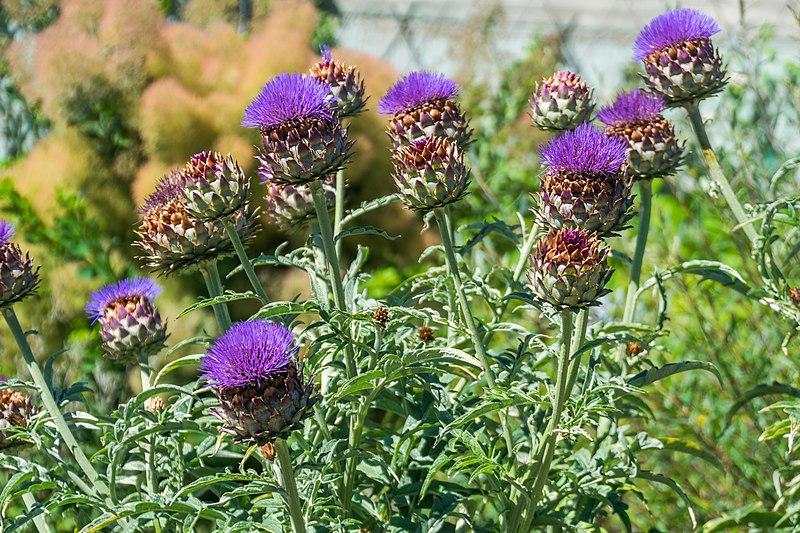
Photo credit : Photo by Krzysztof Golik without modification (CC BY-SA 4.0). License : CC BY-SA 4.0.