Hibiscus syriacus (Syrian Rose) : medicinal properties | Lapo
Hibiscus syriacus (Syrian Rose) : medicinal properties in alcoholic extraction
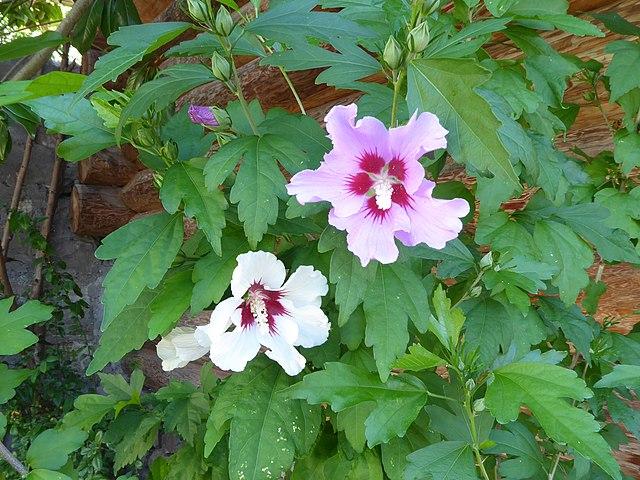
Hibiscus syriacus (Syrian Rose) — family Malvacées.
This database documents alcoholic (ethanol) extractions of active substances. Our monograph currently lists 10 indications in alcoholic extraction for this species. The monograph draws on 59 scientific references recorded for the species.
Therapeutic indications in alcoholic extraction:
Note: scientific reference excerpts are kept in their original language (most often English), without translation, to respect the source text of publications.
- Oxidative stress : Plant part used: Stem. Documented pharmacological profile: Acide gallique-like.
Selon Molagoda I.M.N (2020) : petals (PS) in oxidative stress conditions have not been studied. In this study, we evaluated the cytoprotective effect of PS against H2O2-induced oxidative stress in HaCaT keratinocytes. Selon Punasiya R (2014) : It is used in tradition system of medicine & exibits diuretic, expectorant, stomachic, ophthalmic, antipyretic, anti-Inflammatory activity, antioxidant, demulcent, emollient, febrifuge, haemostatic & antifungal agent. - Osteoarthritis, arthritis, rheumatism, oedema : Plant part used: Flower. Documented pharmacological profile: Dexamethasone-like.
Selon Lee CM (2023) : This study aimed to investigate the anti-inflammatory effect of HSE in LPS-stimulated Raw 264.7 cells. extract (HSE) traditionally has been recognized as promising natural resources for the treatment of diseases related to hyper-inflammation. Selon KIM HN (2018) : In this study, we evaluated the anti-inflammatory effect of 70% ethanol extracts from the root of HS (RHS-E70) & elucidated the potential signaling pathway in LPS-stimulated RAW264.7 cells. - Cancer : Plant part used: Sheet. Documented pharmacological profile: 5-FU (Fluoro-Uracile)-like.
Selon Cheng Y (2008) : The IC (50) values of HS-AE on A549 (adenocarcinoma), H209 (squamous cell carcinoma) or H661 (large cell carcinoma) lung cancer cells ranged from 14 to 22 microg/ml after 48 hours of treatment. syriacus (HS-AE) exhibited a better cytotoxic effect on lung cancer cells than its methanol extract (HS-ME) or water extract (HS-WE). Selon Xu XY (2022) : The previous study suggested that the callus culture is useful method for obtaining the anti-inflammatory ingredients from HS Purpose In the present study, we aimed to investigate the effect of HCE on the colorectal cancer (CRC) & its underlying mechanism of action using HT-29 cells & thymus-deficient mice bearing HT-29 xenografts.
Further indications (including other extraction modes where applicable), dosages, precautions for use and full scientific references are available in the complete monograph.
Lapotitjéri di la Nati medicinal database
Ethanolic extracts of active substances — monographs, indications, dosages and references for healthcare professionals. Ethnopharmacologist Emmanuel Nossin.
→ Search Hibiscus syriacus in the database (subscription required)
Photo credit : Photo by Syrio without modification (CC BY-SA 4.0). License : CC BY-SA 4.0.