
Hymenocallis littoralis (Lonyon-di-lis) | Lapo
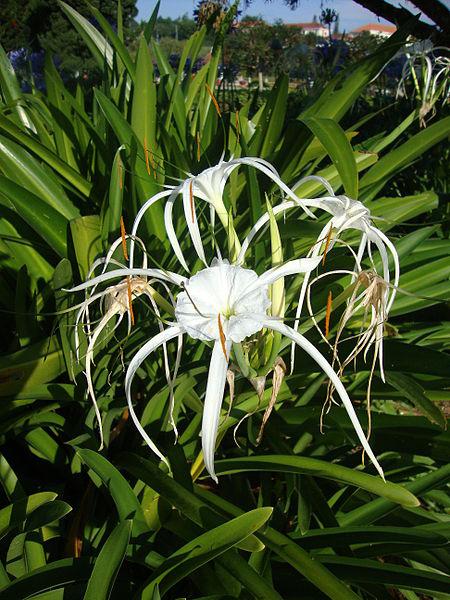
Hymenocallis littoralis (Lonyon-di-lis) : medicinal properties in alcoholic extraction
Hymenocallis littoralis (Lonyon-di-lis) — family Amaryllidacées.
This database documents alcoholic (ethanol) extractions of active substances. Our monograph currently lists 5 indications in alcoholic extraction for this species. The monograph draws on 69 scientific references recorded for the species.
Therapeutic indications in alcoholic extraction:
Note: scientific reference excerpts are kept in their original language (most often English), without translation, to respect the source text of publications.
- Bacterial infection : Plant part used: Stem. Documented pharmacological profile: Ciprofloxacine-like.
Selon SINGH G (2016) : The present study reports that the screening of antimicrobial activity of Tinospora cordifolia & Hymenocallis littoralis, medicinal plant’s extracts with various different plant parts such as bulb, root, leaves & stem against the opportunistic organisms such as Staphylococcus aureus, Escherichia coli, Pseudomonas aeruginosa, Salmonella Typhimurium & fungi Candida albicans using agar well diffusion method & Minimum inhibitory concentration (MIC). littoralis against Escherichia coli followed Staphylococcus aureus, Pseudomonas aeruginosa, Salmonella Typhimurium, Candida albicans produced highest zone of inhibition at 24mm followed by 21mm, 18 mm, 17mm & 17mm respectively. Selon Noormi R (2012) : Gram positive bacteria (Micrococcus spp, Bacillus subtilis, Bacillus thuringiensis, Staphylococcus aureus), Gram negative bacteria Escherichia coli (normal), Escherichia coli (hospital strain) Pseudomonas aeruginosa, Salmonella spp, Proteus mirabilis, Klebsiella pneumoniae), & fungal strains (Candida albicans, Aspergillus niger). - Rheumatism, osteoarthritis, arthritis, oedema : Plant part used: Flower. Documented pharmacological profile: Diclofenac-like.
Selon Karthikeyan R (2016) : These results show that ethanol extract of HL has anti-inflammatory properties & can reduce inflammatory injury & tissue damage. The successive ethanol extract has shown potent anti-inflammatory activity by HRBC membrane stabilization method with 83.46% & 84.72% for 100 & 500 μg/ml, respectively. Selon Karthikeyan R (2016) : Karthikeyan R et al, Anti-Arthritic Activity of Ethanolic Extract of Hymenocallis littoralis (Jacq.) Salisb. - Cancer : Plant part used: Sheet.
Selon Wang A (2018) : The present study demonstrated that alkaloids & carbinol extracts from lily inhibited the proliferation of gastric carcinoma SGC-7901 cells by arresting cells in the G2/M phase. Selon Habartova K (2016) : In addition, Amaryllidaceae alkaloids have frequently been identified as having promising cytotoxic properties against cancer cell lines. While follow- up studies have repeatedly shown that Amaryllidaceae alkaloids & their derivatives demonstrate antiproliferative, cytotoxic & apoptosis-inducing activity, the mechanisms remain unclear.
Further indications (including other extraction modes where applicable), dosages, precautions for use and full scientific references are available in the complete monograph.
Lapotitjéri di la Nati medicinal database
Ethanolic extracts of active substances — monographs, indications, dosages and references for healthcare professionals. Ethnopharmacologist Emmanuel Nossin.
→ Search Hymenocallis littoralis in the database (subscription required)
Photo credit : Photo by Prenn without modification (CC BY 3.0). License : CC BY 3.0.