
Lonicera japonica (Honeysuckle) : medicinal properties | Lapo
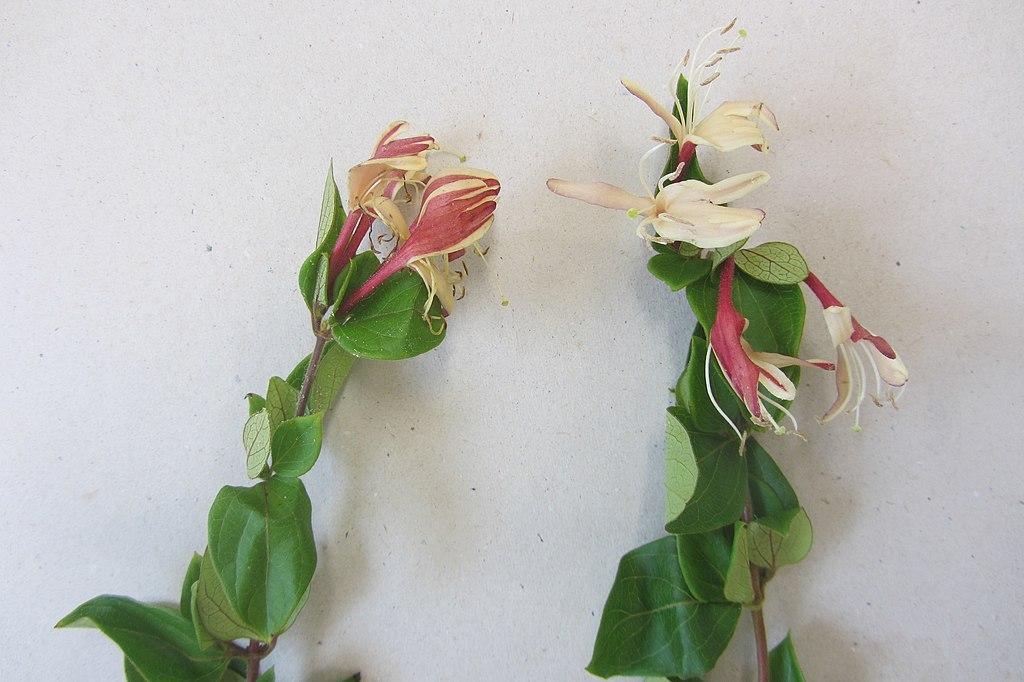
Lonicera japonica (Honeysuckle) : medicinal properties in alcoholic extraction
Lonicera japonica (Honeysuckle) — family Caprifoliacées.
This database documents alcoholic (ethanol) extractions of active substances. Our monograph currently lists 11 indications in alcoholic extraction for this species. The monograph draws on 69 scientific references recorded for the species.
Therapeutic indications in alcoholic extraction:
Note: scientific reference excerpts are kept in their original language (most often English), without translation, to respect the source text of publications.
- Skin allergy : Plant part used: Flower (flower bud). Documented pharmacological profile: Loratidine-like.
Selon Yang X (2023) : The anti-diabetic, anti-Alzheimer's disease, anti-depression, antioxidative, immunoregulatory, anti-tumor, anti-inflammatory, anti-allergic, anti-gout, & anti-alcohol-addiction effects of LJ can also be explained by bioactive polysaccharides isolated from this plant. Selon Bai X (2020) : However, it remains unknown in the immunomodulation of LJ polysaccharides (LJP) on allergic rhinitis (AR). - Asthma, allergic bronchitis : Plant part used: Flower (flower bud). Documented pharmacological profile: Montelukast-like.
Selon Hong SH (2013) : japonica ethanolic extracts in a murine model of ovalbumin-induced asthma, in which intra-peritoneal (IP) injections & aerosol ovalbumin delivery were used to induce allergic asthma. Selon Bai X (2020) : However, it remains unknown in the immunomodulation of LJ polysaccharides (LJP) on allergic rhinitis (AR). - Cancer : Plant part used: Flower (flower bud). Documented pharmacological profile: Lenvatinib-like.
(2019) : Liver fibrosis is a worldwide clinical issue that generally causes hepatic cirrhosis. Liver fibrosis was induced in mice by intraperitoneal injection of 2 ml/kg CCl4 twice a week for 4 weeks. Selon Shen W (2023) : Here, we found that 3,4-di- O -caffeoylquinic acid isobutyl ester effectively inhibited the proliferation & migration of hepatocellular carcinoma cells, & it displayed less toxicity to a normal liver cell line.
Further indications (including other extraction modes where applicable), dosages, precautions for use and full scientific references are available in the complete monograph.
Lapotitjéri di la Nati medicinal database
Ethanolic extracts of active substances — monographs, indications, dosages and references for healthcare professionals. Ethnopharmacologist Emmanuel Nossin.
→ Search Lonicera japonica in the database (subscription required)
Photo credit : Photo by Ewan Cameron without modification (CC BY 4.0). License : CC BY 4.0.