
Ocimum gratissimum (Fonbazen) : medicinal properties | Lapo
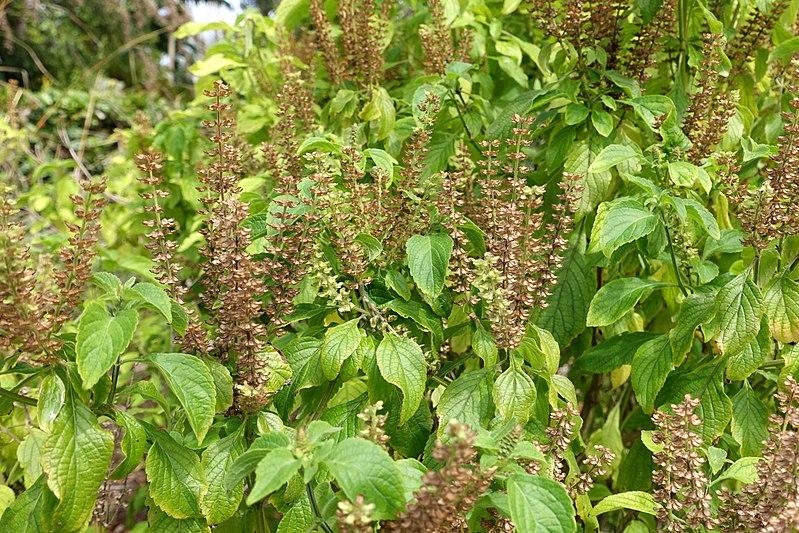
Ocimum gratissimum (Fonbazen) : medicinal properties in alcoholic extraction
Ocimum gratissimum (Fonbazen) — family Lamiacées.
Recognised external sources linked to this monograph: TRAMIL.
This database documents alcoholic (ethanol) extractions of active substances. Our monograph currently lists 21 indications in alcoholic extraction for this species. The monograph draws on 77 scientific references recorded for the species.
Therapeutic indications in alcoholic extraction:
Note: scientific reference excerpts are kept in their original language (most often English), without translation, to respect the source text of publications.
- Plant fungi – carrot : Plant part used: Pesticidal and veterinary use. Documented pharmacological profile: Dowicide-like.
Selon Okoi AI (2013) : The microbial pathogens isolated were Rhizopus stolonifer, Fusarium culmorum, Sclerotinia sclerotiorum and Penicillium expansum. meleguetta is comparable with Dowicide in the in vitro inhibition of mycelia growth of the fungi. Selon Okigbo RN (2006) : flavus, Fusarium oxysporum Rhizopus stolonifer, Botryodiplodia theobromae & Penicillium chrysogenum. - Enterococcus faecalis, E. coli, P. aeruginosa, and S. aureus : Plant part used: Sheet. Documented pharmacological profile: Ciprofloxacine-like.
Selon REGASSA HUNDE M (2025) : However, the medicinal plants of Ocimum gratissimum, which are used for two Gram-positive (Staphylococcus aureus & Enterococcus faecalis) & two Gram-negative (Escherichia coli & Pseudomonas aeruginosa) bacteria, were collected from Jimma town of Ethiopia. Antimicrobial resistance (AMR) among bacteria to conventional antimicrobials has become a serious challenge & threat worldwide. Selon NWEZE E (2009) : (Lamiaceae), used in traditional medicine for the treatment of several ailments such as urinary tract, wound, skin and gastrointestinal infections, was evaluated for its antibacterial properties against four clinical bacteria isolates namely: Escherichia coli, Proteus mirabilis, Staphylococcus aureus and Pseudomonas aeruginosa and the antifungal properties using a clinical isolate of Candida albicans. - Bacterial infection : Plant part used: Sheet. Documented pharmacological profile: Gentamycine-like.
Selon OLUBUKOLA JO (2011) : Methodology: Crude extracts of fresh leaves of Ocimum gratissimum, Psidium guajava, Vernonia amygdalina, Kigelia africana, Azadirachta indica, Pistia stratiotes, Euphorbia hirta, bulb of Allium sativum & Zingiber officinale & Curcuma longa, were evaluated using the agar diffusion assay method & minimal inhibitory concentration (MIC) to determine the antibacterial activities against Vibrio Cholerae, Escherichia Coli & Salmonella Sp. Was not inhibited by ethanolic extracts of Euphorbia hirta and Curcuma longa, both water and ethanolic extracts of others inhibited the growth of Vibrio Cholerae, Escherichia coli and salmonella Sp to varying degree. Selon Regassa Hunde (2024) : The emergence of antimicrobial resistance (AMR) in bacteria is a significant risk & issue associated with conventional antibiotic treatment.
Further indications (including other extraction modes where applicable), dosages, precautions for use and full scientific references are available in the complete monograph.
Lapotitjéri di la Nati medicinal database
Ethanolic extracts of active substances — monographs, indications, dosages and references for healthcare professionals. Ethnopharmacologist Emmanuel Nossin.
→ Search Ocimum gratissimum in the database (subscription required)
Photo credit : Photo by Daderot without modification (CC BY 4.0). License : CC BY 4.0.