Acanthus montanus (Zèb-dôwlis) : vertus médicinales en extraction alcoolique
Acanthus montanus (Zèb-dôwlis) : vertus médicinales en extraction alcoolique
Acanthus montanus (Zèb-dôwlis) — famille Acanthacées.
Cette base documente les extractions alcooliques (éthanol) des substances actives. Notre monographie recense actuellement 3 indications en extraction alcoolique pour cette espèce. La monographie s’appuie sur 18 références scientifiques enregistrées pour l’espèce.
Indications thérapeutiques en extraction alcoolique :
Note : les extraits de références scientifiques sont conservés dans leur langue d’origine (le plus souvent l’anglais), sans traduction, afin de respecter le texte source des publications.
- Infection bactérienne : Partie usitée : Feuille.
Selon Igwe OU (2014) : The extract exhibited marked antibacterial activity against Staphylococcus aureus, Enterococcus faecalis, Bacillus cereus, Escherichia coli, Salmonella typhi & Proteus mirabilis. The presence of these bioactive compounds in the leaves of AM could be the reason behind its bacterial extermination effects as well as its concomitant use in the treatment of diseases & infections in herbal medicine in Nigeria. Selon Okoli CO (2008) : The aqueous root extract (obtained by hot water maceration of the root powder) was studied for effects on the growth of clinically isolated strains of Pseudomonas aeruginosa & Staphylococcus aureus. - Troubles hépatiques : Partie usitée : Parties aériennes.
Selon Patric-Iwuanyanwu K C (2008) : Histopathological examinations in rats administered CCl4-alone showed severe hepatic damage to the liver. the hepatoprotective effects of aqueous & alcoholic extracts of stem & leaf of Acanthus montanus pre-treatment against carbon tetrachloride (CCl4,)-induced liver damage in wistar albino rats were investigated. Selon Omekannaya B (2023) : The result indicates that the leaf extract of Acanthus montanus protected the liver against hepatotoxicity effect of paracetamol & also has shown to be safe foe human consumption. - Diabète mellitus de type I : Partie usitée : Feuille. Association synergique mentionnée : Asystasia gangetica, association synergique avec EMILIA COCCINEA-(Sims)-G ; DON (Feuille), association synergique avec HIBISCUS ROSA-SINENSIS-L, var. rosa-sinensis (Feuille).
Selon Ojiako OA (2015) : The present study ascertained the capacities of crude aqueous & ethanolic leaf extracts of Acanthus Montanus, Asystasia gangetica, Emilia coccinea & Hibiscus rosa sinensis, as well as their Combinatorial formulations to ameliorate hyperglycemia in Type I diabetic rats. Methods: Hyperglycemia was induced by single intra-peritoneal injection of alloxan monohydrate in phosphate buffer saline (PBS) solution (pH = 7.4) dosage = 120 mg/kg; b/w. Selon Ukwe CV (2011) : Hypoglycemic activity of Acanthus montanus, used locally in Nigeria to “cure” diabetes, was evaluated.
D’autres indications (y compris d’autres modes d’extraction le cas échéant), posologies, précautions d’emploi et le détail des références scientifiques sont disponibles dans la fiche monographique complète.
Base médicinale Lapotitjéri di la Nati
Extraits éthanoliques des substances actives — monographies, indications, posologies et références pour professionnels de santé. Ethnopharmacologue Emmanuel Nossin.
→ Rechercher Acanthus montanus dans la base (abonnement requis)
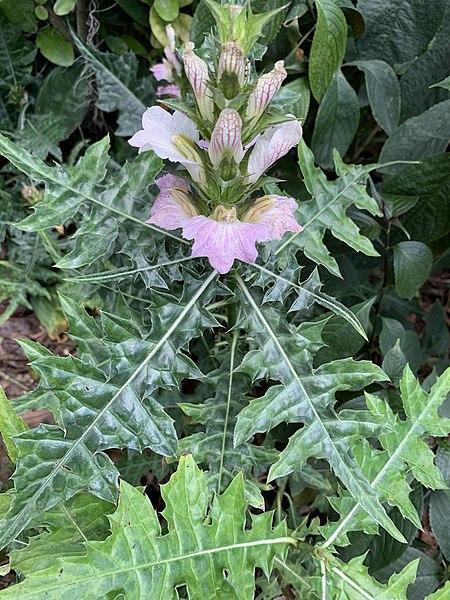
Crédit photo : Photo de Katherine Wagner-Reiss sans modification (CC BY-SA 4.0). Licence : CC BY-SA 4.0.