Plectranthus amboinicus (Gwo-diten) : medicinal properties | Lapo
Plectranthus amboinicus (Gwo-diten) : medicinal properties in alcoholic extraction
Plectranthus amboinicus (Gwo-diten) — family Lamiacées.
Recognised external sources linked to this monograph: TRAMIL and French Pharmacopoeia.
This database documents alcoholic (ethanol) extractions of active substances. Our monograph currently lists 23 indications in alcoholic extraction for this species. The monograph draws on 75 scientific references recorded for the species.
Therapeutic indications in alcoholic extraction:
Note: scientific reference excerpts are kept in their original language (most often English), without translation, to respect the source text of publications.
- Cancer : Plant part used: Sheet. Documented pharmacological profile: Doxorubicine-Cisplatine-like.
Selon Gurgel AP (2009) : The antitumor effect was evaluated in an in vivo experimental study, using the following tumors: Sarcoma-180 and Erlich Ascite carcinoma. amboinicus in an attempt to determine whether the medicinal uses are supported by pharmacological effects. Selon Manurung K (2020) : Methods : Anticancer activity testing was carried out by in silico against several cancer receptor & antioxidant activity testing was carried out by in vitro using the 1,1-Diphenyl-2-Picryhydrazil method. - Bacterial infection : Plant part used: Root. Documented pharmacological profile: Ampicilline-like.
Selon MUNIANDY K (2014) : aromaticus demonstrated good antibacterial activity against Escherichia coli, Proteus mirabilis & Staphylococcus aureus & moderate activity against Pseudomonas aeruginosa & Klebsiella pneumonia. This antibacterial study indicates the crude extract as a bioactive compound that could be useful to develop new antimicrobial agents & it can be used to assist us in reducing the burden of cost & drug resistance. Selon Krithiga N (2012) : The antimicrobial activity of C aromaticus & L inermis was analysed against different pathogens namely Aeromonas hydrophila, Escherichia coli, Edverchila tarda, Enterobacter aerogenes, flavobacterium by using alcoholic & water extracts. - Cabbage worm pest control : Plant part used: Pest control and veterinary products. Documented pharmacological profile: Chlorfluazuron-like.
Selon JAVIER AMV (2018) : Ethanolic extracts from five plant species «lantana", Lantana camara (Linnaeus); oregano, Coleus amboinicus Alpinia pyramidata (Blume), Curcuma longa (Linnaeus); & Catharanthus roseus (Linn.)-were evaluated for their insecticidal activities including contact and residual toxicity, antifeedant activity, and growth regulator activity against third larval instar of cabbage worm, Crocidolomia pavonana (Lepidoptera). Among the five ethanolic extracts, C longa was the most toxic to cabbage worm when applied topically (LD 50 =51.00 µg/g) and through leaf residue film method (LC 50 =116.73 µg/mL) at 72 h after treatment.
Further indications (including other extraction modes where applicable), dosages, precautions for use and full scientific references are available in the complete monograph.
Lapotitjéri di la Nati medicinal database
Ethanolic extracts of active substances — monographs, indications, dosages and references for healthcare professionals. Ethnopharmacologist Emmanuel Nossin.
→ Search Plectranthus amboinicus in the database (subscription required)
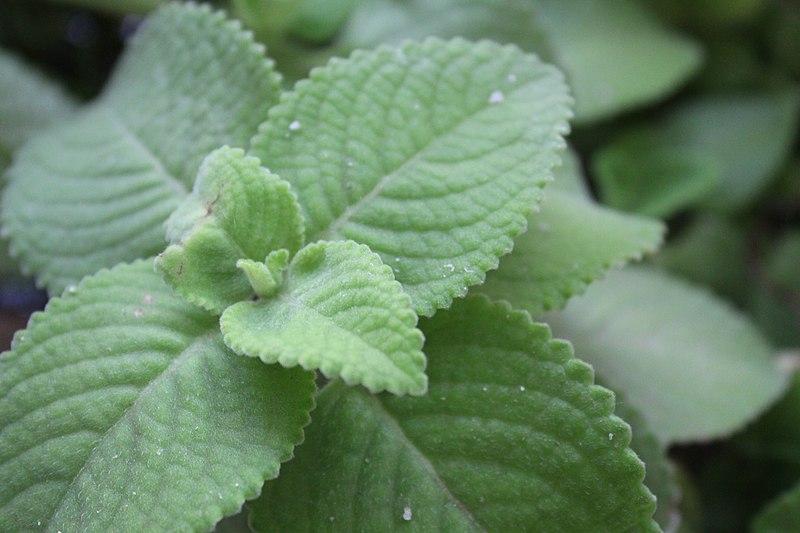
Photo credit : Photo by TNSE prabhakar SLM without modification (CC BY-SA 4.0). License : CC BY-SA 4.0.