Polyscias fructicosa (Gwo Womaren) : medicinal properties | Lapo
Polyscias fructicosa (Gwo Womaren) : medicinal properties in alcoholic extraction
Polyscias fructicosa (Gwo Womaren) — family Araliacées.
This database documents alcoholic (ethanol) extractions of active substances. Our monograph currently lists 9 indications in alcoholic extraction for this species. The monograph draws on 66 scientific references recorded for the species.
Therapeutic indications in alcoholic extraction:
Note: scientific reference excerpts are kept in their original language (most often English), without translation, to respect the source text of publications.
- Bronchial asthma : Plant part used: Sheet. Documented pharmacological profile: Ketotifène-like, Cromoglycate-like.
(2016) : Conclusion: PFE has anti-asthmatic, antihistaminic, & mast cell stabilization effect making it useful in traditional asthma management. PFE significantly inhibited (60.4 ± 8.3%) contractile responses of histamine & produced significant inhibition (56-79%: p ≤ 0.001) of mast cell degranulation. Selon Koffuor GA (2014) : PFE showed no significant toxic effect at lower doses (NOAEL: < 1000 mg/kg) Conclusion: The ETOH leaf extract of PF reduces white blood cell count & its differentials in blood, hence its anti-inflammatory effect; a useful property in the treatment of asthma. - Osteoarthritis, rheumatism, oedema, arthritis : Plant part used: Sheet. Documented pharmacological profile: Phenylbutazone-like.
Selon Rarison R.H.G (2023) : Additionally, lipophilic fractions from PFL showed anti-inflammatory potential in downregulating the level of pro-inflammatory factors in LPS-treated macrophages. This study, integrating network pharmacology analysis with in silico & in vitro approaches, aimed to elucidate the antioxidant & anti-inflammatory capacities of lipophilic extracts from PFL. Selon Bernard BM (1998) : The n-butanol extract of the leaves Polyscias fruticosa (L) Harms (Araliaceae) was tested for its anti-inflammatory activity plethysmometrically in egg white induced paw oedema in rats, antipyretic activity & analgesic activity by writhing method phenylbutazone, paracetamol & aspirin were used as positive controls for anti-inflammatory, antipyretic & analgesic activity screening studies receptivity. - Bacterial infection : Plant part used: Sheet. Documented pharmacological profile: Amoxicilline-like.
Selon Titova, M.V (2023) : In antibacterial tests, the minimum inhibitory concentrations (MICs) of cell biomass extracts against the most common pathogens Staphylococcus aureus, Methicillin-Resistant strain MRSA, Pseudomonas aeruginosa, & Escherichia coli varied within 250-2000 µg mL-1 which was higher compared to extracts of greenhouse plant leaves (MIC = 4000 µg mL-1). Polyscias fruticosa (L.) Harms, or Ming aralia, is a medicinal plant of the Araliaceae family, which is highly valued for its antitoxic, anti-inflammatory, analgesic, antibacterial, anti-asthmatic, adaptogenic, & other properties. Selon Ashmawy (2020) : Phytochemical investigations of Polyscias species revealed the isolation of about 97 chemical compounds from various chemical classes, including saponins as major constituents; Biological studies demonstrated that Polyscias extracts & their bioactive compounds possess antibacterial, antifungal, cytotoxic, immuno-stimulant, wound-healing & anti-asthmatic activities;.
Further indications (including other extraction modes where applicable), dosages, precautions for use and full scientific references are available in the complete monograph.
Lapotitjéri di la Nati medicinal database
Ethanolic extracts of active substances — monographs, indications, dosages and references for healthcare professionals. Ethnopharmacologist Emmanuel Nossin.
→ Search Polyscias fructicosa in the database (subscription required)
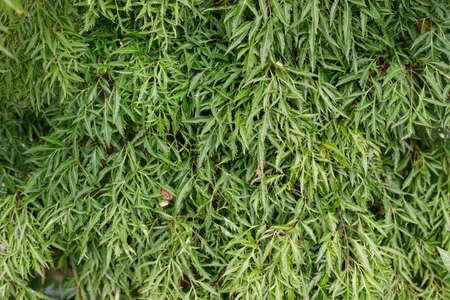
Photo credit : Photo de Mauricio Mercadante sans modification. License : CC BY-NC-SA 2.0.