Brassica oleracea (Chou-Ponmé) : vertus médicinales en extraction alcoolique
Brassica oleracea (Chou-Ponmé) : vertus médicinales en extraction alcoolique
Brassica oleracea (Chou-Ponmé) — famille Brassicacées.
Cette base documente les extractions alcooliques (éthanol) des substances actives. Notre monographie recense actuellement 16 indications en extraction alcoolique pour cette espèce. La monographie s’appuie sur 61 références scientifiques enregistrées pour l’espèce.
Indications thérapeutiques en extraction alcoolique :
Note : les extraits de références scientifiques sont conservés dans leur langue d’origine (le plus souvent l’anglais), sans traduction, afin de respecter le texte source des publications.
- Troubles hépatiques : Partie usitée : Feuille. Association synergique mentionnée : Persea americana-huile fixe, Zingiber officinale-rhizome.
Selon Al-Howiriny T (s.d.) : CCl 4 induced hepatotoxicity in all treated animals was evident by elevated serum GOT, GPT, ALP, GGT and bilirubin levels and simultaneous fall in NP-SH and increased MDA activities in liver tissue. The BO extract at the doses of 150 & 300 mg/kg produced significant hepatoprotection by decreasing the activity of serum enzymes, bilirubin, while it significantly increased the levels of NP-SH & decreased MDA of liver tissue. Selon Ahmed MS (2013) : increases in Serum Glutamate Pyruvate Transaminase (SGPT), Serum Glutamate Oxaloacetate Transaminase (SGOT), Alanine Phosphatase (ALP), Serum Bilirubin & decrease in Total proteins content, which were restored towards normalization in extracts treated rats. - Cancer : Partie usitée : floret.
Selon Hashem SA (2012) : When myrosinase hydrolysate was tested for cytotoxic activity on the colon cancer cell line it showed very high activity – 95% lethality up to 0.78 µg/mL. The crude extract (80% alcohol extract) of broccoli florets was examined for cytotoxic activity against different human cancer cell lines, it showed good inhibition of colon cancer (IC(50) 3.88 µg/mL). Selon Lavanya B (2011) : Brassica oleracea is extensively used as Anthelmintic, healing of peptic ulcers, slowing down growing cancer cells. - Diabète mellitus de type II : Partie usitée : Feuille. Profil pharmacologique documenté : Metformine-like.
Selon Huchalah V (2008) : In the present investigation its antidiabetic potency was tested on the serum insulin level in experimental diabetes in Wistar rats. There was significant increase in the serum insulin level compared to diabetic group (p<0.05). Selon Assad T (2014) : capitata (MEB) was evaluated in alloxan-induced diabetic rabbits.
D’autres indications (y compris d’autres modes d’extraction le cas échéant), posologies, précautions d’emploi et le détail des références scientifiques sont disponibles dans la fiche monographique complète.
Base médicinale Lapotitjéri di la Nati
Extraits éthanoliques des substances actives — monographies, indications, posologies et références pour professionnels de santé. Ethnopharmacologue Emmanuel Nossin.
→ Rechercher Brassica oleracea dans la base (abonnement requis)
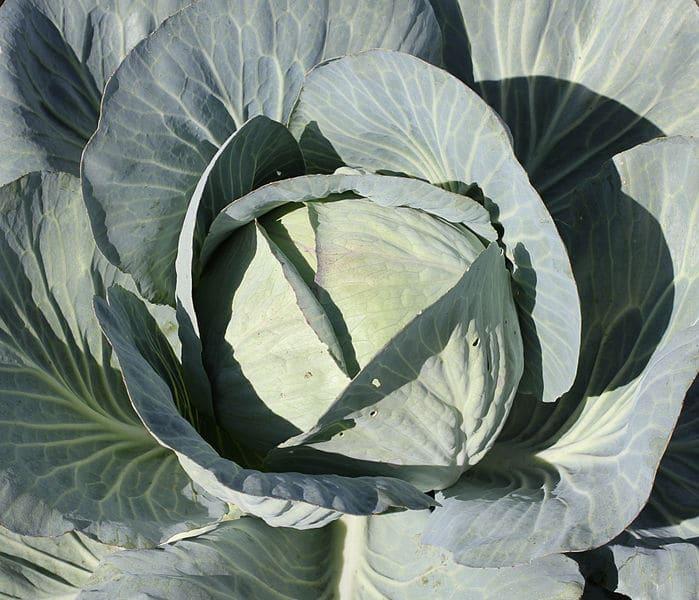
Crédit photo : Photo de George Chernilevsky sans modification (CC BY-SA 2.5). Licence : CC BY-SA 2.5.