
Symphytum officinale (Comfrey) : medicinal properties | Lapo
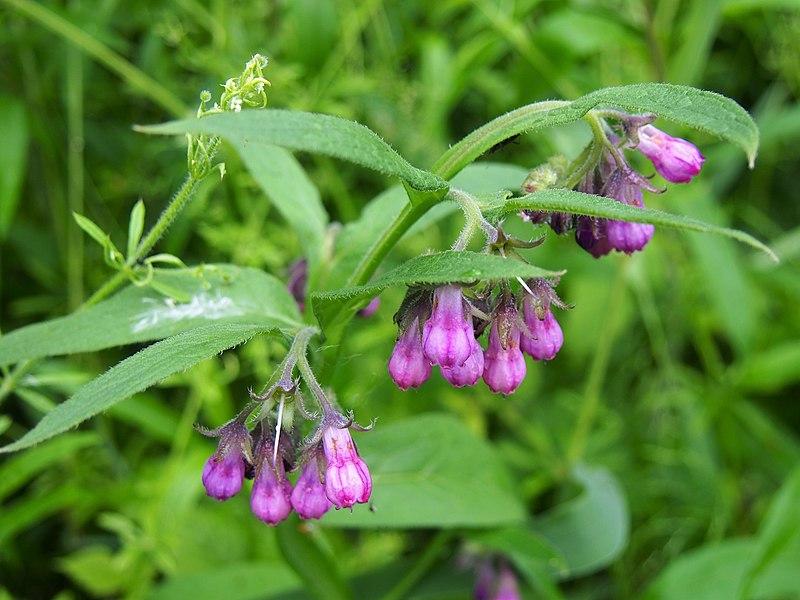
Symphytum officinale (Comfrey) : medicinal properties in alcoholic extraction
Symphytum officinale (Comfrey) — family Boraginacées.
Recognised external sources linked to this monograph: TRAMIL and French Pharmacopoeia.
This database documents alcoholic (ethanol) extractions of active substances. Our monograph currently lists 5 indications in alcoholic extraction for this species. The monograph draws on 62 scientific references recorded for the species.
Therapeutic indications in alcoholic extraction:
Note: scientific reference excerpts are kept in their original language (most often English), without translation, to respect the source text of publications.
- Inflammatory condition : Plant part used: Root. Documented pharmacological profile: Diclofenac-like.
Selon VOSTINARU O (2017) : The anti-inflammatory effect of the hydro-Glycero- alcoholic extract administered orally was assessed by the carrageenan-induced rat paw oedema method while the antinociceptive effect was determined by the acetic acid induced writhing test in mice & by Randall Selitto test in rats. officinale extract (500 mg/kg, orally) reduced significantly & dose-dependently oedema by 55.6% at 1h after inflammation was induced. Selon Kumar DTY (2020) : The present study was carried out to assess the possible anti-inflammatory effect of methanolic extract of roots of S officinale MERSO) using egg white-induced edema in rats (acute model of inflammation). - Bacterial infection : Plant part used: Sheet.
Selon Benedek B (2010) : In conclusion, the comfrey root fluid extract contained in Kytta-Salbe f & Kytta-Plasma f was not mutagenic in the bacterial reverse mutation assay. The aim of this study was to demonstrate the absence of genotoxic effects of this special extract in the bacterial reverse mutation assay (Ame’s test). Selon Sumathi S (2011) : The present study was carried out antibacterial activity of Symphytum officinale by Streak plate method using different solvent such as ethanol, methanol, ethyl acetate & chloroform. - Pain, hyperalgesia : Plant part used: Root.
Selon Pabst H (2012) : Secondary measures included back pain at rest, pressure algometry, consumption of analgesic medication, functional impairment measured with Oswestry Disability Index, and global assessment of response. This randomised, multicentre, double‐blind, three‐arm, placebo‐controlled trial compared a topical combination of 35% comfrey root extract plus 1.2% methyl nicotinate versus a single preparation of methyl nicotinate or placebo cream for relief of acute upper or low back pain. Selon Masoudi M (2017) : Result: the result of this study indicated that Symphytum officinale possess anti-cancer & osteoarthritic pain activity.
Further indications (including other extraction modes where applicable), dosages, precautions for use and full scientific references are available in the complete monograph.
Lapotitjéri di la Nati medicinal database
Ethanolic extracts of active substances — monographs, indications, dosages and references for healthcare professionals. Ethnopharmacologist Emmanuel Nossin.
→ Search Symphytum officinale in the database (subscription required)
Photo credit : Photo by Agnieszka Kwiecień without modification (CC BY-SA 4.0). License : CC BY-SA 4.0.