
Tabebuia rosea (Pwayé-wôz) : medicinal properties | Lapo
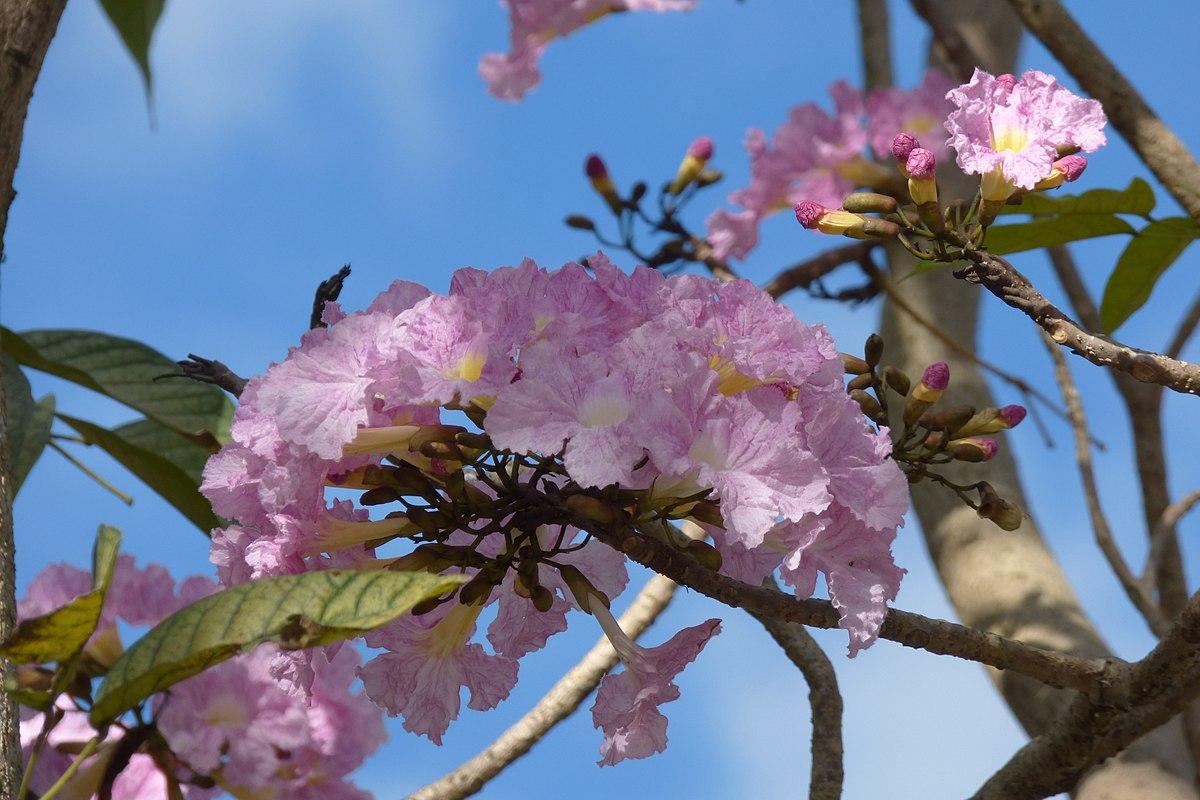
Tabebuia rosea (Pwayé-wôz) : medicinal properties in alcoholic extraction
Tabebuia rosea (Pwayé-wôz) — family Bignoniacées.
This database documents alcoholic (ethanol) extractions of active substances. Our monograph currently lists 5 indications in alcoholic extraction for this species. The monograph draws on 25 scientific references recorded for the species.
Therapeutic indications in alcoholic extraction:
Note: scientific reference excerpts are kept in their original language (most often English), without translation, to respect the source text of publications.
- Bacterial infection : Plant part used: Sheet. Documented pharmacological profile: Pénicilline-like, Streptomycine-like.
Selon Sathya M (2008) : In vitro antibacterial studies on the ethanolic leaf extracts were carried out on ten medically important bacterial strains, including Salmonella typhimurium, Pseudomonas aeruginosa, Klebsiella pneumonia, Escherichia coli, Pseudomonas sp. Staphylococcus epidermis, Micrococcus luteus, Staphylococcus aureus, Streptococcus sp. Selon Franco Ospina LA (2013) : Both Tabebuia species revealed significant antibacterial activity against Staphylococcus aureus ATCC 25923. - Osteoarthritis, arthritis, rheumatism, oedema : Plant part used: Bark (inner). Documented pharmacological profile: Indometacine-like.
Selon Franco Ospina LA (2013) : The evaluation of antiinflammatory action used the 12-O-tetradecanoylphorbol-13-acetate induced ear edema in mice, whereas the antioxidant & antibacterial activities were determined in vitro, using the 2,22 -diphenyl-1-picrylhydrazyl radical scavenging method & agar well diffusion method, respectively. Results: ethanol extracts from TR & TO inner bark, as well as some of their fractions showed significant antiinflammatory & antioxidant activity, being generally Tabebuia rosea more active as antiinflammatory. Selon Almeida ER (1990) : Almeida ER et al, Antiinflammatory action of lapachol, J. - Bacterial infection : Plant part used: Bark (inner). Documented pharmacological profile: Gentamycine-like.
Selon Franco Ospina LA (2013) : Both Tabebuia species revealed significant antibacterial activity against Staphylococcus aureus ATCC 25923. Objectives: to evaluate the antiinflammatory, antioxidant & antibacterial activity of the total ethanolic extracts & fractions obtained from the inner bark of TR & TO by using ether, dichloromethane, ethyl acetate & ethanol. Selon Sathya M (2008) : In vitro antibacterial studies on the ethanolic leaf extracts were carried out on ten medically important bacterial strains, including Salmonella typhimurium, Pseudomonas aeruginosa, Klebsiella pneumonia, Escherichia coli, Pseudomonas sp.
Further indications (including other extraction modes where applicable), dosages, precautions for use and full scientific references are available in the complete monograph.
Lapotitjéri di la Nati medicinal database
Ethanolic extracts of active substances — monographs, indications, dosages and references for healthcare professionals. Ethnopharmacologist Emmanuel Nossin.
→ Search Tabebuia rosea in the database (subscription required)
Photo credit : Photo by Alejandro Bayer Tamayo without modification (CC BY 4.0). License : CC BY 4.0.