Celtis iguanea (Kwôk-chien) : vertus médicinales en extraction alcoolique
Celtis iguanea (Kwôk-chien) : vertus médicinales en extraction alcoolique
Celtis iguanea (Kwôk-chien) — famille Ulmacées.
Cette base documente les extractions alcooliques (éthanol) des substances actives. Notre monographie recense actuellement 7 indications en extraction alcoolique pour cette espèce. La monographie s’appuie sur 8 références scientifiques enregistrées pour l’espèce.
Indications thérapeutiques en extraction alcoolique :
Note : les extraits de références scientifiques sont conservés dans leur langue d’origine (le plus souvent l’anglais), sans traduction, afin de respecter le texte source des publications.
- Hypercholestérolémie, hyperlipidémie, hypertriglycideremie : Partie usitée : Feuille. Profil pharmacologique documenté : Simvastatine-like.
Selon De Moraes FW (2022) : In conclusion, the DF showed antinociceptive activity that involves the vanilloid system as well as anti-inflammatory effect & the EAF showed anti-inflammatory activity involving the reduction of TNF-α cytokine. The antinociceptive & anti-inflammatory activities of crude ethanolic extract of Celtis iguanaea leaves & their active fractions are reported. Selon ZANCHET B (2018) : In this study, we investigated the effects of the hydroalcoholic extract from CI leaves on markers of cardiovascular diseases & the glucose metabolism in cholesterol-fed rats. - Arthrose, arthrite, rhumatisme, œdème : Partie usitée : Feuille. Profil pharmacologique documenté : Dexamethasone-like, Indometacine-like.
Selon De Moraes FW (2022) : The antinociceptive & anti-inflammatory activities of crude ethanolic extract of Celtis iguanaea leaves & their active fractions are reported. In conclusion, the DF showed antinociceptive activity that involves the vanilloid system as well as anti-inflammatory effect & the EAF showed anti-inflammatory activity involving the reduction of TNF-α cytokine. - Douleur, hyperalgie, : Partie usitée : Feuille.
Selon Leite da Veiga M (2016) : Celtis iguanaea is popularly known as “Esporão-de-galo” in Portuguese and its leaves are traditionally used in infusion forms as analgesic, antiasthmatic, digestive & diuretic. Selon De Moraes FW (2022) : The oral treatment with dichloromethane fraction (DF; 9 mg/Kg) produced antinociceptive effect in both phases of formalin test; however, the treatment with ethyl acetate fraction (EAF; 16 mg/Kg) reduced pain only in the second phase of this test. The antinociceptive & anti-inflammatory activities of crude ethanolic extract of Celtis iguanaea leaves & their active fractions are reported.
D’autres indications (y compris d’autres modes d’extraction le cas échéant), posologies, précautions d’emploi et le détail des références scientifiques sont disponibles dans la fiche monographique complète.
Base médicinale Lapotitjéri di la Nati
Extraits éthanoliques des substances actives — monographies, indications, posologies et références pour professionnels de santé. Ethnopharmacologue Emmanuel Nossin.
→ Rechercher Celtis iguanea dans la base (abonnement requis)
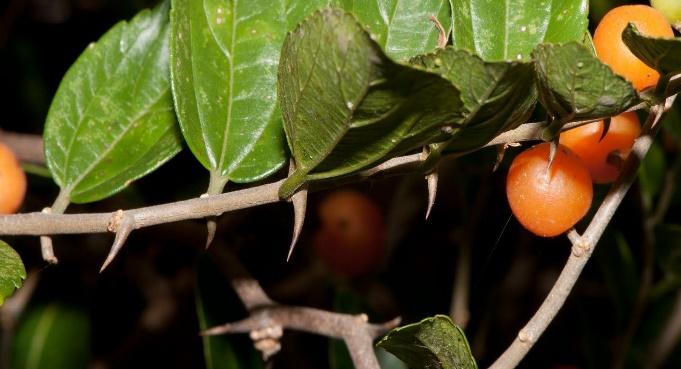
Crédit photo : Photo de Francisco Farriols Sarabia sans modification (CC BY 4.0). Licence : CC BY 4.0.