
Citrus aurantifolia (Sitwon) : vertus médicinales en extraction alcoolique
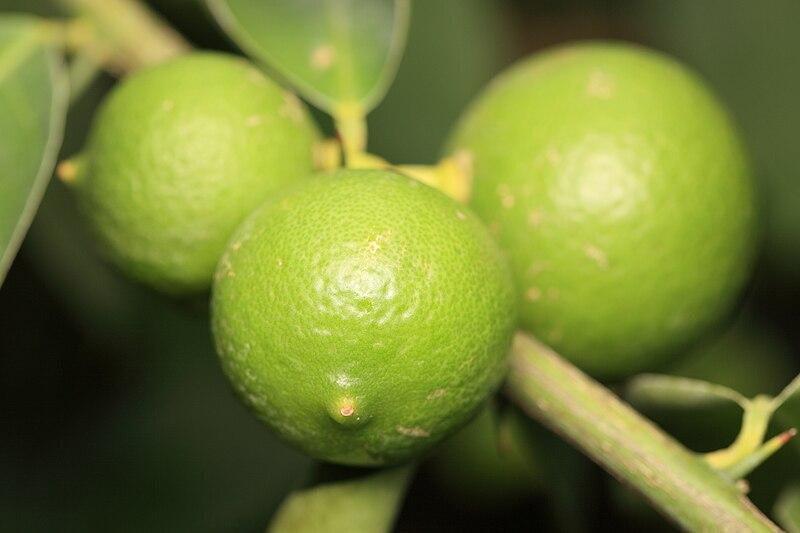
Citrus aurantifolia (Sitwon) : vertus médicinales en extraction alcoolique
Citrus aurantifolia (Sitwon) — famille Rutacées.
Sources externes reconnues associées à cette monographie : TRAMIL et Pharmacopée française.
Cette base documente les extractions alcooliques (éthanol) des substances actives. Notre monographie recense actuellement 15 indications en extraction alcoolique pour cette espèce. La monographie s’appuie sur 90 références scientifiques enregistrées pour l’espèce.
Indications thérapeutiques en extraction alcoolique :
Note : les extraits de références scientifiques sont conservés dans leur langue d’origine (le plus souvent l’anglais), sans traduction, afin de respecter le texte source des publications.
- Infection bactérienne : Partie usitée : Feuille. Profil pharmacologique documenté : Ciprofloxacine-like. Association synergique mentionnée : Kalantchoe pinnata-feuille.
Selon Aibinu I (2007) : The clinical isolates used included Anaerobic facultative bacteria, namely: Staphylococcus aureus ATCC 25213, Staphylococcus aureus, Salmonella paratyphi, Shigella flexnerii, Streptococcus faecalis, Citrobacter spp, Serratia spp, Klebsiella pneumoniae, Pseudomonas aeruginosa, Escherichia coli ATCC 25922, & Escherichia coli; Fungi such as Aspergillus niger & Candida albicans; & Anaerobes which includes Bacteroides spp, Porphyromonas spp, & Clostridium spp. Antimicrobial activity was carried out by the agar well diffusion. Selon AKINNIBOSUN FI (2015) : Escherichia coli, Staphylococcus aureus, Klebsiella pneumoniae, & Pseudomonas aeruginosa, Aspergillus niger, Mucor mucedo, Penicillium notatum & Candida albicans, were used as test organisms & the antimicrobial activity of the extracts was determined by the agar-well diffusion method. - Infection fongique : Partie usitée : Feuille. Profil pharmacologique documenté : Nystatine-like. Association synergique mentionnée : Kalantchoe pinnata-feuille.
Selon AKINNIBOSUN FI (2015) : Escherichia coli, Staphylococcus aureus, Klebsiella pneumoniae, & Pseudomonas aeruginosa, Aspergillus niger, Mucor mucedo, Penicillium notatum & Candida albicans, were used as test organisms & the antimicrobial activity of the extracts was determined by the agar-well diffusion method. Synergistic antibacterial activity ranged from 0.0 ± 0.0 to 2.4 ± 0.6, 11.3 ± 0.9 to 23.5 ± 1.1, 16.7 ± 0.3 to 27.3 ± 0.6 and 8.7 ± 0.9 to 22.7 ± 0.9, for aqueous, ethanol, methanol & acetone extracts respectively. Selon Sharma R (2018) : The juice of above-mentioned citrus fruit cultivars was assessed for OAs, total phenolics, free radical scavenging antioxidants & their antimicrobial potential against selected bacterial & fungal strains. - Arthrose, arthrite, rhumatisme, oedème : Partie usitée : Fruit. Profil pharmacologique documenté : Diclofénac-like.
Selon Malleshappa P (2018) : The extracts obtained were screened for the presence of phytoconstituents by qualitative phytochemical analysis; the anti-inflammatory activity of extracts at 250 & 500mg/Kg body weight concentrations were assessed by in vivo Carrageenan induced rat paw edema model & in vitro HRBC membrane stabilization assay whereas Tail immersion & Hot plate methods have been used to evaluate their analgesic property. The study thus documents that Citrus peels are good sources of anti-inflammatory & antinociceptive agents. Selon DURMUS N (2024) : Citrus peels are rich in bioactive phenolic compounds with various health effects including antioxidant, antiobesity, antiinflammatory, antihypertensive, anti-hypercholesterolemic, antimicrobial, antidiabetic, & anticarcinogenic activities.
D’autres indications (y compris d’autres modes d’extraction le cas échéant), posologies, précautions d’emploi et le détail des références scientifiques sont disponibles dans la fiche monographique complète.
Base médicinale Lapotitjéri di la Nati
Extraits éthanoliques des substances actives — monographies, indications, posologies et références pour professionnels de santé. Ethnopharmacologue Emmanuel Nossin.
→ Rechercher Citrus aurantifolia dans la base (abonnement requis)
Crédit photo : Photo de TANAKA Juuyoh sans modification (CC BY 4.0). Licence : CC BY 4.0.