Crinum asiaticum (Lys de St-Joseph) : vertus médicinales en extraction alcoolique
Crinum asiaticum (Lys de St-Joseph) : vertus médicinales en extraction alcoolique
Crinum asiaticum (Lys de St-Joseph) — famille Amaryllidacées.
Cette base documente les extractions alcooliques (éthanol) des substances actives. Notre monographie recense actuellement 12 indications en extraction alcoolique pour cette espèce. La monographie s’appuie sur 45 références scientifiques enregistrées pour l’espèce.
Indications thérapeutiques en extraction alcoolique :
Note : les extraits de références scientifiques sont conservés dans leur langue d’origine (le plus souvent l’anglais), sans traduction, afin de respecter le texte source des publications.
- Infection bactérienne : Partie usitée : Feuille. Profil pharmacologique documenté : Chloramphénicol-like.
Selon Dūmā-Riris I (2018) : In addition, the antibacterial test showed that the widest inhibition of the leaves a&bulbs are 15.7 mm and 12.4 mm against Escherichia coli respectively & 12.3 mm & 11.5 mm against Staphylococcus aureus. The antioxidant, toxicity and antibacterial of the Crinum leaves & bulbs extracted with ethanol & treated by DPPH (2-2 diphenyl 1-1-picrylhydrazyl) method, Brine Shrimp Lethality Test (BSLT) method, & diffusion method respectively. Selon Chairul (2010) : The antibacterial activity of ethanolic extract of leaves & bulbs of Crinum asiaticum was tested against Propionibacterium acnes, Staphylococcus aureus & Staphylococcus epidermidis, pathogenic bacteria that cause acne. - État inflammatoire : Partie usitée : Feuille. Profil pharmacologique documenté : Diclofénac-like, Prednisolone-like.
Selon Samud AS (1999) : In the present study, we examined the anti-inflammatory effects of this plant extract on carrageenan-induced hind paw oedema in mice. This may indicate that active anti-inflammatory compounds are present in the CFME. Selon Kongkwamaroen C (2021) : Results showed that 95% ethanolic extract of hot air oven-dried leaves had the highest anti-inflammatory activity & total phenolic & lycorine contents. - Douleur, hyperalgie : Partie usitée : Feuille. Profil pharmacologique documenté : Morphine-like.
Selon Asmawi MZ (2011) : The extracts were investigated for their antinociceptive activity on rats using the carrageenan-induced paw hyperalgesia method. After 4 h, the pain threshold of each rat was measured. Selon Rahman A (2013) : In analgesic study, CS extract inhibited 42.34±3.20% of acetic acid induced pain at higher dose of 2.0 g/kg body weight.
D’autres indications (y compris d’autres modes d’extraction le cas échéant), posologies, précautions d’emploi et le détail des références scientifiques sont disponibles dans la fiche monographique complète.
Base médicinale Lapotitjéri di la Nati
Extraits éthanoliques des substances actives — monographies, indications, posologies et références pour professionnels de santé. Ethnopharmacologue Emmanuel Nossin.
→ Rechercher Crinum asiaticum dans la base (abonnement requis)
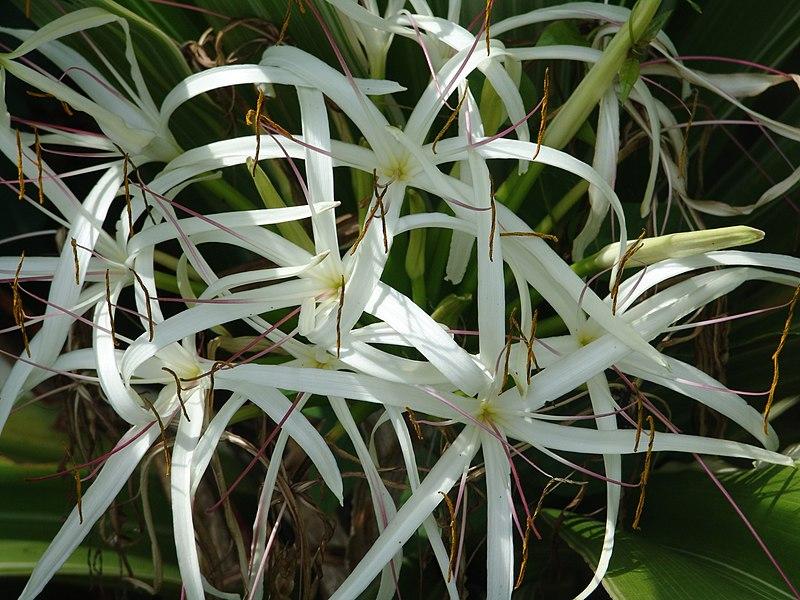
Crédit photo : Photo de Drew Avery sans modification (CC BY 4.0). Licence : CC BY 4.0.