Cynara cardunculus (Artichaut) : vertus médicinales en extraction alcoolique
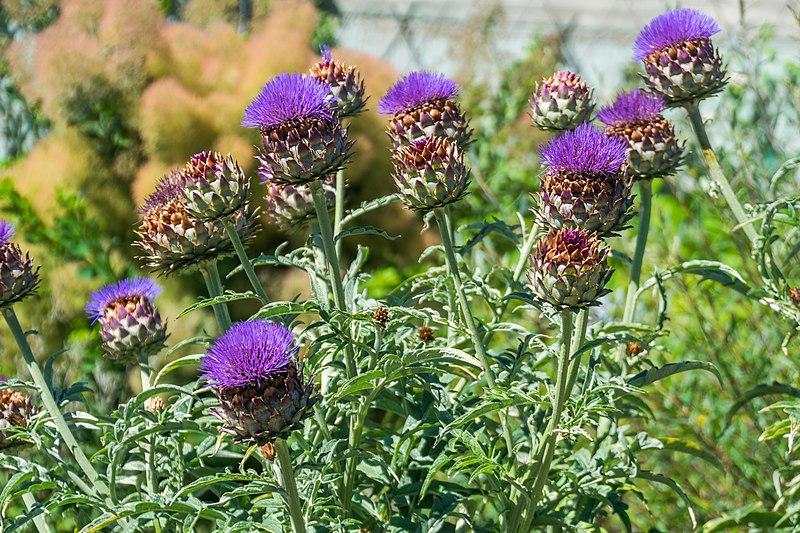
Cynara cardunculus (Artichaut) : vertus médicinales en extraction alcoolique
Cynara cardunculus (Artichaut) — famille Asteracées.
Sources externes reconnues associées à cette monographie : Pharmacopée française.
Cette base documente les extractions alcooliques (éthanol) des substances actives. Notre monographie recense actuellement 12 indications en extraction alcoolique pour cette espèce. La monographie s’appuie sur 86 références scientifiques enregistrées pour l’espèce.
Indications thérapeutiques en extraction alcoolique :
Note : les extraits de références scientifiques sont conservés dans leur langue d’origine (le plus souvent l’anglais), sans traduction, afin de respecter le texte source des publications.
- Cancer : Partie usitée : Feuille. Profil pharmacologique documenté : Pemetrexed-like.
Selon Pulito C (2015) : Malignant pleural mesothelioma is a poorly treated neoplasia arising from the pleural mesothelial lining. We found that C scolymus treatment affects strongly cell growth, migration & tumor engraftment of mesothelioma cell lines. Selon Vigh S (2016) : Chemomapping of artichoke (Cynara scolymus L.) leaf extracts revealed novel bioactive compounds with putative antitumor effects & therefore, we set to analyze the cytotoxic effects of aqueous & alcoholic extracts on T-47D & ZR-75-1 human breast cancer cell lines. - Infection : Partie usitée : Feuille.
Selon Marand SK (2016) : In this regard, this study was performed with the purpose of assessing the antimicrobial activity of Artichoke on five human pathogenic species, including Escherichia coli, Staphylococcus aureus, Bacillus Cereus, Salmonella typhi, and Candida albicans. The results of MIC of the aqueous extract of Artichoke for Salmonella typhi, Escherichia coli, Staphylococcus aureus, Bacillus Cereus, and Candida albicans were 256, 32, 64, 64 and 32mg/ml, respectively, and the MIC of the ethanolic extract were 128, 32, 16, 16, and 16mg/ml, respectively. - Hépatite, cirrhose, stéatose hépatique, intoxication (chimique ou drogue stupéfiante)
avec élévation de l’ALT) : Partie usitée : Feuille. Profil pharmacologique documenté : Bifendate-like.
Selon Ahmadi A (2019) : Also, DZN led to the reduction of hepatic CAT, SOD, & Vit C in the DZN group relative to the control group. In the present study, the hepatoprotective effects of Cynara scolymus leaf extract against DZN-induced liver injury were examined. Selon Rangboo V (2016) : Comparing changes in study markers following interventions showed improvement in liver enzymes.
D’autres indications (y compris d’autres modes d’extraction le cas échéant), posologies, précautions d’emploi et le détail des références scientifiques sont disponibles dans la fiche monographique complète.
Base médicinale Lapotitjéri di la Nati
Extraits éthanoliques des substances actives — monographies, indications, posologies et références pour professionnels de santé. Ethnopharmacologue Emmanuel Nossin.
→ Rechercher Cynara cardunculus dans la base (abonnement requis)
Crédit photo : Photo de Krzysztof Golik sans modification (CC BY-SA 4.0). Licence : CC BY-SA 4.0.