Hemerocallis fulva (Lis wouj) : vertus médicinales en extraction alcoolique
Hemerocallis fulva (Lis wouj) : vertus médicinales en extraction alcoolique
Hemerocallis fulva (Lis wouj) — famille Asphodeliacées.
Cette base documente les extractions alcooliques (éthanol) des substances actives. Notre monographie recense actuellement 6 indications en extraction alcoolique pour cette espèce. La monographie s’appuie sur 25 références scientifiques enregistrées pour l’espèce.
Indications thérapeutiques en extraction alcoolique :
Note : les extraits de références scientifiques sont conservés dans leur langue d’origine (le plus souvent l’anglais), sans traduction, afin de respecter le texte source des publications.
- Stress oxydatif : Partie usitée : Feuille.
Selon Li X (2021) : Meanwhile, modern pharmaceutical research has shown that many bioactive constituents display versatile pharmacological activities, such as anti-depression, antibacterial, anti-tumour, anti-oxidative, insecticide, sedative & hypnotic, thus providing a scientific basis for the further exploitation & utilisation of this important resource. Selon Szewczyk K (2019) : The antibacterial & antioxidant activities of EOs were also evaluated. The essential oils with the high presence of oxygenated monoterpenes & monoterpene hydrocarbons showed higher antioxidant activity. - Dépression : Partie usitée : Fleur. Profil pharmacologique documenté : Fluoxétine-like.
Selon Li X (2021) : Meanwhile, modern pharmaceutical research has shown that many bioactive constituents display versatile pharmacological activities, such as anti-depression, antibacterial, anti-tumour, anti-oxidative, insecticide, sedative & hypnotic, thus providing a scientific basis for the further exploitation & utilisation of this important resource. Selon Lin SH (2013) : In this study, we investigated the antidepressant effects of ethanol extract of daylily flowers (DFEtoH) & rutin by forced swimming test (FST) & neurotransmitter metabolism of brain regions (frontal cortex, hippocampus, striatum, & amygdala). The major flavonoid of daylily flowers, rutin, is also characterized to be an antidepressant. - Chélation métallique : Partie usitée : Parties aériennes. Profil pharmacologique documenté : EDTA-like.
Selon Mao LC (2013) : Water and ethanol extracts were prepared from these dried flowers & their antioxidant properties were evaluated using total antioxidant activity, reducing capacity, metal chelating activity, and DPPH & superoxide anion radical scavenging activities, comparing with standards. Selon Que F (2007) : Antioxidant proper- ties of water & ethanol extracts prepared from these dried flowers were evaluated in terms of total antioxidant activity, reducing capacity, & metal chelating activity.
D’autres indications (y compris d’autres modes d’extraction le cas échéant), posologies, précautions d’emploi et le détail des références scientifiques sont disponibles dans la fiche monographique complète.
Base médicinale Lapotitjéri di la Nati
Extraits éthanoliques des substances actives — monographies, indications, posologies et références pour professionnels de santé. Ethnopharmacologue Emmanuel Nossin.
→ Rechercher Hemerocallis fulva dans la base (abonnement requis)
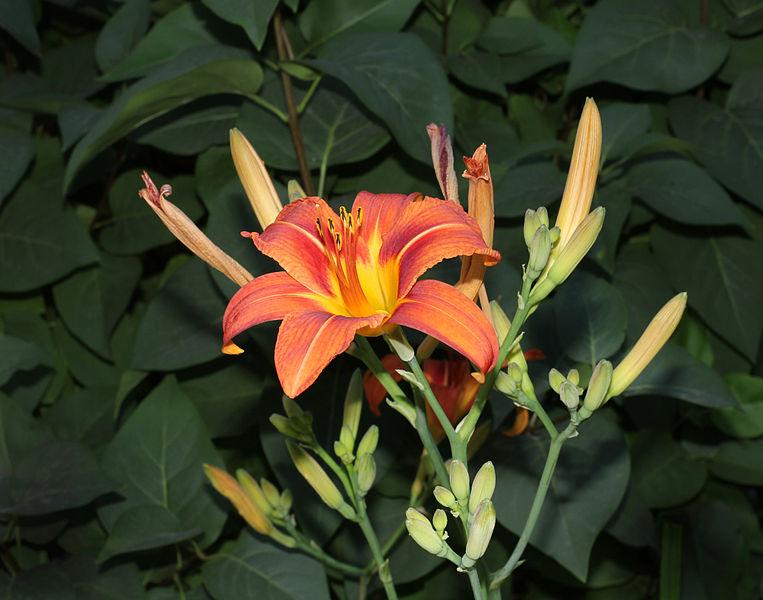
Crédit photo : Photo de George Chernilevsky sans modification (CC BY 4.0). Licence : CC BY 4.0.