Hibiscus syriacus (Rose de Syrie) : vertus médicinales en extraction alcoolique
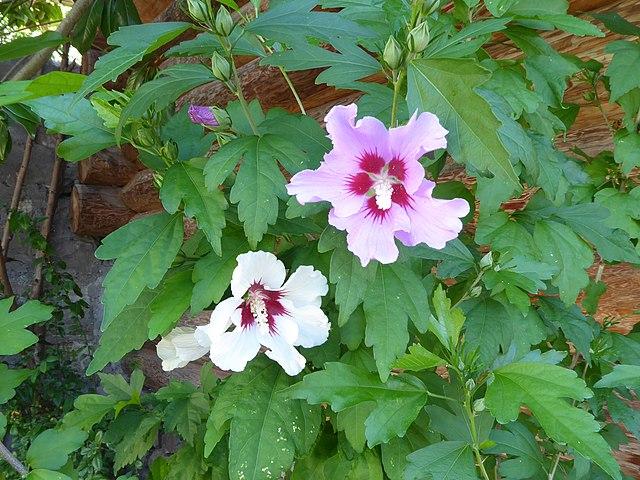
Hibiscus syriacus (Rose de Syrie) : vertus médicinales en extraction alcoolique
Hibiscus syriacus (Rose de Syrie) — famille Malvacées.
Cette base documente les extractions alcooliques (éthanol) des substances actives. Notre monographie recense actuellement 10 indications en extraction alcoolique pour cette espèce. La monographie s’appuie sur 59 références scientifiques enregistrées pour l’espèce.
Indications thérapeutiques en extraction alcoolique :
Note : les extraits de références scientifiques sont conservés dans leur langue d’origine (le plus souvent l’anglais), sans traduction, afin de respecter le texte source des publications.
- Stress oxydatif : Partie usitée : Tige. Profil pharmacologique documenté : Acide gallique-like.
Selon Molagoda I.M.N (2020) : petals (PS) in oxidative stress conditions have not been studied. In this study, we evaluated the cytoprotective effect of PS against H2O2-induced oxidative stress in HaCaT keratinocytes. Selon Punasiya R (2014) : It is used in tradition system of medicine & exibits diuretic, expectorant, stomachic, ophthalmic, antipyretic, anti-Inflammatory activity, antioxidant, demulcent, emollient, febrifuge, haemostatic & antifungal agent. - Arthrose, arthrite, rhumatisme, oedème : Partie usitée : Fleur. Profil pharmacologique documenté : Dexamethasone-like.
Selon Lee CM (2023) : This study aimed to investigate the anti-inflammatory effect of HSE in LPS-stimulated Raw 264.7 cells. extract (HSE) traditionally has been recognized as promising natural resources for the treatment of diseases related to hyper-inflammation. Selon KIM HN (2018) : In this study, we evaluated the anti-inflammatory effect of 70% ethanol extracts from the root of HS (RHS-E70) & elucidated the potential signaling pathway in LPS-stimulated RAW264.7 cells. - Cancer : Partie usitée : Feuille. Profil pharmacologique documenté : 5-FU (Fluoro-Uracile)-like.
Selon Cheng Y (2008) : The IC (50) values of HS-AE on A549 (adenocarcinoma), H209 (squamous cell carcinoma) or H661 (large cell carcinoma) lung cancer cells ranged from 14 to 22 microg/ml after 48 hours of treatment. syriacus (HS-AE) exhibited a better cytotoxic effect on lung cancer cells than its methanol extract (HS-ME) or water extract (HS-WE). Selon Xu XY (2022) : The previous study suggested that the callus culture is useful method for obtaining the anti-inflammatory ingredients from HS Purpose In the present study, we aimed to investigate the effect of HCE on the colorectal cancer (CRC) & its underlying mechanism of action using HT-29 cells & thymus-deficient mice bearing HT-29 xenografts.
D’autres indications (y compris d’autres modes d’extraction le cas échéant), posologies, précautions d’emploi et le détail des références scientifiques sont disponibles dans la fiche monographique complète.
Base médicinale Lapotitjéri di la Nati
Extraits éthanoliques des substances actives — monographies, indications, posologies et références pour professionnels de santé. Ethnopharmacologue Emmanuel Nossin.
→ Rechercher Hibiscus syriacus dans la base (abonnement requis)
Crédit photo : Photo de Syrio sans modification (CC BY-SA 4.0). Licence : CC BY-SA 4.0.