Justicia secunda (Zèb-tansion) : vertus médicinales en extraction alcoolique
Justicia secunda (Zèb-tansion) : vertus médicinales en extraction alcoolique
Justicia secunda (Zèb-tansion) — famille Acanthacées.
Sources externes reconnues associées à cette monographie : TRAMIL et Pharmacopée française.
Cette base documente les extractions alcooliques (éthanol) des substances actives. Notre monographie recense actuellement 11 indications en extraction alcoolique pour cette espèce. La monographie s’appuie sur 57 références scientifiques enregistrées pour l’espèce.
Indications thérapeutiques en extraction alcoolique :
Note : les extraits de références scientifiques sont conservés dans leur langue d’origine (le plus souvent l’anglais), sans traduction, afin de respecter le texte source des publications.
- Anemie : Partie usitée : Parties aeriennes. Profil pharmacologique documenté : Renferon-12-like. Association synergique mentionnée : Gossypium barbadensis, Sorghum bicolor – panache, Hibiscus sabdariffa -C alice.
Selon Yamoah A (2020) : These findings indicate that the water extractable fraction of JS leaves has excellent haematinic properties & this provides the pharmacological basis of its use in Ghanaian traditional medicine for the treatment of anaemia. Selon Moukimou AO (2014) : Anemia was induced in Wistar rats by phenylhydrazine hydrochloride followed by treatment by gavage with hydroethanolic extracts of the plants studied. Indeed, these results confirm the therapeutic indication of these plants in the resorption of anemia in traditional medicine. - Infection bacterienne : Partie usitée : Feuille. Profil pharmacologique documenté : Ciprofloxacine-like.
Selon Bako B (2023) : The results of the antimicrobial activity obtained from the fractions of the Stem inhibited or exhibited activity against Methicillin resist Staph aureus, Vancomycin resistant enterococci, Staphylococcus aureus, Escherichia coli, Klebsiella pneumonia, Helicobacter pylori, Campylobacter fetus, Proteus mirabilis, Pseudomonas aeruginosa, Candida tropicalis, & Candida krusei. secunda stem, the plant could be a viable source of antimicrobial agents in the near future. Selon Rojas JJ (2006) : RESULTS: The water extracts of Bidens pilosa, Jacaranda mimosifolia & Piper pulchrum showed a higher activity against Bacillus Cereus & Escherichia coli than Gentamycin sulfate. - Drépanocytose : Partie usitée : Feuille. Profil pharmacologique documenté : Cromoglycate-like. Association synergique mentionnée : Moringa oleifera-feuille.
Selon Gbolo-Zoawe B (2023) : The DEE reversed sickling by 89.1 %, comparable to DSCG (87.7 %; 60.3 µg/mL), inhibiting sickle cell hemoglobin polymerization of 77.8 % and 74.4 %, respectively. Sickle cell disease (SCD) is an autosomal recessive blood disorder characterized by red blood cells that assume an abnormal, rigid sickle shape under low-oxygen conditions. Selon Moukimou AO (2014) : Anemia was induced in Wistar rats by phenylhydrazine hydrochloride followed by treatment by gavage with hydroethanolic extracts of the plants studied.
D’autres indications (y compris d’autres modes d’extraction le cas échéant), posologies, précautions d’emploi et le détail des références scientifiques sont disponibles dans la fiche monographique complète.
Base médicinale Lapotitjéri di la Nati
Extraits éthanoliques des substances actives — monographies, indications, posologies et références pour professionnels de santé. Ethnopharmacologue Emmanuel Nossin.
→ Rechercher Justicia secunda dans la base (abonnement requis)
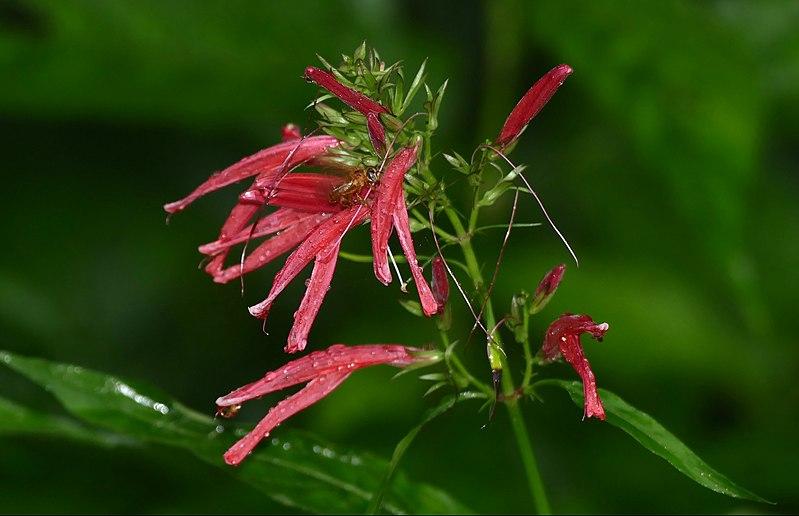
Crédit photo : Photo de Bernard DUPONT sans modification (CC BY 4.0). Licence : CC BY 4.0.