Maranta arundinacea (Lanvè Karayib) : vertus médicinales en extraction alcoolique
Maranta arundinacea (Lanvè Karayib) : vertus médicinales en extraction alcoolique
Maranta arundinacea (Lanvè Karayib) — famille Zingibéracées.
Sources externes reconnues associées à cette monographie : TRAMIL.
Cette base documente les extractions alcooliques (éthanol) des substances actives. Notre monographie recense actuellement 6 indications en extraction alcoolique pour cette espèce. La monographie s’appuie sur 27 références scientifiques enregistrées pour l’espèce.
Indications thérapeutiques en extraction alcoolique :
Note : les extraits de références scientifiques sont conservés dans leur langue d’origine (le plus souvent l’anglais), sans traduction, afin de respecter le texte source des publications.
- Gastroentérite, diarrhée causée par une infection virale : Partie usitée : Feuille.
Selon Rahman K (2015) : Antidiarrheal effect was evaluated by using castor oil-induced diarrhea, enteropooling, & gastrointestinal motility tests at 200 mg/kg & 400 mg/kg body weight in rats where the cytotoxic activity was justified using brine shrimp lethality bioassay at different concentrations of MEMA. The extract showed considerable antidiarrheal effect by inhibiting 42.67% & 57.75% of diarrheal episode at the doses of 200 & 400 mg/kg, respectively. Selon Samal P (2019) : Globally, the gastroenteritis or diarrhoea has become a more significant problem today due to infection caused by water-or foodborne pathogen Vibrio cholera. - Cholera : Partie usitée : Rhizome.
Selon Samal P (2019) : For this, aqueous, methanolic, ethanolic & hexane extracts of both leaf & rhizome of M.A were tested against the pre-isolated strains of Vibrio cholerae such as SPAB1, SPAB4 & SPAB5 by agar well diffusion & minimum inhibitory concentration (MIC) method. Globally, the gastroenteritis or diarrhoea has become a more significant problem today due to infection caused by water-or foodborne pathogen Vibrio cholera. Selon KIM (2003) : KIM et al, Antimicrobial effect of water extract of Arrowroot (Maranta arundinacea) tea on foodborne pathogens in liquid medium Session 29F, Food Microbiology: Control of foodborne microorganisms by antimicrobials, IFT Annual Meeting – Chicago, 2003,. - Stress oxydatif : Partie usitée : Rhizome. Profil pharmacologique documenté : BHT-like.
Selon Ramadhani RM (2017) : Objective : Determine the effect of ethanolic extract of MA tubers against oxidative stress using the parameter of MDA, SGPT & SGOT level in ethanol-induced rats. Oxidative stress can be inhibited by antioxidants. Selon NNIshaa S (2012) : The ethanolic extract of M.arundinacea was screened for antioxidant activity using 1,1-diphenyl-2-picryl hydroxyl (DPPH) quenching assay, 2,2'-azinobis-3-ethy-benzothiozoline-6-sulfonic acid (ABTS) cation decolorization test, Reducing power, scavenging capacity towards hydrogen peroxide (H2O2) radical, nitric oxide (NO) radical inhibition activity using established assay procedures and Ferric Reducing Antioxidant Power (FRAP) Assay.
D’autres indications (y compris d’autres modes d’extraction le cas échéant), posologies, précautions d’emploi et le détail des références scientifiques sont disponibles dans la fiche monographique complète.
Base médicinale Lapotitjéri di la Nati
Extraits éthanoliques des substances actives — monographies, indications, posologies et références pour professionnels de santé. Ethnopharmacologue Emmanuel Nossin.
→ Rechercher Maranta arundinacea dans la base (abonnement requis)
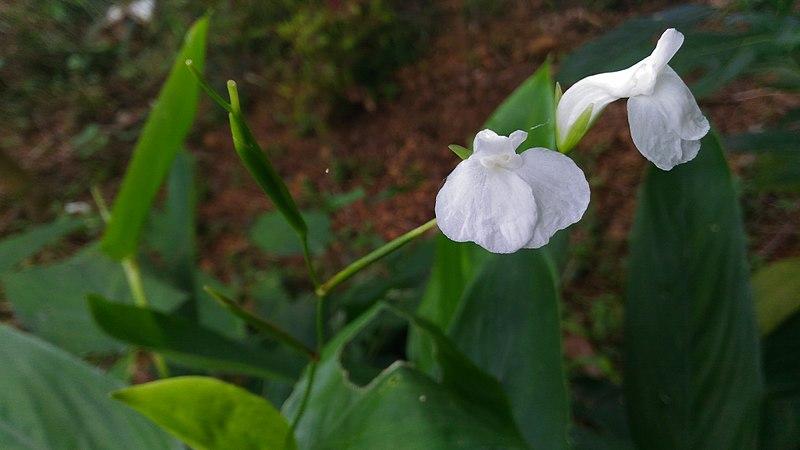
Crédit photo : Photo de Vijayanrajapuram sans modification (CC BY-SA 4.0). Licence : CC BY-SA 4.0.