Murraya paniculata (Buis-de-Chine) : vertus médicinales en extraction alcoolique
Murraya paniculata (Buis-de-Chine) : vertus médicinales en extraction alcoolique
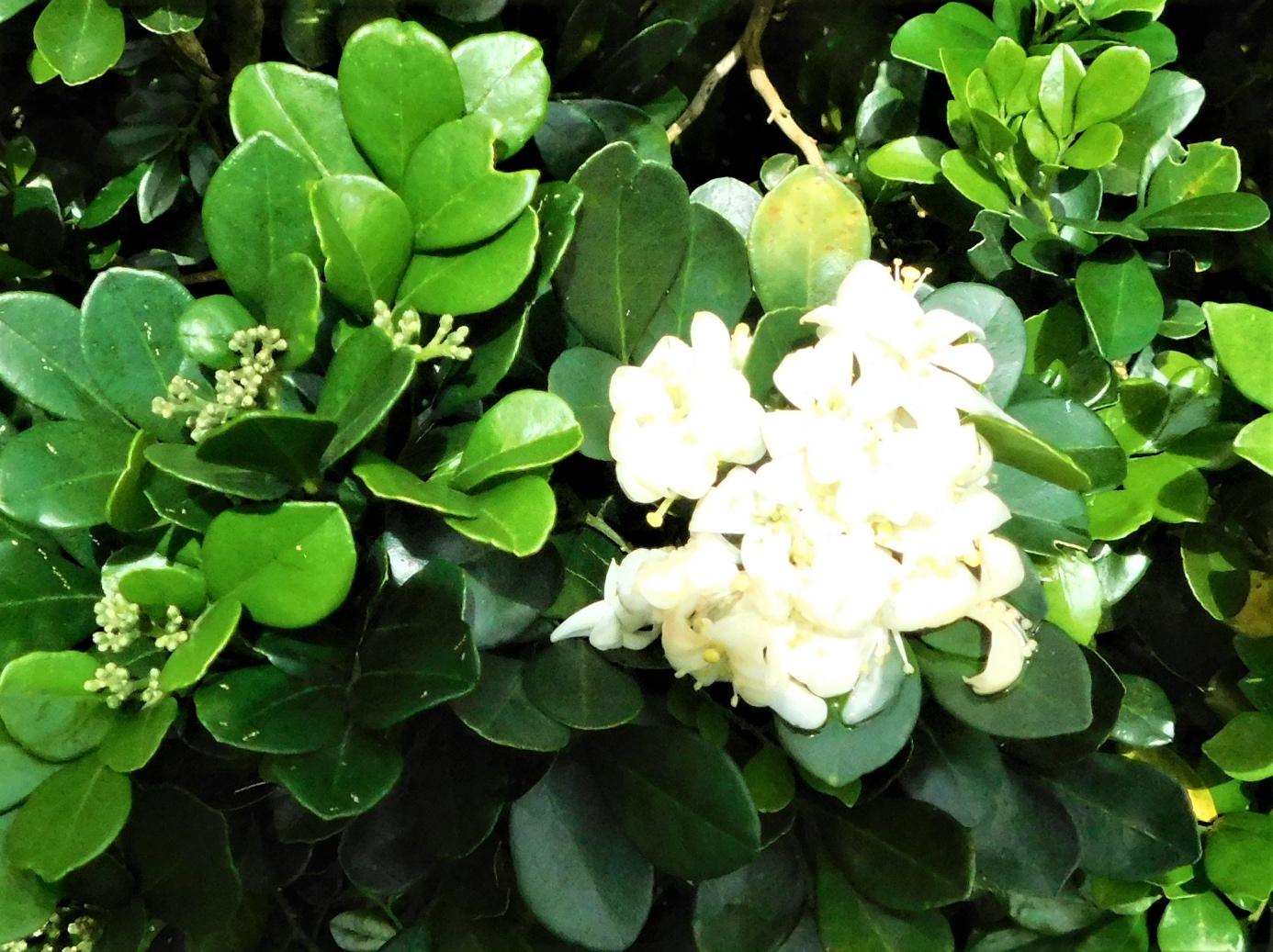
Murraya paniculata (Buis-de-Chine) — famille Rutacées.
Cette base documente les extractions alcooliques (éthanol) des substances actives. Notre monographie recense actuellement 10 indications en extraction alcoolique pour cette espèce. La monographie s’appuie sur 96 références scientifiques enregistrées pour l’espèce.
Indications thérapeutiques en extraction alcoolique :
Note : les extraits de références scientifiques sont conservés dans leur langue d’origine (le plus souvent l’anglais), sans traduction, afin de respecter le texte source des publications.
- Arthrose, arthrite, rhumatisme, oedeme : Partie usitée : Feuille. Profil pharmacologique documenté : Indometacine-like, Aspirine-like.
Selon Rahman A (2010) : Moreover, when given orally to rats at dose of 300 and 600 mg/kg of body weight, the extract showed a significant (P<0.001) anti-inflammatory activity against carrageenin induced paw edema in rats which was comparable to the standard drug Aspirin at the dose of 150 mg/kg of body weight. The ethanol extract of the dried leaves of Murraya paniculata was investigated for its possible antidiarrhoeal & anti-inflammatory activities in animal models. Selon Narkhede MB (2012) : The MPEE was also evaluated for anti-inflammatory potential of evaluated using carrageenan, histamine, serotonin, dextran induced rat paw edema & chronic cotton pellet method. - Obésité : Partie usitée : Feuille. Profil pharmacologique documenté : Orlistat-like. Association synergique mentionnée : Guazuma ulmifolia-feuille.
Selon Rahman A (2010) : The ethanol extract of the dried leaves of Murraya paniculata was investigated for its possible antidiarrhoeal & anti-inflammatory activities in animal models. The overall results tend to suggest the antidiarrhoeal and anti-inflammatory activities of the crude ethanolic extract of leaves of Murraya paniculata (L.) Jack. Selon Narkhede MB (2012) : MPEE at doses of 50mg, 100mg and 200mg / kg exhibited significant anti-inflammatory effect. - Candidiase : Partie usitée : Parasiticide et vétérinaire. Profil pharmacologique documenté : Métronidazole-like.
Selon KUSUMA SF (2017) : The results showed that the ethanol extract of orange Jasmine leaves had antibacterial activity against C. albicans with MIC/MFC ranged at 0,3125-0,625 %w/v. Selon Auteur (2011) : Studies on in vitro antibacterial, antifungal property and antioxidant potency of Murraya paniculata.
D’autres indications (y compris d’autres modes d’extraction le cas échéant), posologies, précautions d’emploi et le détail des références scientifiques sont disponibles dans la fiche monographique complète.
Base médicinale Lapotitjéri di la Nati
Extraits éthanoliques des substances actives — monographies, indications, posologies et références pour professionnels de santé. Ethnopharmacologue Emmanuel Nossin.
→ Rechercher Murraya paniculata dans la base (abonnement requis)
Crédit photo : Photo de la Pharmacopée martiniquaise traditionnelle.