Asparagus racemosus (Mouslinn’) : vertus médicinales en extraction alcoolique
Asparagus racemosus (Mouslinn’) : vertus médicinales en extraction alcoolique
Asparagus racemosus (Mouslinn’) — famille Asparagacées.
Cette base documente les extractions alcooliques (éthanol) des substances actives. Notre monographie recense actuellement 19 indications en extraction alcoolique pour cette espèce. La monographie s’appuie sur 145 références scientifiques enregistrées pour l’espèce.
Indications thérapeutiques en extraction alcoolique :
Note : les extraits de références scientifiques sont conservés dans leur langue d’origine (le plus souvent l’anglais), sans traduction, afin de respecter le texte source des publications.
- Helminthiase Pheretima Posthuma : Partie usitée : Parties_aeriennes. Profil pharmacologique documenté : Pipérazine-like. Association synergique mentionnée : ANDROGRAPHIS PANICULATA-(Burm.f)-Nees, Dioscorea villosaparties aériennes.
Selon Gupta S (2012) : For anthelmintic study, the concentrations of 20 & 40 mg/ml were used against Pheretima posthuma (Earthworms). All the plant extracts as well as their combination showed significant anthelmintic & antimicrobial potential. Selon Deep Soren A (2021) : The study aimed to investigate the anthelmintic credentials of this plant, using two representative groups of helminth parasites. - Arthrose, arthrite, rhumatisme, oedème : Partie usitée : Feuille. Profil pharmacologique documenté : Indometacine-like.
Selon Battu GR (2010) : Study on ethanol extract from the leaves of AR of Indian origin revealed that ethanol extract displayed marked anti-inflammatory effect at a dose of 600 mg/kg causing a maximum inhibition of about 46 % in paw oedema induced by carrageenan. Phytochemical screening of the ethanol extract of leaves of AR revealed that sterols & flavonoids type of compounds might be possibly responsible for the anti-inflammatory activity of the extract, which supports the folk medicinal utilization of this plant. Selon Alok S (2013) : AR has also been successfully by some Ayurvedic practitioner for nervous disorder, inflammation & certain infectious disease. - Convulsion, crise épileptique : Partie usitée : Racine. Profil pharmacologique documenté : Clonazépam-like, Diazépam-like, Phénytoïne-like.
Selon Shastry RA (2015) : Methodology: The anticonvulsant effect of ethanolic extract of A. Conclusion: The data obtained suggest that the plant has anticonvulsant property. Selon Pahwa P (2022) : Therefore, in this study, we investigated the anticonvulsant effect of AR in a mouse model of catamenial epilepsy.
D’autres indications (y compris d’autres modes d’extraction le cas échéant), posologies, précautions d’emploi et le détail des références scientifiques sont disponibles dans la fiche monographique complète.
Base médicinale Lapotitjéri di la Nati
Extraits éthanoliques des substances actives — monographies, indications, posologies et références pour professionnels de santé. Ethnopharmacologue Emmanuel Nossin.
→ Rechercher Asparagus racemosus dans la base (abonnement requis)
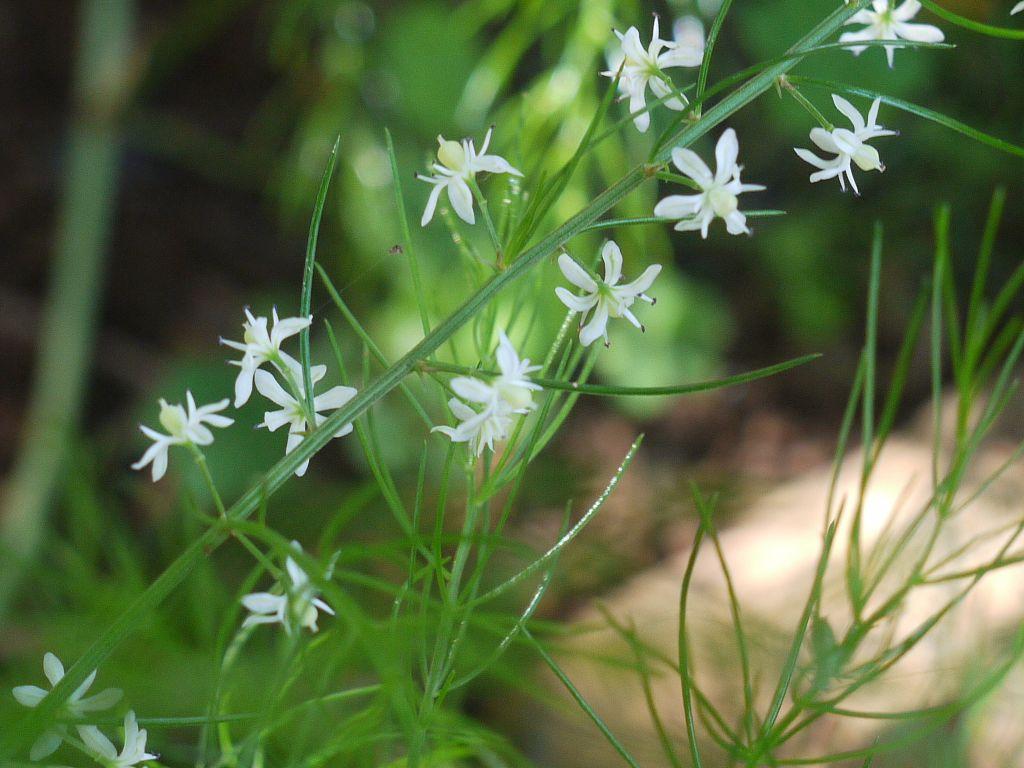
Crédit photo : Photo de Shatavari sans modification (CC BY-SA 2.0). Licence : CC BY-SA 2.0.