Parthenium hysterophorus (Matritjè) : vertus médicinales en extraction alcoolique
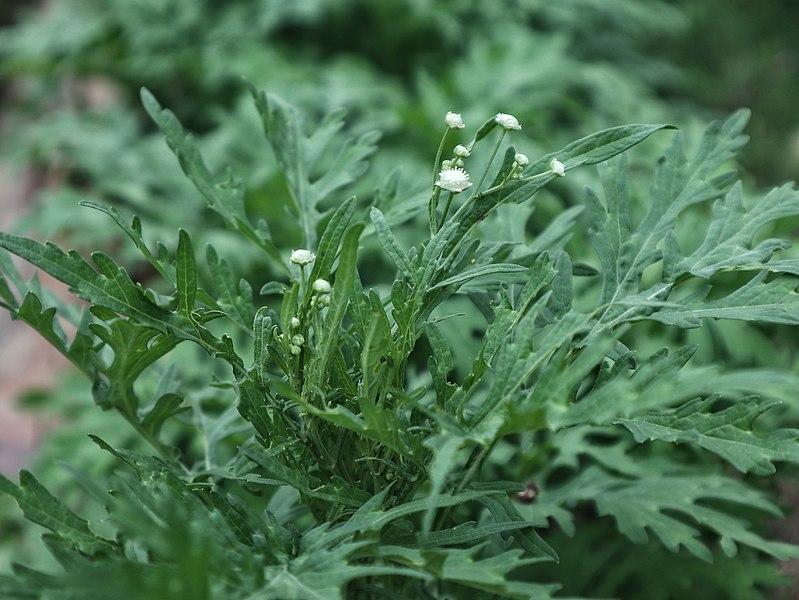
Parthenium hysterophorus (Matritjè) : vertus médicinales en extraction alcoolique
Parthenium hysterophorus (Matritjè) — famille Asteracées.
Sources externes reconnues associées à cette monographie : TRAMIL.
Cette base documente les extractions alcooliques (éthanol) des substances actives. Notre monographie recense actuellement 15 indications en extraction alcoolique pour cette espèce. La monographie s’appuie sur 120 références scientifiques enregistrées pour l’espèce.
Indications thérapeutiques en extraction alcoolique :
Note : les extraits de références scientifiques sont conservés dans leur langue d’origine (le plus souvent l’anglais), sans traduction, afin de respecter le texte source des publications.
- Infection bacterienne : Partie usitée : Feuille. Profil pharmacologique documenté : Azithromycine-like, Cepaxime-like.
Selon -Sharif N (2021) : Variable results of antimicrobial activity against, Salmonella paratyphi A, Pseudomonas aeruginosa, Proteus mirabilis & Escherichia coli were obtained. Fresh & dry samples of leaves, stem & flowers in ethanol, methanol & acetone extracts were tested against bacterial strains through agar well diffusion assay. Selon Fazal H (2011) : The extracts were tested against Escherichia coli, Pseudomonas aeruginosa, Klebsiella pneumoniae, Bacillus subtilis, Enterococcus spp., & Staphylococcus aureus by using agar well diffusion method. - Cancer : Partie usitée : Feuille. Profil pharmacologique documenté : Adriamycine-like. Association synergique mentionnée : Hedyotis corymbosa.
Selon Pandey K (2012) : To study the anticancer activity of ethanolic extract of leaves of Parthenium hysterophorus & Oldenlandia corymbosa by SRB assay method on K562 human leukemia cancer cell line. Results: P hysterophorus & O corymbosa showed significant anticancer activity on K562 human leukemia cancer cell line. Selon Kumar S (2013) : Ethanol fraction showed noticeable cytotoxic activity (81-85%) in SRB assay against MCF-7 & THP-1 cancer cell lines at 100 μg/ml concentration, while lower activity was observed with DU-145 cell line. - Stress oxydatif : Partie usitée : Racine. Profil pharmacologique documenté : acide ascorbique-like.
Selon Kaur M (2020) : It can stimulate numerous cellular & immune responses that may translate into Oxidative stress, allergies, and inflammation. The effect of PH flower extract was evaluated on cell viability, oxidative stress & inflammation in A549 lung cancer cell line by spectrophotometric & reverse transcriptase-polymerase chain reaction methods. Selon Kumar S (2013) : Reducing power & hydroxyl radical scavenging activity assays were used to measure antioxidant activity.
D’autres indications (y compris d’autres modes d’extraction le cas échéant), posologies, précautions d’emploi et le détail des références scientifiques sont disponibles dans la fiche monographique complète.
Base médicinale Lapotitjéri di la Nati
Extraits éthanoliques des substances actives — monographies, indications, posologies et références pour professionnels de santé. Ethnopharmacologue Emmanuel Nossin.
→ Rechercher Parthenium hysterophorus dans la base (abonnement requis)
Crédit photo : Photo de Apurv013 sans modification (CC0 1.0). Licence : CC0 1.0.