Plantago major (Planten) : vertus médicinales en extraction alcoolique
Plantago major (Planten) : vertus médicinales en extraction alcoolique
Plantago major (Planten) — famille Plantaginacées.
Sources externes reconnues associées à cette monographie : TRAMIL et Pharmacopée française.
Cette base documente les extractions alcooliques (éthanol) des substances actives. Notre monographie recense actuellement 18 indications en extraction alcoolique pour cette espèce. La monographie s’appuie sur 68 références scientifiques enregistrées pour l’espèce.
Indications thérapeutiques en extraction alcoolique :
Note : les extraits de références scientifiques sont conservés dans leur langue d’origine (le plus souvent l’anglais), sans traduction, afin de respecter le texte source des publications.
- Cancer : Partie usitée : Semence.
Selon Ozaslan M (2009) : major could be proposed as an effective agent for cancer prevention,. major extract had inhibitory effect against Ehrlich ascites carcinoma. Selon Karagöz K (2007) : The aim of this study is to investigate the antitumor activity of Plantago major extract in Ehrlich ascites tumor (EAT) bearing Balb/C mice in vivo. - Infection bacterienne : Partie usitée : Feuille. Profil pharmacologique documenté : Vancomycine-like.
Selon Alizadeh Behbahani1 B (2017) : Therefore, this study is aimed to examine the antimicrobial activity of P major on 4 pathogenic bacteria species including Staphylococcus aureus, Listeria innocua, Escherichia coli and Pseudomonas aeruginosa. The minimum inhibitory concentration of the aqueous extract of Plantago major for Staphylococcus aureus, Listeria innocua, Escherichia coli & Pseudomonas aeruginosa were 25, 50, 100 and 200 mg/ml, respectively, and the MIC of ethanol extract were 12.5, 25, 50 and 100 mg/ml, respectively. Selon Metner K (2012) : Both extracts were tested for nine bacteria species (Bacillus cereus, Bacillus subtilis, Staphylococcus aureus, Staphylococcus epidermidis, Escherichia coli, Klebsiella pneumonia, Pseudomonas aeruginosa, Proteus mirabilis, Salmonella enteritidis). - Plaie infectée, blessure, incision : Partie usitée : Parties aeriennes. Profil pharmacologique documenté : Sulfadiazine-like.
Selon Keshavarz A (2022) : The wound-healing capacity of this plant has been investigated under in vivo & ex vivo conditions. The bacterial culture from the wound site was taken on days 3, 7, 10, 13, and last day of hospitalization. Selon Ghanadian M (2022) : The wound healing effect of Plantago major leaves has been shown in a few animal studies.
D’autres indications (y compris d’autres modes d’extraction le cas échéant), posologies, précautions d’emploi et le détail des références scientifiques sont disponibles dans la fiche monographique complète.
Base médicinale Lapotitjéri di la Nati
Extraits éthanoliques des substances actives — monographies, indications, posologies et références pour professionnels de santé. Ethnopharmacologue Emmanuel Nossin.
→ Rechercher Plantago major dans la base (abonnement requis)
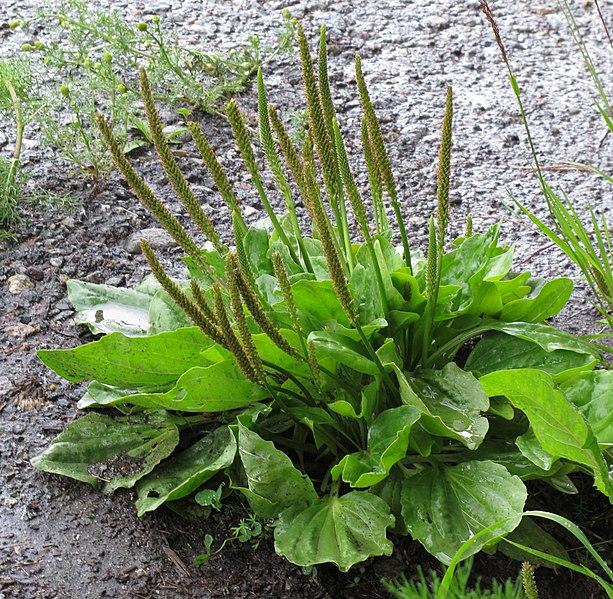
Crédit photo : Photo de Robert Flogaus-Faust sans modification (CC BY-SA 4.0). Licence : CC BY-SA 4.0.