Pyrostegia venusta (Liane de feu) : vertus médicinales en extraction alcoolique
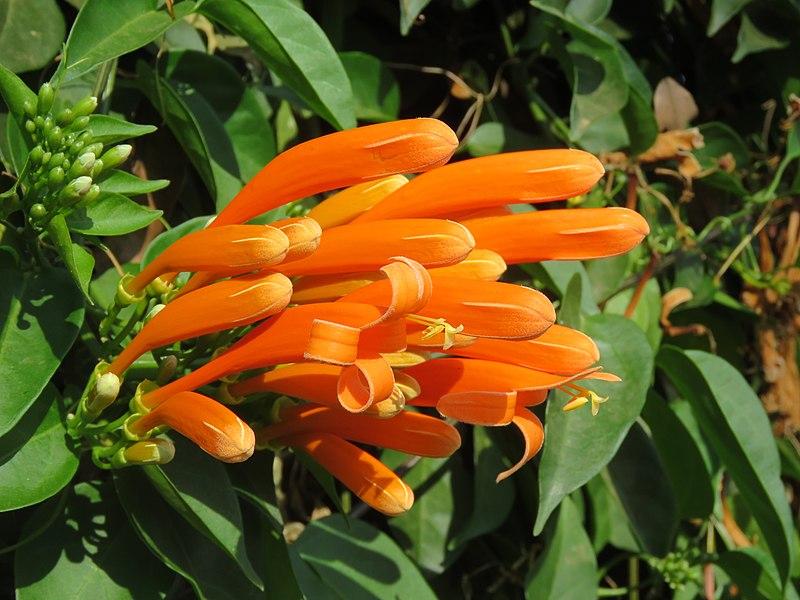
Pyrostegia venusta (Liane de feu) : vertus médicinales en extraction alcoolique
Pyrostegia venusta (Liane de feu) — famille Bignoniacées.
Sources externes reconnues associées à cette monographie : TRAMIL.
Cette base documente les extractions alcooliques (éthanol) des substances actives. Notre monographie recense actuellement 9 indications en extraction alcoolique pour cette espèce. La monographie s’appuie sur 28 références scientifiques enregistrées pour l’espèce.
Indications thérapeutiques en extraction alcoolique :
Note : les extraits de références scientifiques sont conservés dans leur langue d’origine (le plus souvent l’anglais), sans traduction, afin de respecter le texte source des publications.
- Mélanome : Partie usitée : Feuille. Profil pharmacologique documenté : Acide Kojique-like.
Selon Figueiredo CR (2014) : Pyrostegia venusta heptane extract containing saturated aliphatic hydrocarbons induces apoptosis on B16F10-Nex2 melanoma cells & displays antitumor activity in vivo. Selon Zari S (2015) : This study reviews the published literature on wound healing, Hyperpigmentant & antitumor activity of P. It has been commonly used in the traditional Brazilian medicine as a general tonic, treating many diseases such as skin diseases. - Arthrose, arthrite, rhumatisme, œdème : Partie usitée : Fleur. Profil pharmacologique documenté : Indometacine-like.
Selon Usman RM (2019) : ether extract was used to evaluate the anti-inflammatory & analgesic effects in carrageenan-induced paw edema and anti analgesic activity effect in hot plate method. Conclusions: Hence it revealed that PV stem extracts had potent anti-inflammatory activity. Selon –Veloso CC (2012) : venusta hydroethanolic extract (PvHE) was used to evaluate the anti-inflammatory & analgesic effects in carrageenan-induced paw edema, peritonitis induced by lipopolysaccharide, acetic acid-induced writhing & formalin-induced paw-licking tests in Swiss male mice. - Carie, periodontite : Partie usitée : Fleur.
Selon Brito de Sousa M (2016) : One important pathogen associated with this situation is Streptococcus mutans & other important factor is this pathogen's ability to adhere firmly to the tooth surface leading to dental biofilm formation & caries development. oralis & Candida albicans was determined using the broth microdilution method. Selon Bhat M (2022) : The antimicrobial activity was done against bacterial & fungal pathogens like Enterococcus faecalis, Escherichia coli, Candida albicans & Candida glabrata and finally subjected to anticancer activity & cell apoptotic pathway assessment against African green monkey kidney (COS-7) cell line.
D’autres indications (y compris d’autres modes d’extraction le cas échéant), posologies, précautions d’emploi et le détail des références scientifiques sont disponibles dans la fiche monographique complète.
Base médicinale Lapotitjéri di la Nati
Extraits éthanoliques des substances actives — monographies, indications, posologies et références pour professionnels de santé. Ethnopharmacologue Emmanuel Nossin.
→ Rechercher Pyrostegia venusta dans la base (abonnement requis)
Crédit photo : Photo de Vinayaraj sans modification (CC BY-SA 4.0). Licence : CC BY-SA 4.0.