
Symphytum officinale (Konsoud) : vertus médicinales en extraction alcoolique
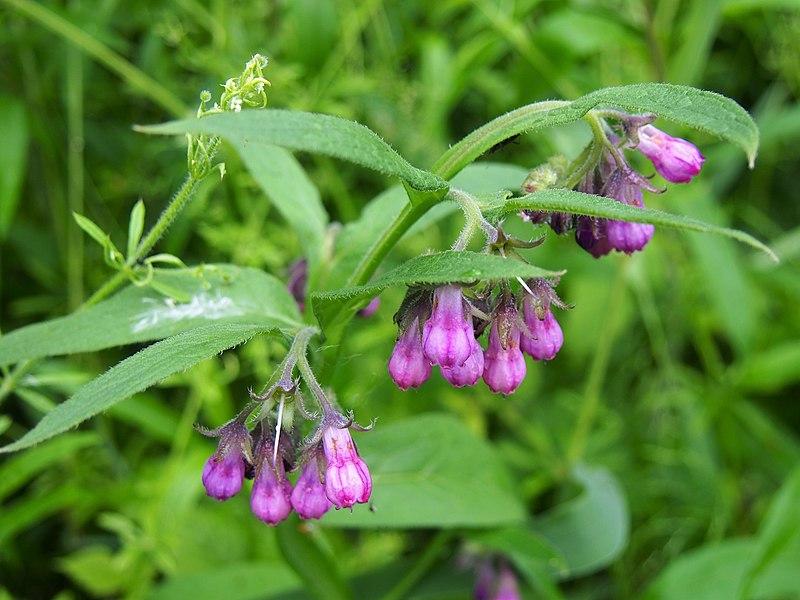
Symphytum officinale (Konsoud) : vertus médicinales en extraction alcoolique
Symphytum officinale (Konsoud) — famille Boraginacées.
Sources externes reconnues associées à cette monographie : TRAMIL et Pharmacopée française.
Cette base documente les extractions alcooliques (éthanol) des substances actives. Notre monographie recense actuellement 5 indications en extraction alcoolique pour cette espèce. La monographie s’appuie sur 62 références scientifiques enregistrées pour l’espèce.
Indications thérapeutiques en extraction alcoolique :
Note : les extraits de références scientifiques sont conservés dans leur langue d’origine (le plus souvent l’anglais), sans traduction, afin de respecter le texte source des publications.
- État inflammatoire : Partie usitée : Racine. Profil pharmacologique documenté : Diclofenac-like.
Selon VOSTINARU O (2017) : The anti-inflammatory effect of the hydro-Glycero- alcoholic extract administered orally was assessed by the carrageenan-induced rat paw oedema method while the antinociceptive effect was determined by the acetic acid induced writhing test in mice & by Randall Selitto test in rats. officinale extract (500 mg/kg, orally) reduced significantly & dose-dependently oedema by 55.6% at 1h after inflammation was induced. Selon Kumar DTY (2020) : The present study was carried out to assess the possible anti-inflammatory effect of methanolic extract of roots of S officinale MERSO) using egg white-induced edema in rats (acute model of inflammation). - Infection bactérienne : Partie usitée : Feuille.
Selon Benedek B (2010) : In conclusion, the comfrey root fluid extract contained in Kytta-Salbe f & Kytta-Plasma f was not mutagenic in the bacterial reverse mutation assay. The aim of this study was to demonstrate the absence of genotoxic effects of this special extract in the bacterial reverse mutation assay (Ame’s test). Selon Sumathi S (2011) : The present study was carried out antibacterial activity of Symphytum officinale by Streak plate method using different solvent such as ethanol, methanol, ethyl acetate & chloroform. - Douleur, hyperalgie : Partie usitée : Racine.
Selon Pabst H (2012) : Secondary measures included back pain at rest, pressure algometry, consumption of analgesic medication, functional impairment measured with Oswestry Disability Index, and global assessment of response. This randomised, multicentre, double‐blind, three‐arm, placebo‐controlled trial compared a topical combination of 35% comfrey root extract plus 1.2% methyl nicotinate versus a single preparation of methyl nicotinate or placebo cream for relief of acute upper or low back pain. Selon Masoudi M (2017) : Result: the result of this study indicated that Symphytum officinale possess anti-cancer & osteoarthritic pain activity.
D’autres indications (y compris d’autres modes d’extraction le cas échéant), posologies, précautions d’emploi et le détail des références scientifiques sont disponibles dans la fiche monographique complète.
Base médicinale Lapotitjéri di la Nati
Extraits éthanoliques des substances actives — monographies, indications, posologies et références pour professionnels de santé. Ethnopharmacologue Emmanuel Nossin.
→ Rechercher Symphytum officinale dans la base (abonnement requis)
Crédit photo : Photo de Agnieszka Kwiecień sans modification (CC BY-SA 4.0). Licence : CC BY-SA 4.0.