
Tabebuia rosea (Pwayé-wôz) : vertus médicinales en extraction alcoolique
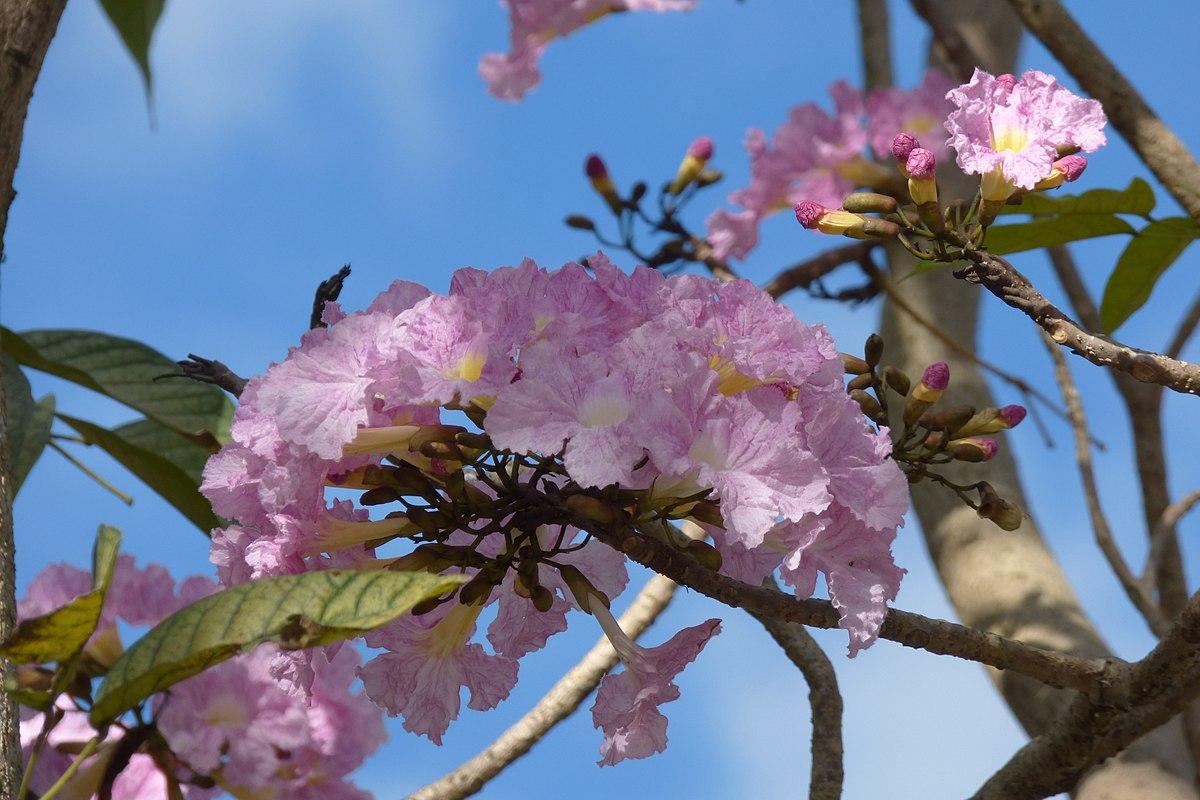
Tabebuia rosea (Pwayé-wôz) : vertus médicinales en extraction alcoolique
Tabebuia rosea (Pwayé-wôz) — famille Bignoniacées.
Cette base documente les extractions alcooliques (éthanol) des substances actives. Notre monographie recense actuellement 5 indications en extraction alcoolique pour cette espèce. La monographie s’appuie sur 25 références scientifiques enregistrées pour l’espèce.
Indications thérapeutiques en extraction alcoolique :
Note : les extraits de références scientifiques sont conservés dans leur langue d’origine (le plus souvent l’anglais), sans traduction, afin de respecter le texte source des publications.
- Infection bacterienne : Partie usitée : Feuille. Profil pharmacologique documenté : Pénicilline-like, Streptomycine-like.
Selon Sathya M (2008) : In vitro antibacterial studies on the ethanolic leaf extracts were carried out on ten medically important bacterial strains, including Salmonella typhimurium, Pseudomonas aeruginosa, Klebsiella pneumonia, Escherichia coli, Pseudomonas sp. Staphylococcus epidermis, Micrococcus luteus, Staphylococcus aureus, Streptococcus sp. Selon Franco Ospina LA (2013) : Both Tabebuia species revealed significant antibacterial activity against Staphylococcus aureus ATCC 25923. - Arthrose, arthrite, rhumatisme, oedème : Partie usitée : Écorce (interne). Profil pharmacologique documenté : Indometacine-like.
Selon Franco Ospina LA (2013) : The evaluation of antiinflammatory action used the 12-O-tetradecanoylphorbol-13-acetate induced ear edema in mice, whereas the antioxidant & antibacterial activities were determined in vitro, using the 2,22 -diphenyl-1-picrylhydrazyl radical scavenging method & agar well diffusion method, respectively. Results: ethanol extracts from TR & TO inner bark, as well as some of their fractions showed significant antiinflammatory & antioxidant activity, being generally Tabebuia rosea more active as antiinflammatory. Selon Almeida ER (1990) : Almeida ER et al, Antiinflammatory action of lapachol, J. - Infection bactérienne : Partie usitée : Écorce (interne). Profil pharmacologique documenté : Gentamycine-like.
Selon Franco Ospina LA (2013) : Both Tabebuia species revealed significant antibacterial activity against Staphylococcus aureus ATCC 25923. Objectives: to evaluate the antiinflammatory, antioxidant & antibacterial activity of the total ethanolic extracts & fractions obtained from the inner bark of TR & TO by using ether, dichloromethane, ethyl acetate & ethanol. Selon Sathya M (2008) : In vitro antibacterial studies on the ethanolic leaf extracts were carried out on ten medically important bacterial strains, including Salmonella typhimurium, Pseudomonas aeruginosa, Klebsiella pneumonia, Escherichia coli, Pseudomonas sp.
D’autres indications (y compris d’autres modes d’extraction le cas échéant), posologies, précautions d’emploi et le détail des références scientifiques sont disponibles dans la fiche monographique complète.
Base médicinale Lapotitjéri di la Nati
Extraits éthanoliques des substances actives — monographies, indications, posologies et références pour professionnels de santé. Ethnopharmacologue Emmanuel Nossin.
→ Rechercher Tabebuia rosea dans la base (abonnement requis)
Crédit photo : Photo de Alejandro Bayer Tamayo sans modification (CC BY 4.0). Licence : CC BY 4.0.