Ageratum conyzoides (Zèb-lavièj) : medicinal properties | Lapo
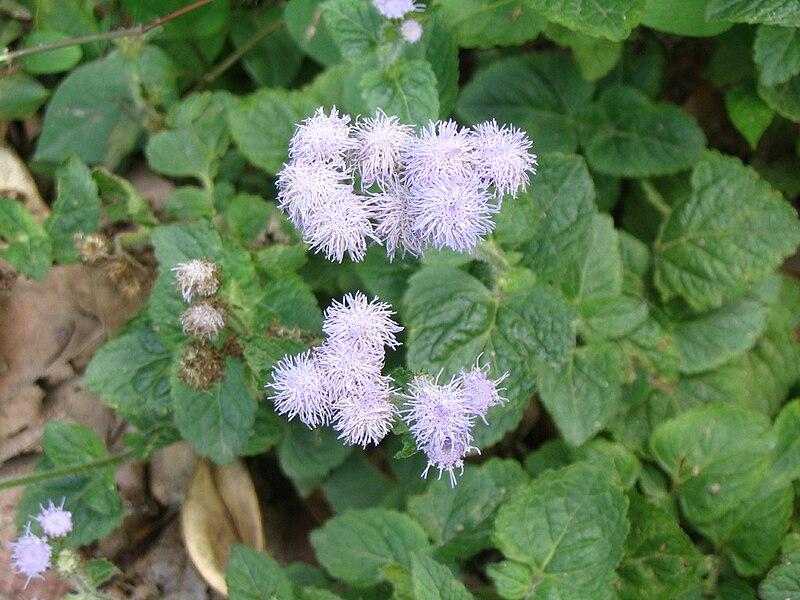
Ageratum conyzoides (Zèb-lavièj) : medicinal properties in alcoholic extraction
Ageratum conyzoides (Zèb-lavièj) — family Asteracées.
Recognised external sources linked to this monograph: TRAMIL and French Pharmacopoeia.
This database documents alcoholic (ethanol) extractions of active substances. Our monograph currently lists 32 indications in alcoholic extraction for this species. The monograph draws on 200 scientific references recorded for the species.
Therapeutic indications in alcoholic extraction:
Note: scientific reference excerpts are kept in their original language (most often English), without translation, to respect the source text of publications.
- Bacterial infection : Plant part used: Sheet. Documented pharmacological profile: Gentamycine-like.
According to Patil RP (2010): We have therefore investigated the Antiaflatoxigenic, antioxidant and antimicrobial activity of essential oils of A. Aflatoxin contamination of various commodities can occur as a result of infection, mainly by Aspergillus flavus & Aspergillus parasiticus. According to Adetutu A (2012): The antibacterial effects of the extracts & fractions of the plant materials were assayed on the bacterial cultures of Escherichia coli, Pseudomonas aeruginosa, Staphylococcus aureus, Methicillin Resistant Staphylococcus aureus (MRSA) & Clostridium perfringens. - Tick-borne disease in cattle : Plant part used: above-ground part. Mentioned synergistic association: ARTEMISIA ABSINTHIUM-L.
According to KUMAR AKJ (2016): In India, Rhipicephalus (Boophilus) microplus populations have developed a certain level of resistance to most of the acaricides marketed against tick species. To manage the problem, the present study was undertaken to evaluate the Acaricidal potential of Ageratum conyzoïdes plants against acaricides-resistant ticks infesting cattle and buffaloes. According to Parveen S (2014): In-vitro efficacy of ethanolic extracts obtained from the aerial parts of Ageratum conyzoïdes & Artemisia absinthium was assessed on Rhipicephalus microplus using adult immersion test (AIT). - Oxidative stress : Plant part used: Sheet. Documented pharmacological profile: V vitamine C-like. Mentioned synergistic association: Chromolaena odorata-feuille.
According to OYEWOLE OI (2015): OYEWOLE OI et al, Antioxidative Potential of Ageratum Conyzoïdes & Zanthoxyllum Zanthoxyloïdes extracts in Cadmium-Induced Oxidative Stress in Rat Tissues, Am J of Biomed Res, 3(4): 71-4, 2015. According to SHIRWAIKAR A (2012): The ethanol extract of Ageratum conyzoïdes was evaluated for Gastroprotection in rats using the Ibuprofen, ethanol & cold restraint stress ulcer models. Oral administration of the ethanol extract at dose levels of 500 & 750 mg/kg significantly protected gastric lesions by 80.59 & 89.33%, respectively, as compared to Misoprostol (74.43%) in the Ibuprofen model; by 97.09 & 99.24%, respectively, in the cold stress model as compared to Famotidine (77.86 and 92.71%) & by 86.58 and 92.29%, respectively, in the alcohol model.
Further indications (including other extraction modes where applicable), dosages, precautions for use and full scientific references are available in the complete monograph.
Lapotitjéri di la Nati medicinal database
Ethanolic extracts of active substances — monographs, indications, dosages and references for healthcare professionals. Ethnopharmacologist Emmanuel Nossin.
→ Search Ageratum conyzoides in the database (subscription required)
Photo credit : Photo by Minghong without modification (CC BY 4.0). License : CC BY 4.0.