
Casearia sylvestris (Dog poo) : medicinal properties | Lapo
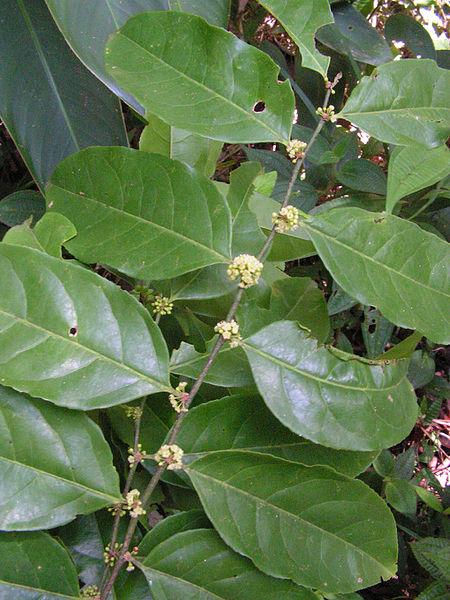
Casearia sylvestris (Dog poo) : medicinal properties in alcoholic extraction
Casearia sylvestris (Dog poo) — family Flacourtiacées.
This database documents alcoholic (ethanol) extractions of active substances. Our monograph currently lists 16 indications in alcoholic extraction for this species. The monograph draws on 58 scientific references recorded for the species.
Therapeutic indications in alcoholic extraction:
Note: scientific reference excerpts are kept in their original language (most often English), without translation, to respect the source text of publications.
- Cancer : Plant part used: Sheet. Documented pharmacological profile: Doxorubicine-like.
According to Da Silva S (2009): We utilized two tumoral models: Ehrlich ascites tumor cells (EAT)/BALB/c mice & Lewis’s lung cancer cells (LLC1)/C57bl/6 mice. Both compounds presented similar & low in vitro cytotoxicity against Ehrlich ascites tumor cells & & not present any significant toxicity against Lewis’s lung cancer cells. According to Bettega FK (2014): Antiproliferative effects in vivo were measured in tumor tissue from Ehrlich ascites-bearing mice through the 3H-thymidine uptake assay & the trypan blue exclusion method Results: In vitro, EC50 values found at 24 h on MCF-7 cells were 141 µg/mL for CAE & 66 µg/mL for f-CHCl3. - Abdominal pain : Plant part used: Sheet.
According to Esteves I (2005): To investigate the antiulcer & antiinflammatory activities of the essential oil from Casearia sylvestris leaves (EOCS) the following tests were used: rat paw edema, granulomatous tissue test, vascular permeability, writhing test, gastric ulcer stress-induced & evaluation of gastric secretion (pylorus ligation test). Furthermore, EOCS inhibited 90% of stress-induced gastric ulcer, while cimetidine inhibited 70% (p < 0.05, Student's t-test). According to De Matos E (2007): Significant antinociceptive effects in the hot plate test were only detected following administration of the highest extract dose, but this analgesic action appeared to be specific as the extract failed to change motor & exploratory activities. - Arthritis, osteoarthritis, rheumatism, oedema : Plant part used: Sheet. Documented pharmacological profile: Indometacine-like.
According to Esteves I (2005): With the overall results obtained in this study the authors suggest an anti-inflammatory activity for the EOCS of Casearia sylvestris beyond its anti-ulcer activity. To investigate the antiulcer & antiinflammatory activities of the essential oil from Casearia sylvestris leaves (EOCS) the following tests were used: rat paw edema, granulomatous tissue test, vascular permeability, writhing test, gastric ulcer stress-induced & evaluation of gastric secretion (pylorus ligation test). According to Ruppelt BM (1991): Analgesic & anti-inflammatory activities.
Further indications (including other extraction modes where applicable), dosages, precautions for use and full scientific references are available in the complete monograph.
Lapotitjéri di la Nati medicinal database
Ethanolic extracts of active substances — monographs, indications, dosages and references for healthcare professionals. Ethnopharmacologist Emmanuel Nossin.
→ Search Casearia sylvestris in the database (subscription required)
Photo credit : Photo by Tarciso Leão without modification (CC BY 2.0). License : CC BY 2.0.