
Casearia sylvestris (Pis-chien) : vertus médicinales en extraction alcoolique
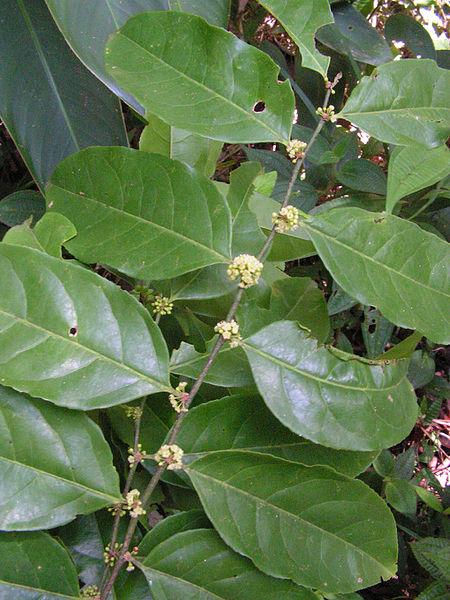
Casearia sylvestris (Pis-chien) : vertus médicinales en extraction alcoolique
Casearia sylvestris (Pis-chien) — famille Flacourtiacées.
Cette base documente les extractions alcooliques (éthanol) des substances actives. Notre monographie recense actuellement 16 indications en extraction alcoolique pour cette espèce. La monographie s’appuie sur 58 références scientifiques enregistrées pour l’espèce.
Indications thérapeutiques en extraction alcoolique :
Note : les extraits de références scientifiques sont conservés dans leur langue d’origine (le plus souvent l’anglais), sans traduction, afin de respecter le texte source des publications.
- Cancer : Partie usitée : Feuille. Profil pharmacologique documenté : Doxorubicine-like.
Selon Da Silva S (2009) : We utilized two tumoral models: Ehrlich ascites tumor cells (EAT)/BALB/c mice & Lewis’s lung cancer cells (LLC1)/C57bl/6 mice. Both compounds presented similar & low in vitro cytotoxicity against Ehrlich ascites tumor cells & & not present any significant toxicity against Lewis’s lung cancer cells. Selon Bettega FK (2014) : Antiproliferative effects in vivo were measured in tumor tissue from Ehrlich ascites-bearing mice through the 3H-thymidine uptake assay & the trypan blue exclusion method Results: In vitro, EC50 values found at 24 h on MCF-7 cells were 141 µg/mL for CAE & 66 µg/mL for f-CHCl3. - Gastralgies : Partie usitée : Feuille.
Selon Esteves I (2005) : To investigate the antiulcer & antiinflammatory activities of the essential oil from Casearia sylvestris leaves (EOCS) the following tests were used: rat paw edema, granulomatous tissue test, vascular permeability, writhing test, gastric ulcer stress-induced & evaluation of gastric secretion (pylorus ligation test). Furthermore, EOCS inhibited 90% of stress-induced gastric ulcer, while cimetidine inhibited 70% (p < 0.05, Student's t-test). Selon De Matos E (2007) : Significant antinociceptive effects in the hot plate test were only detected following administration of the highest extract dose, but this analgesic action appeared to be specific as the extract failed to change motor & exploratory activities. - Arthrite, arthrose, rhumatisme, œdème : Partie usitée : Feuille. Profil pharmacologique documenté : Indometacine-like.
Selon Esteves I (2005) : With the overall results obtained in this study the authors suggest an anti-inflammatory activity for the EOCS of Casearia sylvestris beyond its anti-ulcer activity. To investigate the antiulcer & antiinflammatory activities of the essential oil from Casearia sylvestris leaves (EOCS) the following tests were used: rat paw edema, granulomatous tissue test, vascular permeability, writhing test, gastric ulcer stress-induced & evaluation of gastric secretion (pylorus ligation test). Selon Ruppelt BM (1991) : Analgesic & anti-inflammatory activities.
D’autres indications (y compris d’autres modes d’extraction le cas échéant), posologies, précautions d’emploi et le détail des références scientifiques sont disponibles dans la fiche monographique complète.
Base médicinale Lapotitjéri di la Nati
Extraits éthanoliques des substances actives — monographies, indications, posologies et références pour professionnels de santé. Ethnopharmacologue Emmanuel Nossin.
→ Rechercher Casearia sylvestris dans la base (abonnement requis)
Crédit photo : Photo de Tarciso Leão sans modification (CC BY 2.0). Licence : CC BY 2.0.