Momordica charantia (Pawoka) : medicinal properties | Lapo
Momordica charantia (Pawoka) : medicinal properties in alcoholic extraction
Momordica charantia (Pawoka) — family Cucurbitacées.
Recognised external sources linked to this monograph: TRAMIL and French Pharmacopoeia.
This database documents alcoholic (ethanol) extractions of active substances. Our monograph currently lists 34 indications in alcoholic extraction for this species. The monograph draws on 262 scientific references recorded for the species.
Therapeutic indications in alcoholic extraction:
Note: scientific reference excerpts are kept in their original language (most often English), without translation, to respect the source text of publications.
- Type II diabetes mellitus (Acarbose/Glibenclamide-like only in synergistic combination) : Plant part used: Fruit. Documented pharmacological profile: Acarbose-like, Glibenclamide-like. Mentioned synergistic association: Momordica dioica-fruit.
Selon Hussain TS (2014) : Glibenclamide, a standard drug, not only lowered hyperglycaemia & hyperlipidaemia but also restored the normal levels. Alloxan-induced diabetic rabbits were treated with methanolic & ethanolic MC extract. Selon Basch E (2003) : Bitter melon (Momordica charantia) is an alternative therapy that has primarily been used for lowering blood glucose levels in patients with diabetes mellitus. - Cancer : Plant part used: Seed.
Selon Fang EF (2012) : The incidence of nasopharyngeal carcinoma (NPC) remains high in endemic regions, including southern China, northern Africa, & North America. In this study, the antitumor activity of Momordica charantia lectin (MCL), a type II ribosome inactivating protein from bitter gourd, on NPC was investigated. Selon Bhattacharya S (2016) : Head & neck squamous cell carcinoma (HNSCC) is the sixth most common cancer & leading cause of cancer related mortality worldwide. - Dermatomycosis : Plant part used: Pest control and veterinary products. Documented pharmacological profile: Lévamisole-like.
Selon Ahmad B (2013) : The crude methanolic extract & ethyl acetate fraction (EtOAc) presented good linear growth inhibition against Microsporum canis (70%). Luffa cylindrica & Momordica charantia, were screened for antibacterial, antifungal & phytotoxic activities. Selon Tavares Braga L (2007) : Young rabbits, New Zealand, males, were divided in groups that received by via oral during 15 days Tween 20 (1%, control; n=5), levamisole (25 mg/kg/LP; n=4) or ethanolic extract of MC leaves (EE, 10 mg/kg/LP; n=6), beginning at 15th day of Microsporum canis inoculation.
Further indications (including other extraction modes where applicable), dosages, precautions for use and full scientific references are available in the complete monograph.
Lapotitjéri di la Nati medicinal database
Ethanolic extracts of active substances — monographs, indications, dosages and references for healthcare professionals. Ethnopharmacologist Emmanuel Nossin.
→ Search Momordica charantia in the database (subscription required)
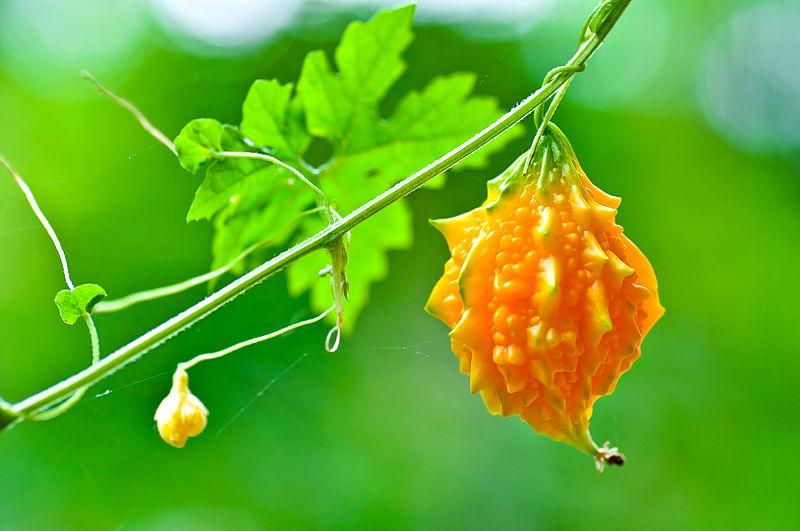
Photo credit : Photo by Balaram Mahalder without modification (CC BY-SA 3.0). License : CC BY-SA 3.0.