Momordica charantia (Pawoka) : vertus médicinales en extraction alcoolique
Momordica charantia (Pawoka) : vertus médicinales en extraction alcoolique
Momordica charantia (Pawoka) — famille Cucurbitacées.
Sources externes reconnues associées à cette monographie : TRAMIL et Pharmacopée française.
Cette base documente les extractions alcooliques (éthanol) des substances actives. Notre monographie recense actuellement 34 indications en extraction alcoolique pour cette espèce. La monographie s’appuie sur 262 références scientifiques enregistrées pour l’espèce.
Indications thérapeutiques en extraction alcoolique :
Note : les extraits de références scientifiques sont conservés dans leur langue d’origine (le plus souvent l’anglais), sans traduction, afin de respecter le texte source des publications.
- Diabète mellitus de type II (Acarbose/Glibenclamide-like uniquement en association synergique) : Partie usitée : Fruit. Profil pharmacologique documenté : Acarbose-like, Glibenclamide-like. Association synergique mentionnée : Momordica dioica-fruit.
Selon Hussain TS (2014) : Alloxan-induced diabetic rabbits were treated with methanolic & ethanolic MC extract. Glibenclamide, a standard drug, not only lowered hyperglycaemia & hyperlipidaemia but also restored the normal levels. Selon Basch E (2003) : Bitter melon (Momordica charantia) is an alternative therapy that has primarily been used for lowering blood glucose levels in patients with diabetes mellitus. - Cancer : Partie usitée : Semence.
Selon Fang EF (2012) : The incidence of nasopharyngeal carcinoma (NPC) remains high in endemic regions, including southern China, northern Africa, & North America. In this study, the antitumor activity of Momordica charantia lectin (MCL), a type II ribosome inactivating protein from bitter gourd, on NPC was investigated. Selon Bhattacharya S (2016) : Head & neck squamous cell carcinoma (HNSCC) is the sixth most common cancer & leading cause of cancer related mortality worldwide. - Dermatomycose : Partie usitée : Parasiticide et vétérinaire. Profil pharmacologique documenté : Lévamisole-like.
Selon Ahmad B (2013) : The crude methanolic extract & ethyl acetate fraction (EtOAc) presented good linear growth inhibition against Microsporum canis (70%). Luffa cylindrica & Momordica charantia, were screened for antibacterial, antifungal & phytotoxic activities. Selon Tavares Braga L (2007) : Young rabbits, New Zealand, males, were divided in groups that received by via oral during 15 days Tween 20 (1%, control; n=5), levamisole (25 mg/kg/LP; n=4) or ethanolic extract of MC leaves (EE, 10 mg/kg/LP; n=6), beginning at 15th day of Microsporum canis inoculation.
D’autres indications (y compris d’autres modes d’extraction le cas échéant), posologies, précautions d’emploi et le détail des références scientifiques sont disponibles dans la fiche monographique complète.
Base médicinale Lapotitjéri di la Nati
Extraits éthanoliques des substances actives — monographies, indications, posologies et références pour professionnels de santé. Ethnopharmacologue Emmanuel Nossin.
→ Rechercher Momordica charantia dans la base (abonnement requis)
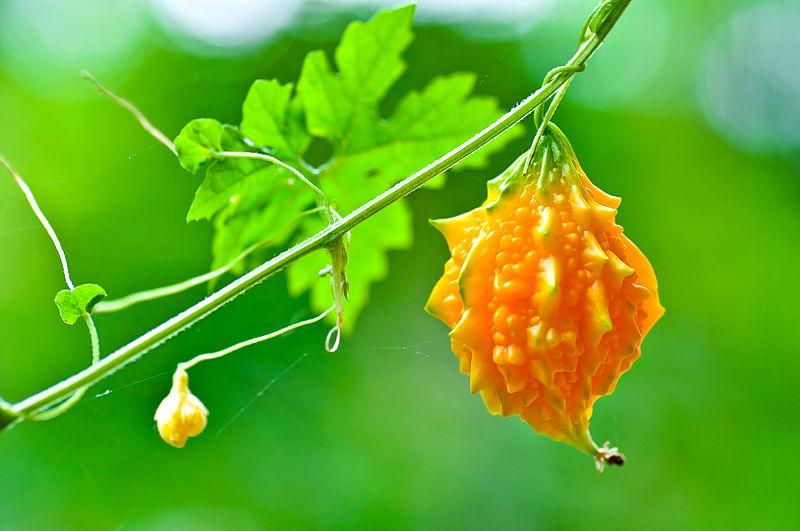
Crédit photo : Photo de Balaram Mahalder sans modification (CC BY-SA 3.0). Licence : CC BY-SA 3.0.