
Tagetes erecta (Marigold) : medicinal properties | Lapo
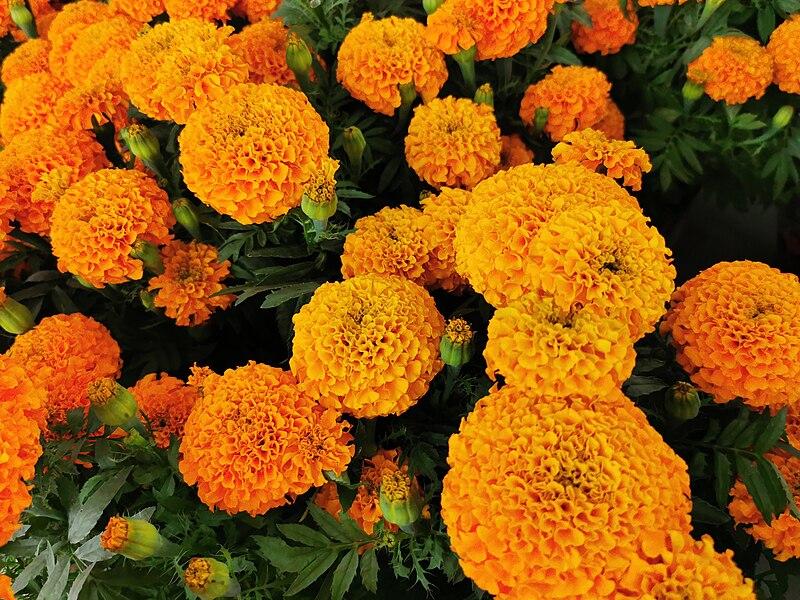
Tagetes erecta (Marigold) : medicinal properties in alcoholic extraction
Tagetes erecta (Marigold) — family Astéracées.
This database documents alcoholic (ethanol) extractions of active substances. Our monograph currently lists 30 indications in alcoholic extraction for this species. The monograph draws on 108 scientific references recorded for the species.
Therapeutic indications in alcoholic extraction:
Note: scientific reference excerpts are kept in their original language (most often English), without translation, to respect the source text of publications.
- Cancer : Plant part used: Root. Documented pharmacological profile: Paclitaxel-like.
Selon Barhoi D (2021) : To evaluate the antitumor potential of aqueous extract of TE (AETE), EAC (Ehrlich ascites carcinoma) induced solid tumor model was prepared in Swiss albino mice. The present study was designed to evaluate the anticancer activity of a medicinal plant, Tagetes erecta L., in established cancer cell lines in vitro & in animal models in vivo. Selon Gonzalez ASC (2023) : Our objective was to evaluate the antitumor activity of TE extract in a lung carcinoma model. - Fungal infection : Plant part used: Flower. Documented pharmacological profile: Amphotericine B-like, Fluconazole-like.
(2019) : Antifungal activity against was evaluated against Candida albicans, Aspergillus niger, Aspergillus flavus, & Penicillium crysogenum fungal strains in disc diffusion method using Amphotericin-B, fluconazole as positive controls. This study demonstrated that the petal extract of TEacould be a valuable lead, which has the potential to be explored for its use against fungal infection, & breast carcinoma in the upcoming years by the scientific fraternity. Selon Mumtaz T (2018) : These ornamental plants are being utilized as an antiseptic, antifungal, anti-inflammatory, antibacterial & wound healing agents in modern system of medicine. - Bacterial infection : Plant part used: Sheet. Documented pharmacological profile: Amoxicilline-like, Ciprofloxacine-like, Streptomycine-like.
Selon Rhama S (2011) : It was then subjected to disc diffusion assay to assess its antibacterial potentials against Alcaligens faecalis, Bacillus cereus, Campylobacter coli, Escherchia coli, Klebsiella pneumoniae, Pseudomonas aeruginosa, Proteus vulgaris, Streptococcus mutans & Streptococcus pyogenes. The flavonoid possesses antibacterial activity against all the tested strains & shows maximum zone of inhibition for K pneumoniae (29.50 mm). Selon Mumtaz T (2018) : These ornamental plants are being utilized as an antiseptic, antifungal, anti-inflammatory, antibacterial & wound healing agents in modern system of medicine.
Further indications (including other extraction modes where applicable), dosages, precautions for use and full scientific references are available in the complete monograph.
Lapotitjéri di la Nati medicinal database
Ethanolic extracts of active substances — monographs, indications, dosages and references for healthcare professionals. Ethnopharmacologist Emmanuel Nossin.
→ Search Tagetes erecta in the database (subscription required)
Photo credit : Photo by Wotancito without modification (CC BY 4.0). License : CC BY 4.0.