Zingiber zerumbet (Jenjanb wouj) : medicinal properties | Lapo
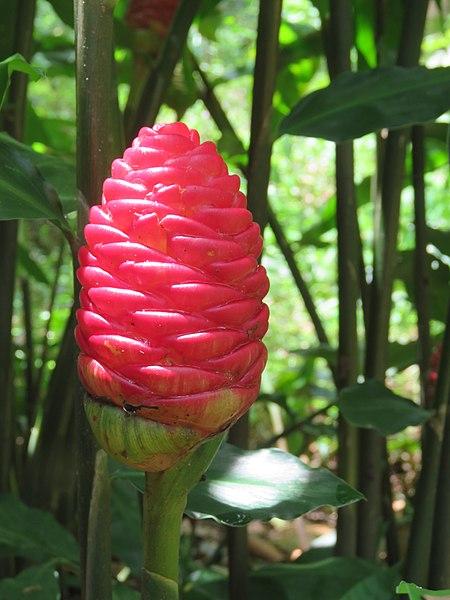
Zingiber zerumbet (Jenjanb wouj) : medicinal properties in alcoholic extraction
Zingiber zerumbet (Jenjanb wouj) — family Zingiberacées.
This database documents alcoholic (ethanol) extractions of active substances. Our monograph currently lists 11 indications in alcoholic extraction for this species. The monograph draws on 143 scientific references recorded for the species.
Therapeutic indications in alcoholic extraction:
Note: scientific reference excerpts are kept in their original language (most often English), without translation, to respect the source text of publications.
- Bacterial infection : Plant part used: Rhizome. Documented pharmacological profile: Kanamycine-like.
Selon Azelan NA (2015) : In this study, essential oils from both plants were investigated for their efficacy on antibacterial activity against two Gram positive (Staphylococcus aureus, & Bacillus cereus) & two Gram negative (Pseudomonas aeruginosa & Escherichia coli) bacteria species using the disc diffusion assay. zerumbet essential oils might provide potential therapeutic agents against bacterial infection. Selon Preshahdin NA (2023) : Among the extracts, the methanol extract demonstrated high inhibitory activity against Bacillus cereus (14.00 mm), Staphylococcus aureus (9.00 mm), & Salmonella typhi (10.66 mm), while the ethyl acetate extract gave the biggest inhibition zone on E. - Cancer : Plant part used: Rhizome. Documented pharmacological profile: Cisplatine-like.
Selon Wahab SIA (2008) : The aim of this study is to evaluate some derivatives of Zerumbone for their anti-tumor effects towards human cervical cancer cell lines (HeLa). The results of this study showed that derivatives of ZER have shown lesser anti-tumor effects towards HeLa cancer cells compared to the principal compound (ZER). Selon Kalantari K (2017) : ZER also has effects on angiogenesis & acts as an antitumor drug in the treatment of cancer, showing selective toxicity toward various cancer cell lines. - Autoimmune diseases : Plant part used: Rhizome. Documented pharmacological profile: Dexaméthasone-like.
Selon Murakami A (2019) : Ulcerative colitis (UC) & Crohn’s disease are inflammatory disorders of unknown cause & difficult to treat, though some synthetic chemicals, including ligands for peroxisome proliferator-activated receptors (PPARs), are anticipated to be useful drugs. In contrast, few food phytochemicals have been reported to suppress colitis in animal models. Selon Kapitan O (2017) : Puni (Zingiber zerumbet) is a wildly grown plant that used by Timorese people to treat ulcerative lesions in Timor Island.
Further indications (including other extraction modes where applicable), dosages, precautions for use and full scientific references are available in the complete monograph.
Lapotitjéri di la Nati medicinal database
Ethanolic extracts of active substances — monographs, indications, dosages and references for healthcare professionals. Ethnopharmacologist Emmanuel Nossin.
→ Search Zingiber zerumbet in the database (subscription required)
Photo credit : Photo de Vinayaraj sans modification (CC BY 4.0). License : CC BY 4.0.