Zingiber zerumbet (Jenjanb wouj) : vertus médicinales en extraction alcoolique
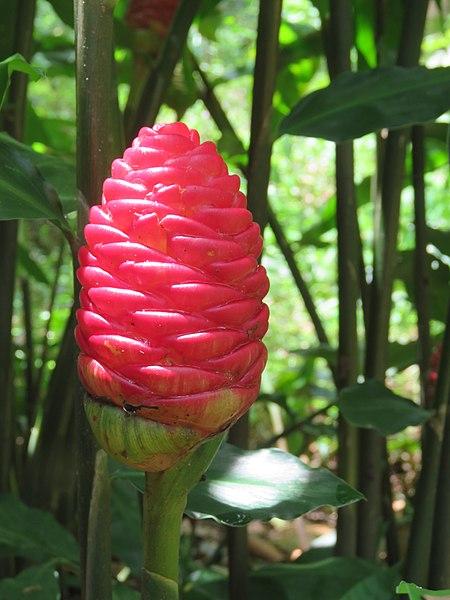
Zingiber zerumbet (Jenjanb wouj) : vertus médicinales en extraction alcoolique
Zingiber zerumbet (Jenjanb wouj) — famille Zingiberacées.
Cette base documente les extractions alcooliques (éthanol) des substances actives. Notre monographie recense actuellement 11 indications en extraction alcoolique pour cette espèce. La monographie s’appuie sur 143 références scientifiques enregistrées pour l’espèce.
Indications thérapeutiques en extraction alcoolique :
Note : les extraits de références scientifiques sont conservés dans leur langue d’origine (le plus souvent l’anglais), sans traduction, afin de respecter le texte source des publications.
- Infection bactérienne : Partie usitée : Rhizome. Profil pharmacologique documenté : Kanamycine-like.
Selon Azelan NA (2015) : In this study, essential oils from both plants were investigated for their efficacy on antibacterial activity against two Gram positive (Staphylococcus aureus, & Bacillus cereus) & two Gram negative (Pseudomonas aeruginosa & Escherichia coli) bacteria species using the disc diffusion assay. zerumbet essential oils might provide potential therapeutic agents against bacterial infection. Selon Preshahdin NA (2023) : Among the extracts, the methanol extract demonstrated high inhibitory activity against Bacillus cereus (14.00 mm), Staphylococcus aureus (9.00 mm), & Salmonella typhi (10.66 mm), while the ethyl acetate extract gave the biggest inhibition zone on E. - Cancer : Partie usitée : Rhizome. Profil pharmacologique documenté : Cisplatine-like.
Selon Wahab SIA (2008) : The aim of this study is to evaluate some derivatives of Zerumbone for their anti-tumor effects towards human cervical cancer cell lines (HeLa). The results of this study showed that derivatives of ZER have shown lesser anti-tumor effects towards HeLa cancer cells compared to the principal compound (ZER). Selon Kalantari K (2017) : ZER also has effects on angiogenesis & acts as an antitumor drug in the treatment of cancer, showing selective toxicity toward various cancer cell lines. - Maladies autoimmunes : Partie usitée : Rhizome. Profil pharmacologique documenté : Dexaméthasone-like.
Selon Murakami A (2019) : Ulcerative colitis (UC) & Crohn’s disease are inflammatory disorders of unknown cause & difficult to treat, though some synthetic chemicals, including ligands for peroxisome proliferator-activated receptors (PPARs), are anticipated to be useful drugs. In contrast, few food phytochemicals have been reported to suppress colitis in animal models. Selon Kapitan O (2017) : Puni (Zingiber zerumbet) is a wildly grown plant that used by Timorese people to treat ulcerative lesions in Timor Island.
D’autres indications (y compris d’autres modes d’extraction le cas échéant), posologies, précautions d’emploi et le détail des références scientifiques sont disponibles dans la fiche monographique complète.
Base médicinale Lapotitjéri di la Nati
Extraits éthanoliques des substances actives — monographies, indications, posologies et références pour professionnels de santé. Ethnopharmacologue Emmanuel Nossin.
→ Rechercher Zingiber zerumbet dans la base (abonnement requis)
Crédit photo : Photo de Vinayaraj sans modification (CC BY 4.0). Licence : CC BY 4.0.