
Peperomia pellucida (Zèb-kouwès) : vertus médicinales en extraction alcoolique
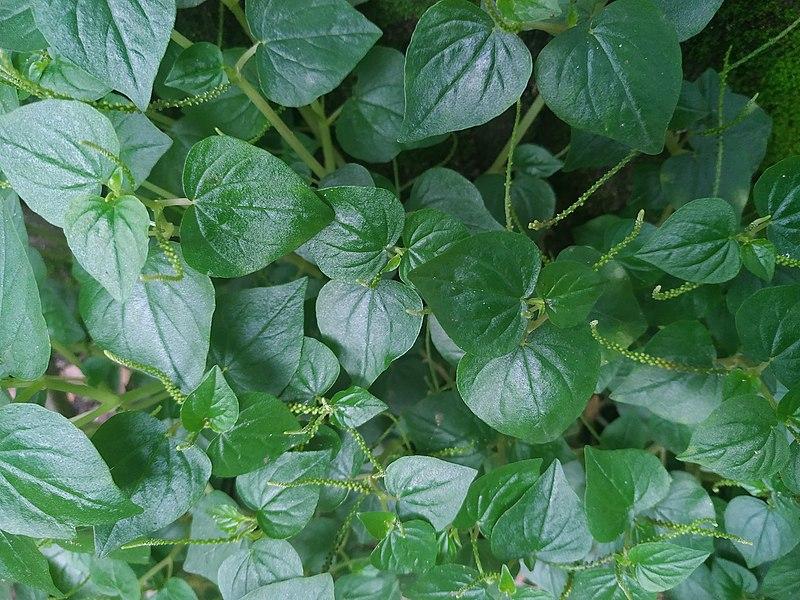
Peperomia pellucida (Zèb-kouwès) : vertus médicinales en extraction alcoolique
Peperomia pellucida (Zèb-kouwès) — famille Pipéracées.
Sources externes reconnues associées à cette monographie : TRAMIL et Pharmacopée française.
Cette base documente les extractions alcooliques (éthanol) des substances actives. Notre monographie recense actuellement 12 indications en extraction alcoolique pour cette espèce. La monographie s’appuie sur 74 références scientifiques enregistrées pour l’espèce.
Indications thérapeutiques en extraction alcoolique :
Note : les extraits de références scientifiques sont conservés dans leur langue d’origine (le plus souvent l’anglais), sans traduction, afin de respecter le texte source des publications.
- Infection bacterienne : Partie usitée : Feuille. Profil pharmacologique documenté : Pénicilline-like.
Selon Zubair KL (2013) : Ethanol extract of the plant had higher inhibitory action against Staphylococcus aureus, Bacillus subtilis, Proteus mirabilis & Pseudomonas fluorescens. The results of the present study revealed that the leaves of this traditional medicinal plant are a remedy for thrombosis, diarrhoea & possess potential antimicrobial activity against important human pathogens. Selon Ogunmoye AO (2018) : The antimicrobial effects showed it has Minimum Inhibition Concentration (MIC) on Pseudomonas aeruginosa & Bacillus subtilis at 0.01% oil concentration having 7.0 mm and 9.3 mm zones of inhibitions; but MIC against Bacillus cereus was obtained at 0.1% concentration of the oil. - Cancer : Partie usitée : Parties aériennes. Profil pharmacologique documenté : Zeocine-like.
Selon Pappachen LK (2013) : the presents study involves in the investigation of various extracts of Peperomia Pellucida for its phytochemical constituents & the cytotoxic potential, Qualitative phytochemical analysis of the plant extracts were done & all the extracts were screened for in vitro cytotoxic activity by MTT assay method using HEK 293 (Human Epithelial Kidney cell line), HeLa (Human cervical cancer cell line) & HePG2 (Human hepatic carcinoma cell line).It was found that the presence of phytochemicals were maximum in the methanol extract of P Pellucida when compared to other extracts and the methanol extract showed significant cytotoxic activity than all the other extracts against the above mentioned cancer cell lines while was found to be less cytotoxic against normal human kidney cells(HEK 293) displaying safety for normal cells. Selon Xu S (2006) : New structures were elucidated mainly by NMR & MS techniques & anticancer activities evaluated in HL-60, MCF-7 & HeLa cell lines. Compound 1 & peperomin E show growth inhibitory effects on the three cancer cell lines with 50-IC values ranging between 1.4 & 9.1 & between 1.8 & 11.1 m-M, respectively. - Infection du poisson-chat (Clarias gariepinus) : Partie usitée : Parasiticide et vétérinaire. Profil pharmacologique documenté : Gentamycine-like.
Selon Awe FA (s.d.) : The identified bacterial pathogen includes Streptococcus sp, Bacillus Cereus, Klebsiella sp, Enterobacter aerogenes and Escherichia coli. The leaves of these plants have inhibitory action on isolated bacteria & can be used to treat bacterial fin-rot of infected catfish Clarias gariepinus. Selon Okoh OS (2017) : Results: The EOs exhibited strong antibacterial activities against six bacteria (Escherichia coli [180], Enterobacter cloacae, Mycobacterium smegmatis, Listeria ivanovii, Staphylococcus aureus, Streptococcus uberis & Vibrio parahaemolyticus) strains.
D’autres indications (y compris d’autres modes d’extraction le cas échéant), posologies, précautions d’emploi et le détail des références scientifiques sont disponibles dans la fiche monographique complète.
Base médicinale Lapotitjéri di la Nati
Extraits éthanoliques des substances actives — monographies, indications, posologies et références pour professionnels de santé. Ethnopharmacologue Emmanuel Nossin.
→ Rechercher Peperomia pellucida dans la base (abonnement requis)
Crédit photo : Photo de Navaneeth Krishnan S sans modification (CC BY-SA 3.0). Licence : CC BY-SA 3.0.