
Plumeria alba (Franjipanié-blan) : vertus médicinales en extraction alcoolique
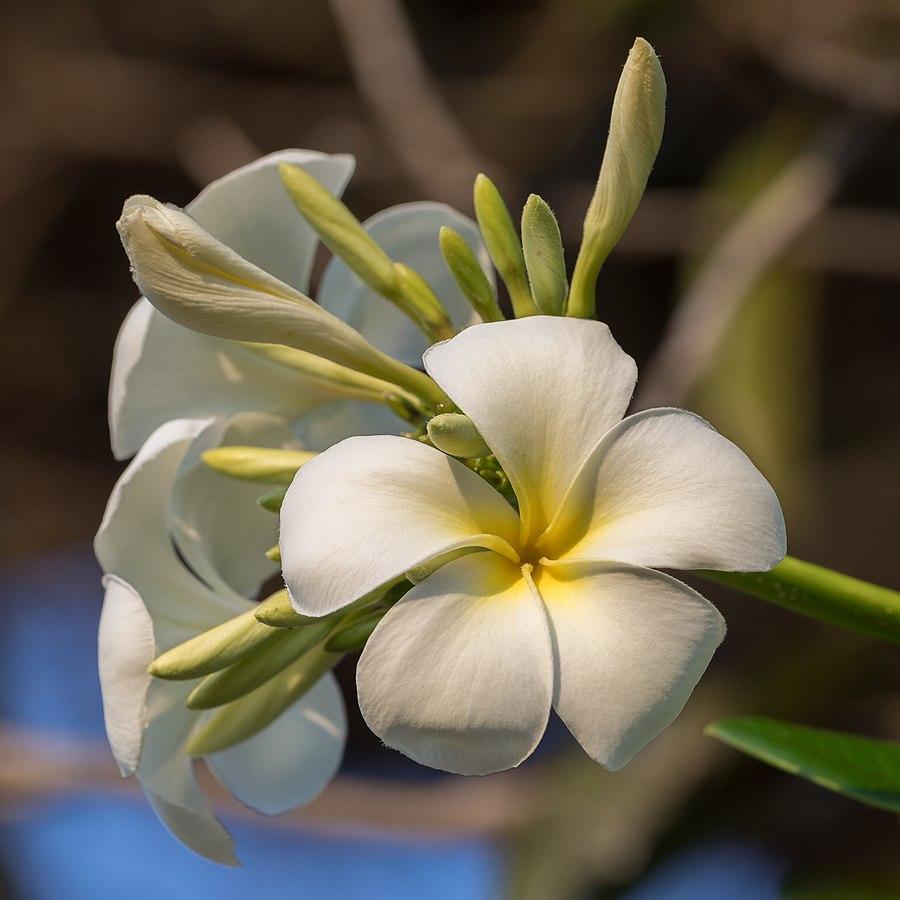
Plumeria alba (Franjipanié-blan) : vertus médicinales en extraction alcoolique
Plumeria alba (Franjipanié-blan) — famille Plumeriacées.
Cette base documente les extractions alcooliques (éthanol) des substances actives. Notre monographie recense actuellement 17 indications en extraction alcoolique pour cette espèce. La monographie s’appuie sur 61 références scientifiques enregistrées pour l’espèce.
Indications thérapeutiques en extraction alcoolique :
Note : les extraits de références scientifiques sont conservés dans leur langue d’origine (le plus souvent l’anglais), sans traduction, afin de respecter le texte source des publications.
- Infection bacterienne : Partie usitée : Feuille. Profil pharmacologique documenté : Ciprofloxacine-like.
Selon Khaing W (2019) : Moreover three different solvents such as ethanol, ethyl acetate & n-hexane extracts of the sample were examined for their antimicrobial activities against Bacillus subtilis, Staphylococcus aureus, Pseudomonas aeruginosa, Bacillus pumilus, Candida albicans & E. coli by Agar- well diffusion method. Selon Rudrappa M (2022) : Antimicrobial activity was investigated against Escherichia coli, Pseudomonas aeruginosa, Enterobacter aerogenes, Enterococcus faecalis, Bacillus subtilis, Streptococcus pneumoniae, Candida albicans, & Candida glabrata. - Diabete mellitus de type II : Partie usitée : Feuille. Profil pharmacologique documenté : Glibenclamide-like, Glimepiride-like.
Selon Nanda J (2023) : A Streptozotocin-nicotinamide-induced Type II diabetes model was used to elaborate on the hypoglycemic activity of ethanolic & aqueous leaf extractives of PA which were compared to the diabetic control group. In comparison to the diabetic control group, the ethanolic extract at a dose of 500 mg/kg b.w. Selon Mushtaq A (2017) : Any impairment in the functionality of insulin leads to long lasting metabolic disorder called diabetes mellitus which can be described as a group of disorders i.e., hyperlipidemia, cardiomyopathy, nephritis, fatty liver & weight loss. - Stress oxydatif : Partie usitée : Feuille. Profil pharmacologique documenté : Acide gallique-like.
Selon Kadébé T (2016) : Analysis of oxidative stress markers shows that the supernatant fraction & total extract significantly increased serum glutathione level (p < 0.01) but significantly lowered malondialdehyde (MDA) concentration in liver (p < 0.05). Selon Abdulrascheed-Adekele T (2023) : A post-treatment tissue analysis revealed that PAm attenuated neuronal oxidative stress, neuronal inflammation, and neuro-cognitive deficiencies. Consequently, we provide in silico insights into the potential of apigetrin to target AChE/COX-2/NOX/NF-κB Altogether the present study provides preclinical evidence of the therapeutic potential of the apigetrin-enriched PAm extract for treating oxidative stress & neuro-inflammation associated with diabetes.
D’autres indications (y compris d’autres modes d’extraction le cas échéant), posologies, précautions d’emploi et le détail des références scientifiques sont disponibles dans la fiche monographique complète.
Base médicinale Lapotitjéri di la Nati
Extraits éthanoliques des substances actives — monographies, indications, posologies et références pour professionnels de santé. Ethnopharmacologue Emmanuel Nossin.
Crédit photo : Photo de Basile Morin sans modification (CC BY 4.0). Licence : CC BY 4.0.