
Tectona grandis (Bwa-Tèk) : vertus médicinales en extraction alcoolique
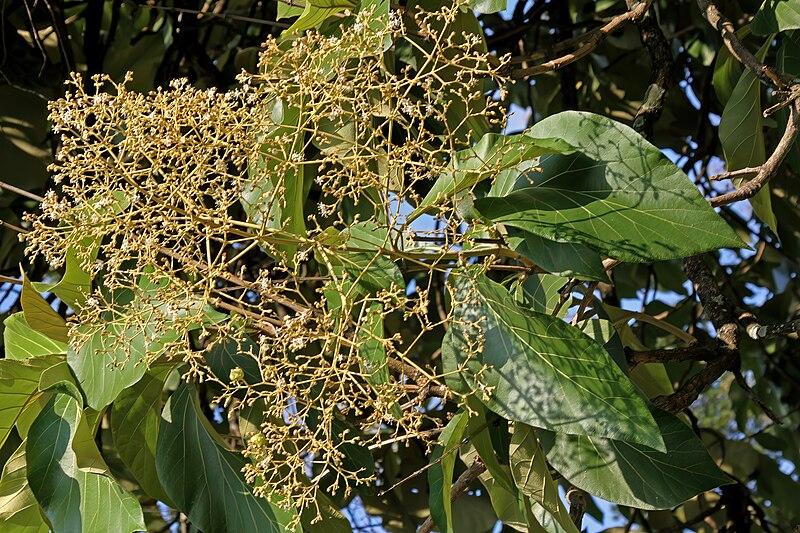
Tectona grandis (Bwa-Tèk) : vertus médicinales en extraction alcoolique
Tectona grandis (Bwa-Tèk) — famille Verbénacées.
Cette base documente les extractions alcooliques (éthanol) des substances actives. Notre monographie recense actuellement 23 indications en extraction alcoolique pour cette espèce. La monographie s’appuie sur 45 références scientifiques enregistrées pour l’espèce.
Indications thérapeutiques en extraction alcoolique :
Note : les extraits de références scientifiques sont conservés dans leur langue d’origine (le plus souvent l’anglais), sans traduction, afin de respecter le texte source des publications.
- Infection bacterienne : Partie usitée : Fruit. Profil pharmacologique documenté : Ciprofloxacine-like.
Selon Bitchagno GTM (s.d.) : Isolated compounds as well as crude ethanol extract were tested for their antibacterial activities using broth microdilution method against four Gram negative bacteria strains Escherichia coli (ATCC 8739), Pseudomonas aeruginosa (PA 01), Klebsiella pneumonia (ATCC 11296) & Escherichia aerogenes (ATCC 13048). Among the isolated metabolites, 6-methyl-1,4-dihydroxyanthraquinone exhibited a strong activity against E aerogenes with MIC of 16 μg/mL, while tectograndone showed a moderate activity against E coli with MIC of 32 μg/mL. Selon Kamath K (2017) : Antibacterial activity was carried out by using different concentrations of extracts on bacterial strains of Staphylococcus aureus, Escherichia coli & Pseudomonas aeruginosa by using agar well diffusion method & results were compared. - Cancer : Partie usitée : Feuille.
Selon MENEZES (de) FURTADO C (2012) : Over the past six years we have been studying extracts from tropical, specially Amazon, plants, to search for new sensitizers for photodynamic therapy of cancer & infectious diseases. While TGE was highly toxic towards melanoma cells under illumination with red light of the LED, it also possessed significant dark toxicity towards both B16 F10 and murine fibroblast NIH3T3 cells. Selon Prajuabjinda O (2015) : The ethanolic extract of Tectona grandis stem showed the highest cytotoxic activities against human Breast adenocarcinoma (MCF-7), but was less cytotoxic against large cell lung Carcinoma (COR-L23) (IC50 = 3.92 and 7.78 μg/ml, respectively). - Arthrose, arthrite, rhumatisme, oedeme : Partie usitée : Tige. Profil pharmacologique documenté : Indometacine-like.
Selon Javalgikar A (2019) : The objective of present study was to evaluate in vitro anti-inflammatory activity & antihelmintic of ethanolic extracts of T grandis leaves. It allays thirst, and acts as antihelmintic, expectorant & anti-inflammatory. Selon Shaik A (2019) : The objective of present study was to evaluate in vitro anti-inflammatory activity & antihelmintic of ethanolic extracts of T grandis leaves.
D’autres indications (y compris d’autres modes d’extraction le cas échéant), posologies, précautions d’emploi et le détail des références scientifiques sont disponibles dans la fiche monographique complète.
Base médicinale Lapotitjéri di la Nati
Extraits éthanoliques des substances actives — monographies, indications, posologies et références pour professionnels de santé. Ethnopharmacologue Emmanuel Nossin.
→ Rechercher Tectona grandis dans la base (abonnement requis)
Crédit photo : Photo de SAplants sans modification (CC BY 4.0). Licence : CC BY 4.0.