Acmella oleracea (Zèb-maldan) : medicinal properties | Lapo
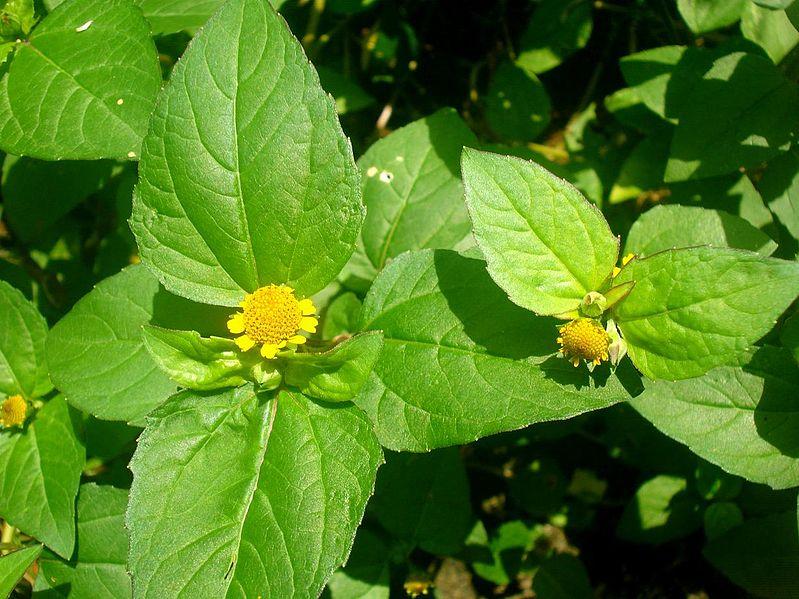
Acmella oleracea (Zèb-maldan) : medicinal properties in alcoholic extraction
Acmella oleracea (Zèb-maldan) — family Asteracées.
Recognised external sources linked to this monograph: TRAMIL and French Pharmacopoeia.
This database documents alcoholic (ethanol) extractions of active substances. Our monograph currently lists 24 indications in alcoholic extraction for this species. The monograph draws on 107 scientific references recorded for the species.
Therapeutic indications in alcoholic extraction:
Note: scientific reference excerpts are kept in their original language (most often English), without translation, to respect the source text of publications.
- Larvicide : Plant part used: sheet. Documented pharmacological profile: DDT-like.
According to Pitasawat B (1998): Ten species of plants, reported to possess carminative property, were screened for larvicidal potential against Culex quinquefasciatus by exposing early 4th instar larvae to a series of concentrations of the ethanolic extracts of the plants. According to Author (2012): An alternative approach for mosquito control is the use of natural products of plant origin. Phytochemicals have proven that they are potential mosquito control agent & also alternative to synthetic insecticides. - Osteoarthritis, arthritis, rheumatism, oedema : Plant part used: aerial parts.
According to Barman S (2009): ELSA showed significant anti-inflammatory activity against acute, subacute & chronic inflammation as well as central & peripheral analgesic activity. Carrageenan induced rat paw edema model; Granuloma pouch method & Adjuvant arthritis method were used for acute, sub-acute & chronic inflammation respectively. According to Chakraborty A (2004): MATERIAL & METHODS: SPA was evaluated for antiinflammatory action by carrageenan-induced rat paw edema. - Pain : Plant part used: flower. Documented pharmacological profile: Opioïde-like.
According to OGATA NEC (2013): In this study we examined the antinociceptive effect of the ethanolic extract obtained from the flowers of Acmella oleracea (EEAO) in animal models of nociceptive (chemical & thermal) & neuropathic (partial sciatic nerve ligation) pain. Furthermore, EEAO (100 mg/kg) also reduced mechanical allodynia caused by partial sciatic nerve ligation for 3 h. According to Dallazen JL (2022): In contrast, IBA treatment only partially reduced the mechanical allodynia.
Further indications (including other extraction modes where applicable), dosages, precautions for use and full scientific references are available in the complete monograph.
Lapotitjéri di la Nati medicinal database
Ethanolic extracts of active substances — monographs, indications, dosages and references for healthcare professionals. Ethnopharmacologist Emmanuel Nossin.
→ Search Acmella oleracea in the database (subscription required)
Photo credit : Photo de Ks.mini sans modification (CC BY 4.0). License : CC BY 4.0.