Acmella oleracea (Zèb-maldan) : vertus médicinales en extraction alcoolique
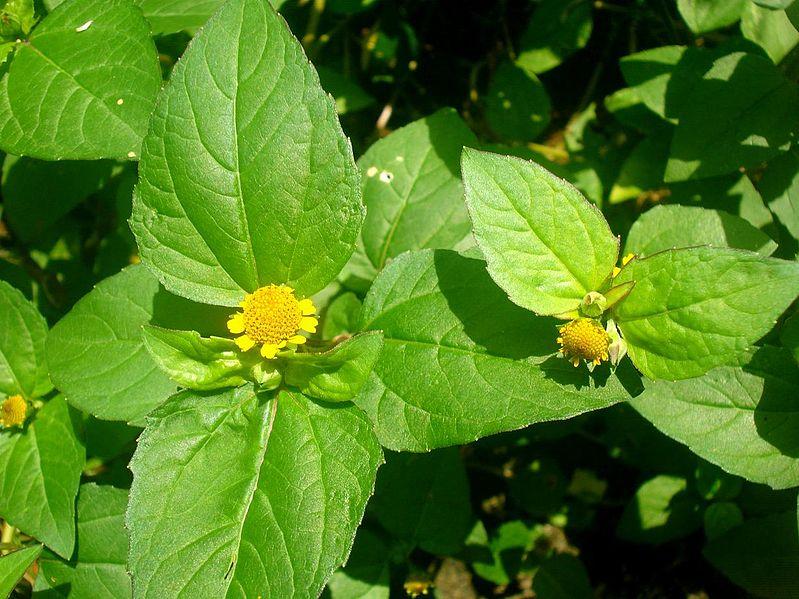
Acmella oleracea (Zèb-maldan) : vertus médicinales en extraction alcoolique
Acmella oleracea (Zèb-maldan) — famille Asteracées.
Sources externes reconnues associées à cette monographie : TRAMIL et Pharmacopée française.
Cette base documente les extractions alcooliques (éthanol) des substances actives. Notre monographie recense actuellement 24 indications en extraction alcoolique pour cette espèce. La monographie s’appuie sur 107 références scientifiques enregistrées pour l’espèce.
Indications thérapeutiques en extraction alcoolique :
Note : les extraits de références scientifiques sont conservés dans leur langue d’origine (le plus souvent l’anglais), sans traduction, afin de respecter le texte source des publications.
- Démoustication Larvicide : Partie usitée : feuille. Profil pharmacologique documenté : DDT-like.
Selon Pitasawat B (1998) : Ten species of plants, reported to possess carminative property, were screened for larvicidal potential against Culex quinquefasciatus by exposing early 4th instar larvae to a series of concentrations of the ethanolic extracts of the plants. Selon Auteur (2012) : An alternative approach for mosquito control is the use of natural products of plant origin. Phytochemicals have proven that they are potential mosquito control agent & also alternative to synthetic insecticides. - Arthrose, arthrite, rhumatisme, oedème : Partie usitée : parties aériennes.
Selon Barman S (2009) : ELSA showed significant anti-inflammatory activity against acute, subacute & chronic inflammation as well as central & peripheral analgesic activity. Carrageenan induced rat paw edema model; Granuloma pouch method & Adjuvant arthritis method were used for acute, sub-acute & chronic inflammation respectively. Selon Chakraborty A (2004) : MATERIAL & METHODS: SPA was evaluated for antiinflammatory action by carrageenan-induced rat paw edema. - Douleur : Partie usitée : fleur. Profil pharmacologique documenté : Opioïde-like.
Selon OGATA NEC (2013) : In this study we examined the antinociceptive effect of the ethanolic extract obtained from the flowers of Acmella oleracea (EEAO) in animal models of nociceptive (chemical & thermal) & neuropathic (partial sciatic nerve ligation) pain. Furthermore, EEAO (100 mg/kg) also reduced mechanical allodynia caused by partial sciatic nerve ligation for 3 h. Selon Dallazen JL (2022) : In contrast, IBA treatment only partially reduced the mechanical allodynia.
D’autres indications (y compris d’autres modes d’extraction le cas échéant), posologies, précautions d’emploi et le détail des références scientifiques sont disponibles dans la fiche monographique complète.
Base médicinale Lapotitjéri di la Nati
Extraits éthanoliques des substances actives — monographies, indications, posologies et références pour professionnels de santé. Ethnopharmacologue Emmanuel Nossin.
→ Rechercher Acmella oleracea dans la base (abonnement requis)
Crédit photo : Photo de Ks.mini sans modification (CC BY 4.0). Licence : CC BY 4.0.