Caesalpinia pulcherrima (Baragèt) : vertus médicinales en extraction alcoolique
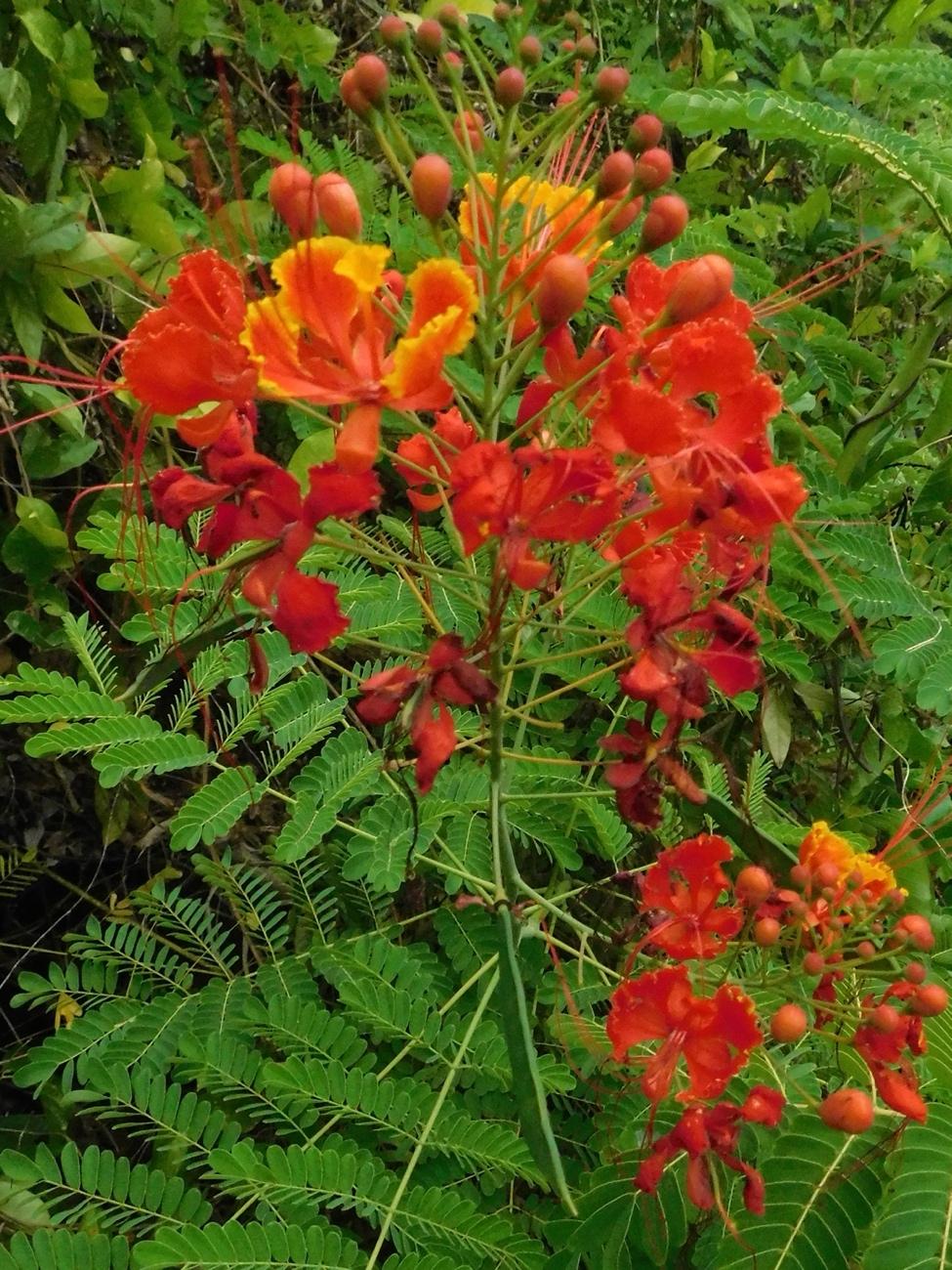
Caesalpinia pulcherrima (Baragèt) : vertus médicinales en extraction alcoolique
Caesalpinia pulcherrima (Baragèt) — famille Caesalpiniacées.
Cette base documente les extractions alcooliques (éthanol) des substances actives. Notre monographie recense actuellement 17 indications en extraction alcoolique pour cette espèce. La monographie s’appuie sur 74 références scientifiques enregistrées pour l’espèce.
Indications thérapeutiques en extraction alcoolique :
Note : les extraits de références scientifiques sont conservés dans leur langue d’origine (le plus souvent l’anglais), sans traduction, afin de respecter le texte source des publications.
- Infection bactérienne : Partie usitée : Fleur. Profil pharmacologique documenté : Ciprofloxacine-like.
Selon Dhaked S P (s.d.) : The objective of the present work was to evaluate the in-vitro antimicrobial potency of the ethanolic & aqueous extract of C pulcherrima flower (CPF) using agar plate disk diffusion method against Escherichia coli, Bacillus subtilis & streptococcus aureus. Ethanolic extract of C pulcherrima was more effective against E coli, B subtilis than aqueous extract & Cephalosporin. Selon Atienza A (2016) : For the antimicrobial activity, the leaf extracts showed inhibition against all the selected microorganisms, Staphylococcus aureus, Pseudomonas aeruginosa, Escherichia coli, Enterococcus faecalis, Streptococcus mutans, Bacillus subtilis, Aspergillus niger & Candida albicans, at 1000 μg/mL. - Diabète mellitus de type II : Partie usitée : Feuille. Profil pharmacologique documenté : Acarbose-like.
Selon -Brantner A (2016) : n Asia, medicinal plants are applied for the treatment of many diseases including diabetes mellitus [1]. The most significant inhibitory activity was detected from all ethanolic extracts ranging from 89% to 96%, while acarbose resulted in 84% inhibition. Selon Balasubramanian V (2012) : A single oral dose of 100, 200 & 300 mg/kg of the extract was evaluated for hypoglycemic activity in alloxan-induced (100 mg/kg) diabetic rats. - Helminthiase : Partie usitée : Fleur. Profil pharmacologique documenté : Piperazine-like.
Selon Dhaked PS (2011) : The objective of the present work was to evaluate the in-vitro anthelmintic potency of the ethanolic, petroleum ether & aqueous extract of CP flower (CPF) using Indian earthworms (Pheretima posthuma). Thus, the present study demonstrates that the traditional claim of CP as an anthelmintic has been confirmed as the Aqueous, ethanolic, & petroleum ether extracts displayed activity against the earthworm used in study,. Selon Nilesh Satwadhar (2012) : The crude aqueous and hydroalcoholic extracts of Caesalpinia pulcherrima (Caesalpiniaceae) bark were evaluated for in-vitro anthelmintic activity on the Indian adult earthworms Pheretima posthuma.
D’autres indications (y compris d’autres modes d’extraction le cas échéant), posologies, précautions d’emploi et le détail des références scientifiques sont disponibles dans la fiche monographique complète.
Base médicinale Lapotitjéri di la Nati
Extraits éthanoliques des substances actives — monographies, indications, posologies et références pour professionnels de santé. Ethnopharmacologue Emmanuel Nossin.
→ Rechercher Caesalpinia pulcherrima dans la base (abonnement requis)
Crédit photo : Photo de David E Mead sans modification (CC BY 4.0). Licence : CC BY 4.0.