Codiaeum variegatum (Kroton) : vertus médicinales en extraction alcoolique
Codiaeum variegatum (Kroton) : vertus médicinales en extraction alcoolique
Codiaeum variegatum (Kroton) — famille Euphorbiacées.
Cette base documente les extractions alcooliques (éthanol) des substances actives. Notre monographie recense actuellement 12 indications en extraction alcoolique pour cette espèce. La monographie s’appuie sur 52 références scientifiques enregistrées pour l’espèce.
Indications thérapeutiques en extraction alcoolique :
Note : les extraits de références scientifiques sont conservés dans leur langue d’origine (le plus souvent l’anglais), sans traduction, afin de respecter le texte source des publications.
- Stress oxydatif : Partie usitée : Écorce de tige. Profil pharmacologique documenté : Curcumine-like.
Selon Anim M T (2016) : Strong antioxidant activities were observed in both stem bark & leaf with EC50 values of 0.053±0.004 mg/mL & 1.396±0.073 mg/mL respectively. Hence, the objective of this research was to determine the phytochemical, total phenolic content, antioxidant & antiproliferative effect of Codiaeum variegatum crude extracts & fractions. Selon Pechangou Nsangou S (2023) : Ethanolic extract & EF5 showed higher Phenolic compound contents & higher antioxidant activity than hydroethanolic extract & other fractions through DPPH radical scavenging power (EC50 = 311.50 ± 4.12 μg/mL) & total antioxidant capacity (44 ± 0.07 mgEAA/gF). - Cancer : Partie usitée : Écorce de tige.
Selon Anim M T (2016) : Both crude extracts showed antiproliferative activity towards all cancer cell lines with the stem bark exhibiting the strongest cytotoxicity. These results established the antiproliferative nature of this plant. Selon Pechangou Nsangou N (2023) : Macrophages were treated with different concentrations (0.1; 1; 10 and 100 μg/mL) of the extracts/fractions for the inhibition of 5-lipoxygenase activity, nitric oxide (NO) & Tumor Necrosis Factor Alpha (TNF-α) production. - Arthrose, arththite, rhumatisme, oedème : Partie usitée : Feuille. Profil pharmacologique documenté : Acide salicylique-like, Baicaline-like.
Selon Bijekar (2015) : Bijekar et al, Evaluation of antiinflammatory activity of flavonoid fractions from Euphorbiaceae members on raw 264.7 cell lines. Selon Pechangou Nsangou N (2023) : The fractionation process increased anti-inflammatory activity. Among fractions, HEF2, HEF3, HEF5, EEF1, EEF3 & EEF5 exhibited the best anti-inflammatory potential.
D’autres indications (y compris d’autres modes d’extraction le cas échéant), posologies, précautions d’emploi et le détail des références scientifiques sont disponibles dans la fiche monographique complète.
Base médicinale Lapotitjéri di la Nati
Extraits éthanoliques des substances actives — monographies, indications, posologies et références pour professionnels de santé. Ethnopharmacologue Emmanuel Nossin.
→ Rechercher Codiaeum variegatum dans la base (abonnement requis)
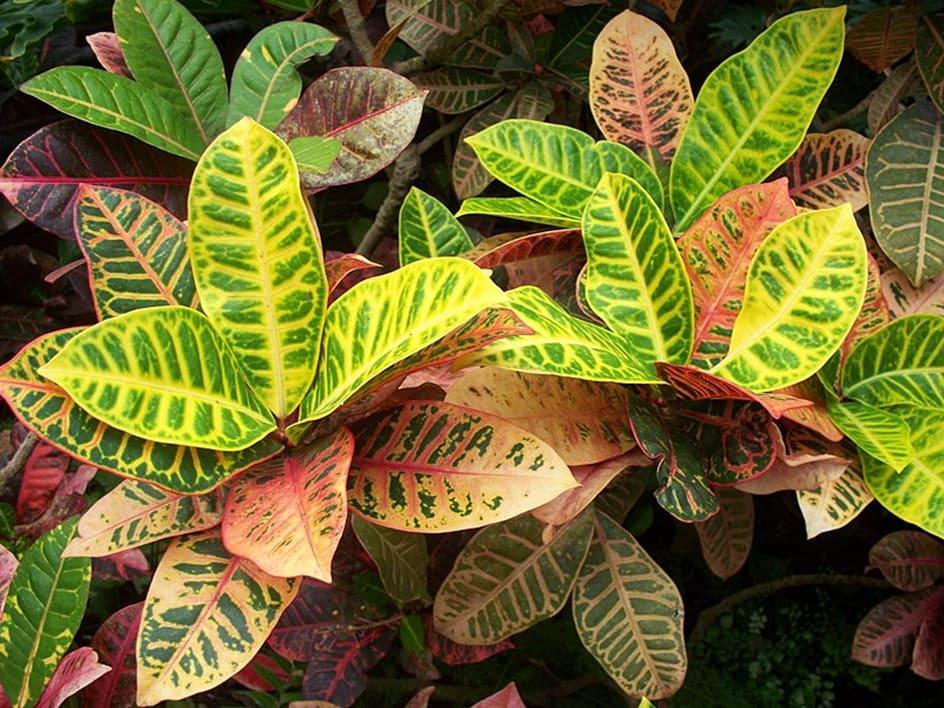
Crédit photo : Photo by Cbaile19 without modification (CC0 1.0). Licence : CC0 1.0.