Curcuma longa (Tjitjima) : vertus médicinales en extraction alcoolique
Curcuma longa (Tjitjima) : vertus médicinales en extraction alcoolique
Curcuma longa (Tjitjima) — famille Zingiberacées.
Sources externes reconnues associées à cette monographie : TRAMIL et Pharmacopée française.
Cette base documente les extractions alcooliques (éthanol) des substances actives. Notre monographie recense actuellement 43 indications en extraction alcoolique pour cette espèce. La monographie s’appuie sur 228 références scientifiques enregistrées pour l’espèce.
Indications thérapeutiques en extraction alcoolique :
Note : les extraits de références scientifiques sont conservés dans leur langue d’origine (le plus souvent l’anglais), sans traduction, afin de respecter le texte source des publications.
- Cancer : Partie usitée : Rhizome. Profil pharmacologique documenté : Folfox-like. Association synergique mentionnée : Bevacizumab.
Selon LI M (2018) : Curcumin, a well-studied component in turmeric, exhibits potent antitumor effects in colorectal cancer. Conclusions: CL extract was demonstrated for the first time for its anti-tumor & anti-metastatic effects in both colorectal cancer cells & orthotopic mouse model through regulation of multiple targets. Selon LEE GGL (2016) : In conclusion, combination of CL extract with bevacizumab possessed potent anti-tumor effects without observable side effects, strongly suggesting the adjuvant use of turmeric extract in colorectal cancer therapy. - Infection Bactérienne : Partie usitée : Rhizome. Profil pharmacologique documenté : Acide Nalidixique-like, Imipenem-like.
Selon Sincharoenpokai P (2009) : Tarda in which some were different from those of ethanol and hexane turmeric extract. Selon NAZ S (2012) : -Curcuma longa rhizome extracts of different samples (A, B & C) were evaluated for antibacterial activity against four pathogenic bacterial strains, which are Bacillus subtilis, Bacillus macerans, Bacillus licheniformis & Azotobacter sp using agar well diffusion method. licheniformis & Azotobacter respectively. - Plaie infectée, blessure, incision : Partie usitée : Rhizome. Profil pharmacologique documenté : Nitrofurazone-like. Association synergique mentionnée : Terminalia arjuna-écorce, Centella asiatica-feuille.
Selon Naama JH (2010) : The extract showed a considerable anticancer activity against the cell line of human hepato cellular liver Carcinoma. The study of anticancer activity of the curcumin and ethanolic extract were done in vivo on mice & in vitro on cell line. Selon Gull N (2023) : Among all forms of cancers, hepatocellular carcinoma (HCC) is the fifth most common cancer worldwide.
D’autres indications (y compris d’autres modes d’extraction le cas échéant), posologies, précautions d’emploi et le détail des références scientifiques sont disponibles dans la fiche monographique complète.
Base médicinale Lapotitjéri di la Nati
Extraits éthanoliques des substances actives — monographies, indications, posologies et références pour professionnels de santé. Ethnopharmacologue Emmanuel Nossin.
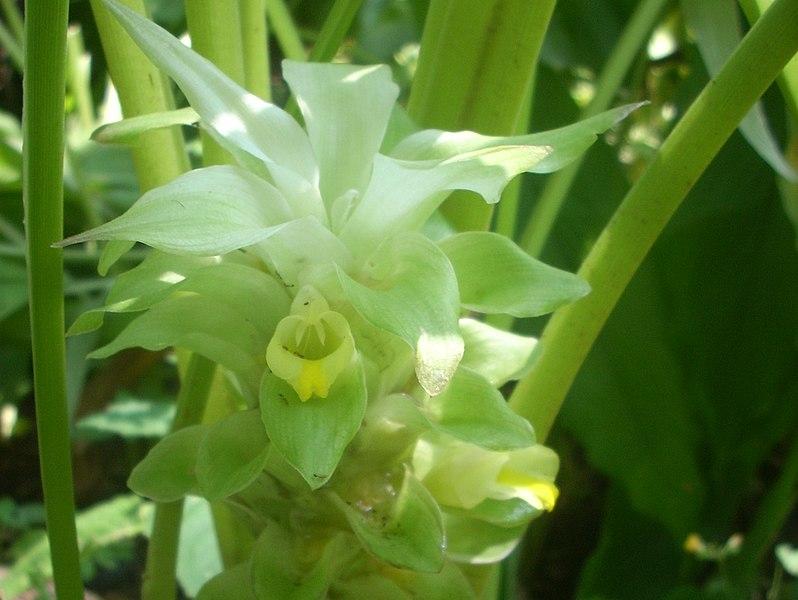
Crédit photo : Photo de Manojk sans modification (CC BY-SA 3.0. Licence : CC BY-SA 3.0.