Artemisia dracunculus (Wild thyme) : medicinal properties | Lapo
Artemisia dracunculus (Wild thyme) : medicinal properties in alcoholic extraction
Artemisia dracunculus (Wild thyme) — family Astéracées.
This database documents alcoholic (ethanol) extractions of active substances. Our monograph currently lists 10 indications in alcoholic extraction for this species. The monograph draws on 79 scientific references recorded for the species.
Therapeutic indications in alcoholic extraction:
Note: scientific reference excerpts are kept in their original language (most often English), without translation, to respect the source text of publications.
- Type II diabetes mellitus : Plant part used: Seed. Documented pharmacological profile: Metformine-like.
According to Author (2016): The AD extract described in this project as PMI-5011 was originally identified from a screening of extracts for hypoglycemic activity in diabetic mice as the most promising candidate for the development of a nutritional supplement for diabetes. PMI-5011 is able to significantly decrease blood glucose concentrations in Streptozotocin-induced diabetic mice & in genetically diabetic KK-Ay mice. According to Kirk-Ballard H (2013): Impaired insulin signaling is a key feature of type 2 diabetes & is associated with increased ubiquitin-proteasome-dependent protein degradation in skeletal muscle. - Bacterial infection caused by Clostridium perfringens, Escherichia coli, Pseudomonas aeruginosa and Salmonella typhimurium : Plant part used: Sheet. Documented pharmacological profile: Cefoxitine-like.
According to Gupta PC (2009): (Asteraceae) were investigated for their antibacterial activity by using agar well diffusion assays against five Gram-positive bacteria () & three Gram- Staphylococcus aureus, Bacillus subtilis, Bacillus pumilus, Bacillus cereus, & Micrococcus luteus negative bacteria (Escherichia coli, Salmonella typhi,&d Pseudomonas aeruginosa). According to Benil M (n.d.): aeruginosa (ATCC 27853), the methanol extract that was diluted with 5 ml distilled water showed inhibition zones against two different strains of Escherichia coli (RSHI, ATCC 25922), Shigella (RSHI), L. The chloroform & acetone extracts were inhibitory only towards Pseudomonas aeruginosa (ATCC 27853). - Liver disorders : Plant part used: Aerial_parts. Documented pharmacological profile: Silymarine-like.
According to Kalantari H (2013): Liver morphology was assessed using hematoxylin & eosin (HE) staining of liver tissue. Mutagenicity & liver toxicity of the herb tarragon (Artemisia dracunculus) was evaluated using single cell gel (comet) electrophoresis. According to Obolskiy D (2011): In vivo studies mainly in rodents, particularly from Russian sources, highlight potential anti-inflammatory, hepatoprotective, & antihyperglycemic effects.
Further indications (including other extraction modes where applicable), dosages, precautions for use and full scientific references are available in the complete monograph.
Lapotitjéri di la Nati medicinal database
Ethanolic extracts of active substances — monographs, indications, dosages and references for healthcare professionals. Ethnopharmacologist Emmanuel Nossin.
→ Search Artemisia dracunculus in the database (subscription required)
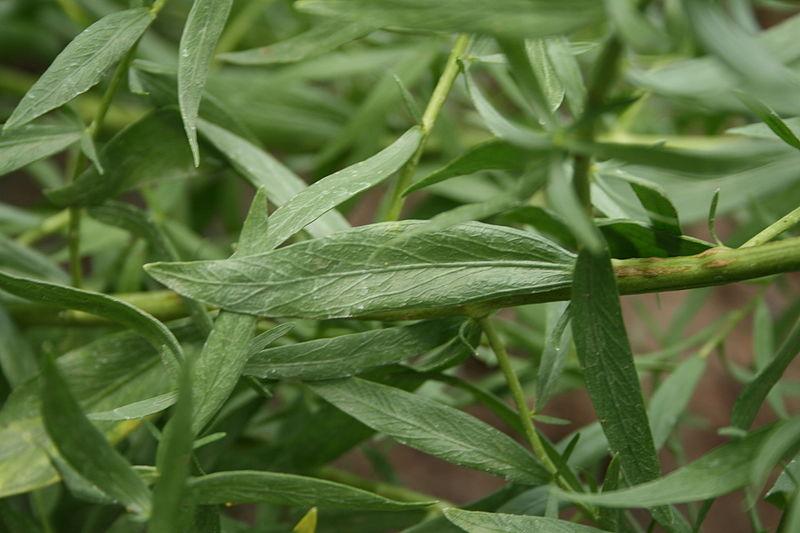
Photo credit : Photo by Oceancetaceen – Alice Chodura without modification (CC BY 4.0). License : CC BY 4.0.